SafeCare BC Logo
SafeCare BC Logo
Programs & Services

Programs and Services

View All
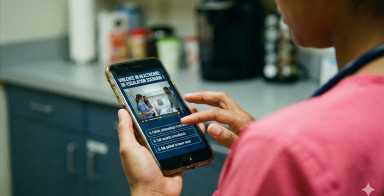
We are dedicated to providing comprehensive occupational health and safety (OHS) consulting services tailored to your needs.
View Service
Psychological health and safety, often called workplace mental health, encompasses principles and practices to foster a supportive, respectful, and psychologically safe work environment.
View Service
The Provincial Violence Prevention Curriculum is recognized as best-practice in violence prevention training for health care workers.
View Service
Safety huddle

Improving involvement and influence: Having a say in your work 

When you feel involved, you typically feel more in control of your tasks and more satisfied with your job. 

After this huddle, staff should be able to:

  • Explain what involvement and influence mean for their daily work routines. 
  • Recognize how feeling involved (or not involved) impacts their personal stress levels. 
  • Identify specific opportunities where they can have more input or control over their work. 

How to run the safety huddle

As the huddle leader, do the following: 

  • Before the huddle, review the huddle content and huddle leader notes. 
  • Have resources ready, such as policies, employee assistance programs, or SafeCare BC resources. 
  • Choose a scenario that fits your workplace and read it aloud. 
  • Use the guiding questions to lead the discussion. 
  • Use huddle leader notes as support while leading the discussion. 
  • Keep the discussion short to about 5-10 minutes. 

Definitions

Involvement and influence refer to a work environment where you feel included in discussions and decisions about your work. This is about more than just major company changes; it is about having input on your daily tasks, knowing how your team works together, and feeling that your opinions matter. When you feel involved, you typically feel more in control of your tasks and more satisfied with your job. 

Scenario for long-term care

Mei is a care aide on the evening shift at a local care home. She notices that the new resident activity schedule often clashes with the residents' preferred time to wind down. This conflict leads several residents to become agitated and restless right before bed. Mei believes that shifting to a quieter activity, such as soft music, would help residents settle in more easily and make the transition safer for everyone. She wants to mention this to her team lead, Paul, but she is worried he will say management has already set the schedule. She knows that if she stays quiet, the residents will continue to struggle, and her team's stress will stay high. She stands by the nursing station, deciding whether to bring it up during the next huddle. 

Guiding questions for long-term care

  • What is the best way for staff like Mei to share observations about resident schedules?  
  • How can we ensure that ideas from frontline staff are heard, even if they can't be changed immediately?  
  • Have you ever felt you had little or no influence over a work process? How did that impact you? 

Facilitation tip: Watch for staff who may feel "powerless" against schedules or processes that are set by management. Gently guide the talk toward small changes the team can control, like how tasks are divided during a shift

Scenario for home care

Liam is a community health worker whose visits are scheduled in an order that doesn't make geographic sense — he's often driving back and forth across neighbourhoods instead of working through them one at a time. This eats into the time he can spend with clients like Mr. Abara. Liam has figured out that grouping his visits by neighbourhood would significantly reduce his drive time. He has a one-on-one with his supervisor, Carlos, today. He wants to bring up the scheduling issue, but the last time he raised it, he was told the system handles scheduling automatically and that he just needs to manage his time better. That response left him feeling dismissed, and the inefficiency has been weighing on him — it feels like it's getting in the way of doing his job well. Carlos asks, "How is everything going with your schedule lately?" Liam pauses, deciding how to respond. 

Guiding questions for home care

  • How comfortable do you feel providing feedback on tools like scheduling software or reporting systems?  
  • What could leadership do to make it easier to give input on work efficiency and client care?  
  • What makes it easy or difficult to share suggestions about our work processes here? 

Facilitation tip: If the conversation turns into a complaint session, redirect it by asking what specific examples or "workarounds" the team has found that could be shared.

Huddle leader notes

  • Create a safe space:
    • Listen, respect all views, and be mindful of others’ challenges.
    • Guide the discussion to focus on what participants can control.
    • Move the conversation from complaints to solutions, strengths, and helpful actions.
    • Invite anyone with specific concerns to talk with you after the huddle.
  • Key discussion points: Use the objectives and key discussion points below to guide the huddle if needed.
    • Closing the loop: Explain that even if a "no" is the answer, staff deserve to know their idea was heard and the reasons why. 
    • Direct vs. indirect influence: Be clear about what staff can influence directly (e.g., team meeting topics) versus what requires input to higher management (e.g., policy changes). 
    • Constructive feedback: Reiterate that the goal is to improve the workplace for everyone, not to blame individuals. 

Downloads
safety-huddle-improvinginvolvement-August2026.pdf
Download
979.3KB
Improving involvement and influence: Having a say in your work 

Additional Resources

Starting at $35
Using the fundamentals of motivational interviewing, this workshop will help you have conversations with respect and curiosity that make others feel heard, supported, and valued.
View Workshop Topic

More Safety huddles

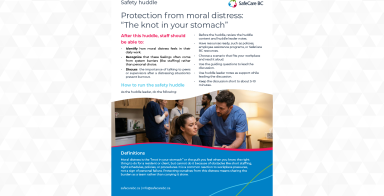
This huddle will help you lead a discussion on moral distress and the importance of talking to peers or supervisors after a distressing situation to prevent burnout.
Files Attached
View Safety huddle
This safety huddle can be used to lead a discussion on how assuming positive intent can reduce workplace tension.
Files Attached
View Safety huddle
Mastering work-life balance is essential for healthcare safety. Discover practical strategies to prevent burnout, manage busy shifts, and improve care for those you support.
Files Attached
View Safety huddle
Learn when workers can stop unsafe tasks, report concerns, and follow the right process to stay safe.
Files Attached
View Safety huddle
Equip your team with the skills to spot workplace hazards before they cause an injury. This safety huddle guides staff through conducting an environmental scan, a key part of any point of care risk assessment. Discover how to build a proactive safety culture and protect your healthcare team.
Files Attached
View Safety huddle
In this huddle, we’ll review safe and effective cleaning and disinfecting practices in the workplace. Staff will learn how to follow workplace policies, clean and disinfect shared equipment and high-touch areas, and select the right personal protective equipment (PPE) for different cleaning tasks. We’ll also cover where to find important information such as safety data sheets and product labels, which explain safe handling and spill response procedures. Use the guiding questions to spark discussion about common high-risk areas, frequently shared items, and strategies for reducing the spread of infectious diseases.
Files Attached
View Safety huddle
Working with clients or residents and their families is not always easy. You may not be able to control how others act, but you can control how you respond.
Files Attached
View Safety huddle
When a critical incident impacts your team, it's vital to have a safe space to talk and heal. Our critical incident debriefing tools provide leaders and frontline staff in BC's long-term care and home support sectors with a structured way to discuss what happened, ensuring everyone feels supported with dignity and respect. Discover how to create a culture of psychological safety, identify available resources, and learn to navigate these challenging conversations to promote recovery and well-being.
Files Attached
View Safety huddle
Browse by Resource Type

Resources Related to , ,

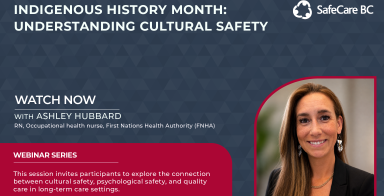
This session invites participants to explore the connection between cultural safety, psychological safety, and quality care in long-term care settings.
View Webinar
It didn’t start with leadership. Karen Tasker’s journey at Sienna Senior Living’s Lakeview Lodge Community, in West Kelowna, began in 2013, when she returned to the workforce after 14 years as a stay-at-home mom. Her first role was as a dietary aide, handling meals, laundry, and housekeeping, but it quickly became clear that there was […]
View News Story
“When I saw the participation rate, which was way above 90 per cent of our care staff who took the training, I thought, okay, there is something here,” says Loren Tisdelle, human resources director at Louis Brier Home and Hospital. “That kind of participation is rare with regular in-person sessions.”  That moment signalled that a new way of learning […]
View News Story
Workplace communication improves when teams use strength-based language, I statements, objective words, and curiosity to build trust.
Files Attached
View Info Sheet
SafeCare BC Logo
©2026 SafeCare BC | All rights reserved.
To empower workplaces that provide care to create a culture of safety through evidence-based education, advocacy for safer workplaces, leadership, and collaboration
cross