SafeCare BC Logo
SafeCare BC Logo
Programs & Services

Programs and Services

View All
We are dedicated to providing comprehensive occupational health and safety (OHS) consulting services tailored to your needs.
View Service

Psychological health and safety, often called workplace mental health, encompasses principles and practices to foster a supportive, respectful, and psychologically safe work environment.
View Service

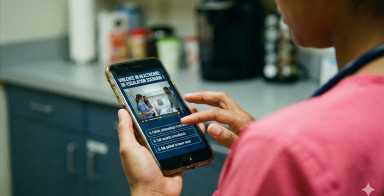
The Provincial Violence Prevention Curriculum is recognized as best-practice in violence prevention training for health care workers.
View Service
This safety huddle can be used to lead a discussion on how assuming positive intent can reduce workplace tension.
Choosing Curiosity Over Judgment

After this huddle, staff should be able to:

  • Identify the difference between a judgment and a curious question.  
  • Discuss how assuming positive intent can reduce workplace tension.  

How to run the safety huddle

As the huddle leader, do the following:

  • Before the huddle, review the huddle content and huddle leader notes.
  • Have resources ready, such as policies, employee assistance programs, or SafeCare BC resources.
  • Choose a scenario that fits your workplace and read it aloud.
  • Use the guiding questions to lead the discussion.
  • Use huddle leader notes as support while leading the discussion.
  • Keep the discussion short to about 5-10 minutes.

Definitions

Language is not neutral; the words we choose directly set the tone for our workplaces. When we reach for quick labels or judgments about why someone is doing something, it often creates a culture of "watching and whispering" that makes people feel unsafe. Choosing curiosity means pausing to ask what else might be going on before we jump to conclusions about behaviours.  

Scenario for long-term care

Maryam is a highly experienced care aide who has worked at Pine Grove Village for 18 years.  Lately, she has noticed that a newer staff member, Chloe, consistently leaves the floor exactly when her shift ends, even if the morning routine is still slightly behind. Maryam feels frustrated, thinking, "Chloe just doesn't care about the team. She’s only here for the paycheque and leaves us to clean up the mess."  One afternoon, Maryam is about to make a sharp comment to Chloe about her "lack of commitment" just as Chloe is grabbing her coat. Maryam pauses, remembering that she doesn't really know why Chloe leaves so abruptly. She can either deliver the criticism or ask a question. 

Guiding questions for long-term care

  • What is the "judgment" Maryam has already made about Chloe, and how might that affect how they work together?  
  • If Maryam says, "You never stay a minute late to help us," how is Chloe likely to respond?  
  • What are some "unseen" reasons a colleague might need to leave exactly on time?  
  • How could Maryam rephrase her frustration into a curious question instead?  

Scenario for home care

Mai is a home health care aide who often feels the pressure of travelling between clients. She frequently checks in with her coordinator, Maria, via a messaging app. Lately, Maria’s responses have been very short. Sometimes they are just one-word answers or a "thumbs up" emoji. Mai starts to feel like Maria is being dismissive or annoyed with her questions. She thinks, "Maria is so impatient. She clearly thinks I’m incompetent because I’m asking for clarification." Mai finds herself wanting to stop reaching out altogether to avoid feeling judged.

Guiding questions for home care

  • How does Mai’s internal "label" of Maria as "impatient" change her willingness to communicate?  
  • In a busy home care organization, what might be happening on Maria's end that Mai can't see?  
  • How could Mai use an "I statement" to clear the air without sounding like she is accusing Maria?

Huddle leader notes

Organizational support: A healthy organization fosters a workplace where workers still have energy left for their personal lives after their shift ends.

Create a safe space:

  • Listen, respect all views, and be mindful of others’ challenges.
  • Guide the discussion to focus on what participants can control.
  • Move the conversation from complaints to solutions, strengths, and helpful actions.
  • Invite anyone with specific concerns to talk with you after the huddle.

Key discussion points: Use the objectives and key discussion points below to guide the huddle if needed. 

  • Judgment shuts doors: Labelling a colleague (e.g., "lazy," "unprofessional") usually makes them defensive and stops real communication.  
  • Curiosity opens them: Asking "I wonder what's going on?" shifts the energy from resentment to understanding.  
  • Generosity is a choice: When we talk about people generously, we create a space where they are more likely to be generous toward us.  
  • Unseen burdens: We often don't know the full story of our colleagues' lives (second jobs, childcare, eldercare). 

Downloads
Choosing Curiosity Over Judgment
Choosing curiosity over judgment

Additional Resources

Strong communication is essential for a safe and respectful healthcare workplace. Learn how using “I” statements can reduce conflict, build trust, and support better teamwork during high-stress situations.
Files Attached
View Safety huddle
Communication is a skill that everyone can practice and improve. This info sheet offers four practical tool you can use to help build health workplace relationships.
Files Attached
View Info Sheet
Looking to implement a psychological health and safety policy in your organization? This ready-to-use template helps employers support mental health in the workplace by providing a clear, customizable framework that promotes well-being, prevents psychological harm, and outlines roles and responsibilities across all levels of your organization.
Files Attached
View Template
Use this info sheet to learn how “I” statements can be used to shift your workplace communication from blame to connection.
Files Attached
View Info Sheet
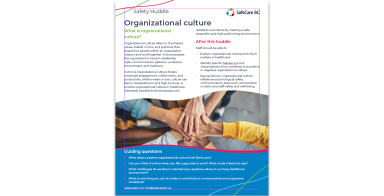
A strong organizational culture fosters employee engagement, collaboration, and productivity, while a weak or toxic culture can lead to dissatisfaction and high turnover.
Files Attached
View Safety huddle
Psychologically healthy and safe workplaces promote workers’ psychological well-being and actively work to prevent harm to workers’ psychological health. In a psychologically healthy and safe workplace, everyone feels supported, respected, and valued. 
Files Attached
View Safety huddle
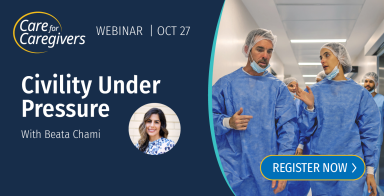
This safety huddle aims to foster a positive work environment for healthcare workers by promoting civility and respect. It aims to help staff define civility and respect, understand the impact of uncivil behaviour on individuals, teams, and resident/client care, and identify strategies for respectful communication and constructive responses to disrespect.
Files Attached
View Safety huddle

More Safety huddles

This safety huddle can be used to lead a discussion on how assuming positive intent can reduce workplace tension.
Files Attached
View Safety huddle
Mastering work-life balance is essential for healthcare safety. Discover practical strategies to prevent burnout, manage busy shifts, and improve care for those you support.
Files Attached
View Safety huddle
Learn when workers can stop unsafe tasks, report concerns, and follow the right process to stay safe.
Files Attached
View Safety huddle
Equip your team with the skills to spot workplace hazards before they cause an injury. This safety huddle guides staff through conducting an environmental scan, a key part of any point of care risk assessment. Discover how to build a proactive safety culture and protect your healthcare team.
Files Attached
View Safety huddle
In this huddle, we’ll review safe and effective cleaning and disinfecting practices in the workplace. Staff will learn how to follow workplace policies, clean and disinfect shared equipment and high-touch areas, and select the right personal protective equipment (PPE) for different cleaning tasks. We’ll also cover where to find important information such as safety data sheets and product labels, which explain safe handling and spill response procedures. Use the guiding questions to spark discussion about common high-risk areas, frequently shared items, and strategies for reducing the spread of infectious diseases.
Files Attached
View Safety huddle
Providing compassionate end-of-life care is a profound part of the job, but it can also lead to grief and loss for frontline staff. This can impact well-being and team morale. Fostering a workplace culture where open conversations about grief are supported is crucial for the health and safety of your team. Discover how to recognize grief in the workplace and provide essential support to your healthcare staff.
Files Attached
View Safety huddle
Working with clients or residents and their families is not always easy. You may not be able to control how others act, but you can control how you respond.
Files Attached
View Safety huddle
When a critical incident impacts your team, it's vital to have a safe space to talk and heal. Our critical incident debriefing tools provide leaders and frontline staff in BC's long-term care and home support sectors with a structured way to discuss what happened, ensuring everyone feels supported with dignity and respect. Discover how to create a culture of psychological safety, identify available resources, and learn to navigate these challenging conversations to promote recovery and well-being.
Files Attached
View Safety huddle
Browse by Resource Type

Resources Related to ,

“When I saw the participation rate, which was way above 90 per cent of our care staff who took the training, I thought, okay, there is something here,” says Loren Tisdelle, human resources director at Louis Brier Home and Hospital. “That kind of participation is rare with regular in-person sessions.”  That moment signalled that a new way of learning […]
View News Story
Think of your workplace — or your household, or your circle of friends — as a garden. Every day, you plant something. The words you choose are the seeds. When you plant a flower, you create something beautiful, for yourself and for everyone around you. When you plant a weed, you create something that, over time, makes it harder for anything healthy to grow. The choice of what to plant is yours.
View Safety Topic
Workplace communication improves when teams use strength-based language, I statements, objective words, and curiosity to build trust.
Files Attached
View Info Sheet
SafeCare BC Logo
©2026 SafeCare BC | All rights reserved.
To empower workplaces that provide care to create a culture of safety through evidence-based education, advocacy for safer workplaces, leadership, and collaboration
cross