SafeCare BC Logo
SafeCare BC Logo
Programs & Services

Programs and Services

View All
We are dedicated to providing comprehensive occupational health and safety (OHS) consulting services tailored to your needs.
View Service
Psychological health and safety, often called workplace mental health, encompasses principles and practices to foster a supportive, respectful, and psychologically safe work environment.
View Service
The Provincial Violence Prevention Curriculum is recognized as best-practice in violence prevention training for health care workers.
View Service
Safety huddle

Using “I” statements to build team trust

Strong communication is essential for a safe and respectful healthcare workplace. Learn how using “I” statements can reduce conflict, build trust, and support better teamwork during high-stress situations.
Using I statements to build team trust - Safety huddle

Strong communication is essential for a safe and respectful healthcare workplace. Learn how using “I” statements can reduce conflict, build trust, and support better teamwork during high-stress situations.

After this huddle, staff should be able to:

  • Identify the structure of a genuine "I" statement. 
  • Demonstrate how to shift from blaming “you” statements to respectful “I” statements that demonstrate feelings and experiences.  

How to run the safety huddle

As the huddle leader, do the following:

  • Before the huddle, review the huddle content and huddle leader notes.
  • Have resources ready, such as policies, employee assistance programs, or SafeCare BC resources.
  • Choose a scenario that fits your workplace and read it aloud.
  • Use the guiding questions to lead the discussion.
  • Use huddle leader notes as support while leading the discussion.
  • Keep the discussion short to about 5-10 minutes.

Definitions

An “I” statement is a communication tool that shifts the focus from what someone else did “wrong” to how you are personally experiencing a situation. By removing blame from the equation, you reduce the chance that the other person will become defensive, making it easier for them to hear what you are saying. It is a practical skill used to build connections and reduce friction, especially in high-stress environments or situations.

“I” statements follow a simple structure. They state how a specific event or situation made you feel, followed by the request you would like to make. 

“I feel [emotion] when [specific behaviour or situation] because [impact]. I need [specific request].” 

Example: 

“I feel [stressed] when [I’m managing multiple residents on my own] because [it affects our residents getting breakfast on time]. I need [your help with the remaining residents]. 

Scenario for long-term care

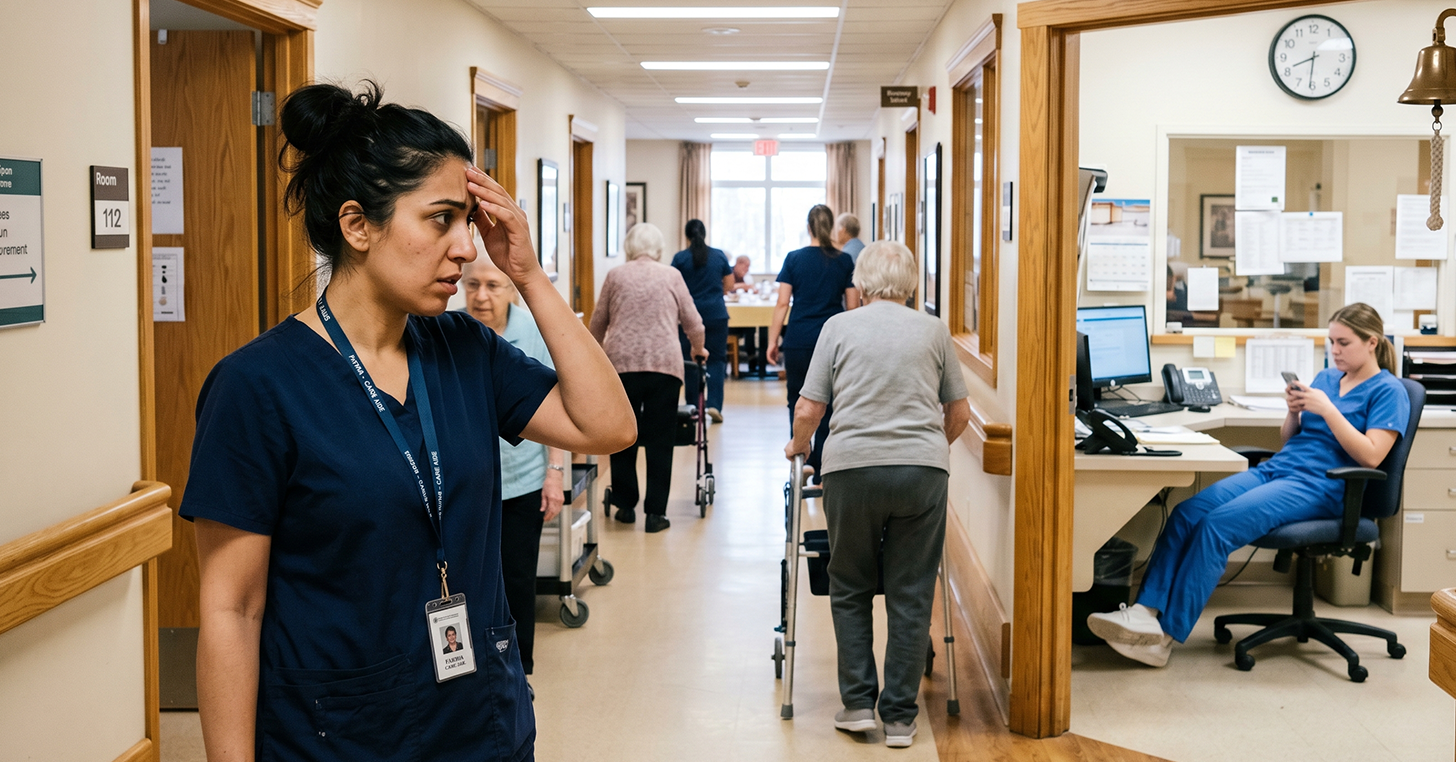
Fatima is a care aide at a busy long-term care home. She is currently working a short-staffed morning shift and has successfully helped several residents get ready for breakfast. However, her colleague, who was supposed to help with the remaining residents, has been scrolling on their phone at the nursing station for the last ten minutes. Fatima feels her stress levels rising as the breakfast bell rings. She is tempted to walk over and snap, "You are being so lazy and inconsiderate while I’m doing all the work!" She knows this will likely start an argument, so she pauses to consider how to use an "I" statement to address the situation. 

Guiding questions for long-term care

  • How do you expect the other person to react to the “you” version of Fatima’s comment (calling her colleague lazy and inconsiderate)?
  • Using the "I feel... when... because..." structure, how could Fatima rephrase her concern?  
  • Why is it important for Fatima to focus on her own experience of the workload rather than judging her colleague's character?  

Scenario for home care

Jessica is a home health support worker who drives between several clients each day. Her schedule is tight, and she relies on the staff from the previous shift to leave accurate, timely notes in the mobile app, so she knows exactly what her clients need when she arrives. For the third time this week, her colleague on the previous shift has not updated the notes, leaving Jessica feeling unprepared and anxious as she enters a client’s home. When Jessica sees this colleague at the end of the day, she wants to say, "You are so disorganized. You’re making my job impossible because you never do your paperwork!" She stops herself, realizing that this approach is full of accusations and blaming. Her colleague will likely get defensive, and this approach won’t effectively solve the issue. 

Guiding questions for home care

  • What is the judgment Jessica is making about her colleague in the first version of her comment?  
  • If Jessica starts with "I feel unprepared when I don't have the morning notes," how might that change the colleague's reaction?  
  • In a role where you don't see your teammates often, why is blame-free communication so important for staying connected?  

Huddle leader notes

Organizational support: A healthy organization fosters a workplace where workers still have energy left for their personal lives after their shift ends.

Create a safe space:

  • Listen, respect all views, and be mindful of others’ challenges.
  • Guide the discussion to focus on what participants can control.
  • Move the conversation from complaints to solutions, strengths, and helpful actions.
  • Invite anyone with specific concerns to talk with you after the huddle.

Key discussion points: Use the objectives and key discussion points below to guide the huddle if needed. 

  • The blame game: Starting with "You..." often sounds like an accusation, which causes people to go quiet or protect themselves. 
  • The "I" formula: A strong "I" statement often follows a simple pattern: "I feel [emotion] when [action] because [impact]". 
  • Avoid fake I statements: Saying "I feel that you are being selfish" is still a judgment disguised as an "I" statement. 
  • Practical phrases: Encourage staff to use openers like "I notice...", "I'm concerned that...", or "I would prefer..." 
  • Impact on safety: Clear, respectful communication helps people feel safe enough to ask questions or admit mistakes. 

Downloads
Using I statements to build team trust - Safety huddle
Strong communication is essential for a safe and respectful healthcare workplace. Learn how using “I” statements can reduce conflict, build trust, and support better teamwork during high-stress situations.
Using “I” statements to build team trust

Additional Resources

Learn how to use "I" statements to manage your own stress response and reduce internal conflict, fostering a sense of calm during challenging discussions.
View Safety Topic
Respectful communication is about understanding and being understood in a way that supports clarity, empathy and connection.
View Safety Topic
Communication is a skill that everyone can practice and improve. This info sheet offers four practical tool you can use to help build health workplace relationships.
Files Attached
View Infosheet

More Safety huddles

Mastering work-life balance is essential for healthcare safety. Discover practical strategies to prevent burnout, manage busy shifts, and improve care for those you support.
Files Attached
View Safety huddle
Learn when workers can stop unsafe tasks, report concerns, and follow the right process to stay safe.
Files Attached
View Safety huddle
Equip your team with the skills to spot workplace hazards before they cause an injury. This safety huddle guides staff through conducting an environmental scan, a key part of any point of care risk assessment. Discover how to build a proactive safety culture and protect your healthcare team.
Files Attached
View Safety huddle
In this huddle, we’ll review safe and effective cleaning and disinfecting practices in the workplace. Staff will learn how to follow workplace policies, clean and disinfect shared equipment and high-touch areas, and select the right personal protective equipment (PPE) for different cleaning tasks. We’ll also cover where to find important information such as safety data sheets and product labels, which explain safe handling and spill response procedures. Use the guiding questions to spark discussion about common high-risk areas, frequently shared items, and strategies for reducing the spread of infectious diseases.
Files Attached
View Safety huddle
When a critical incident impacts your team, it's vital to have a safe space to talk and heal. Our critical incident debriefing tools provide leaders and frontline staff in BC's long-term care and home support sectors with a structured way to discuss what happened, ensuring everyone feels supported with dignity and respect. Discover how to create a culture of psychological safety, identify available resources, and learn to navigate these challenging conversations to promote recovery and well-being.
Files Attached
View Safety huddle
Working with clients or residents and their families is not always easy. You may not be able to control how others act, but you can control how you respond.
Files Attached
View Safety huddle
Providing compassionate end-of-life care is a profound part of the job, but it can also lead to grief and loss for frontline staff. This can impact well-being and team morale. Fostering a workplace culture where open conversations about grief are supported is crucial for the health and safety of your team. Discover how to recognize grief in the workplace and provide essential support to your healthcare staff.
Files Attached
View Safety huddle
This SafeCare BC safety huddle provides guidance on how to utilize your Joint Occupational Health and Safety (JOHS) Committee to improve workplace safety. Learn how to report safety hazards, understand the role of the JOHS committee, and find JOHS resources. Ideal for healthcare workers and safety training.
Files Attached
View Safety huddle
Browse by Resource Type
SafeCare BC Logo
©2026 SafeCare BC | All rights reserved.
To empower workplaces that provide care to create a culture of safety through evidence-based education, advocacy for safer workplaces, leadership, and collaboration
cross