Ready to tackle violence prevention in healthcare? Discover our immersive, scenario-based training that identifies hidden risks and boosts your team's competency!
Psychological health and safety, often called workplace mental health, encompasses principles and practices to foster a supportive, respectful, and psychologically safe work environment.
WorkSafeBC has paused its consultations on proposed changes to the Occupational Health and Safety Regulation addressing psychological health and safety, harassment, and violence. The pause is due to the provincial election and is procedural; it does not indicate that a decision has been made about the proposed changes. The proposals would introduce significant new and […]
WorkSafeBC has paused its consultations on proposed changes to the Occupational Health and Safety Regulation addressing psychological health and safety, harassment, and violence. The pause is due to the provincial election and is procedural; it does not indicate that a decision has been made about the proposed changes.
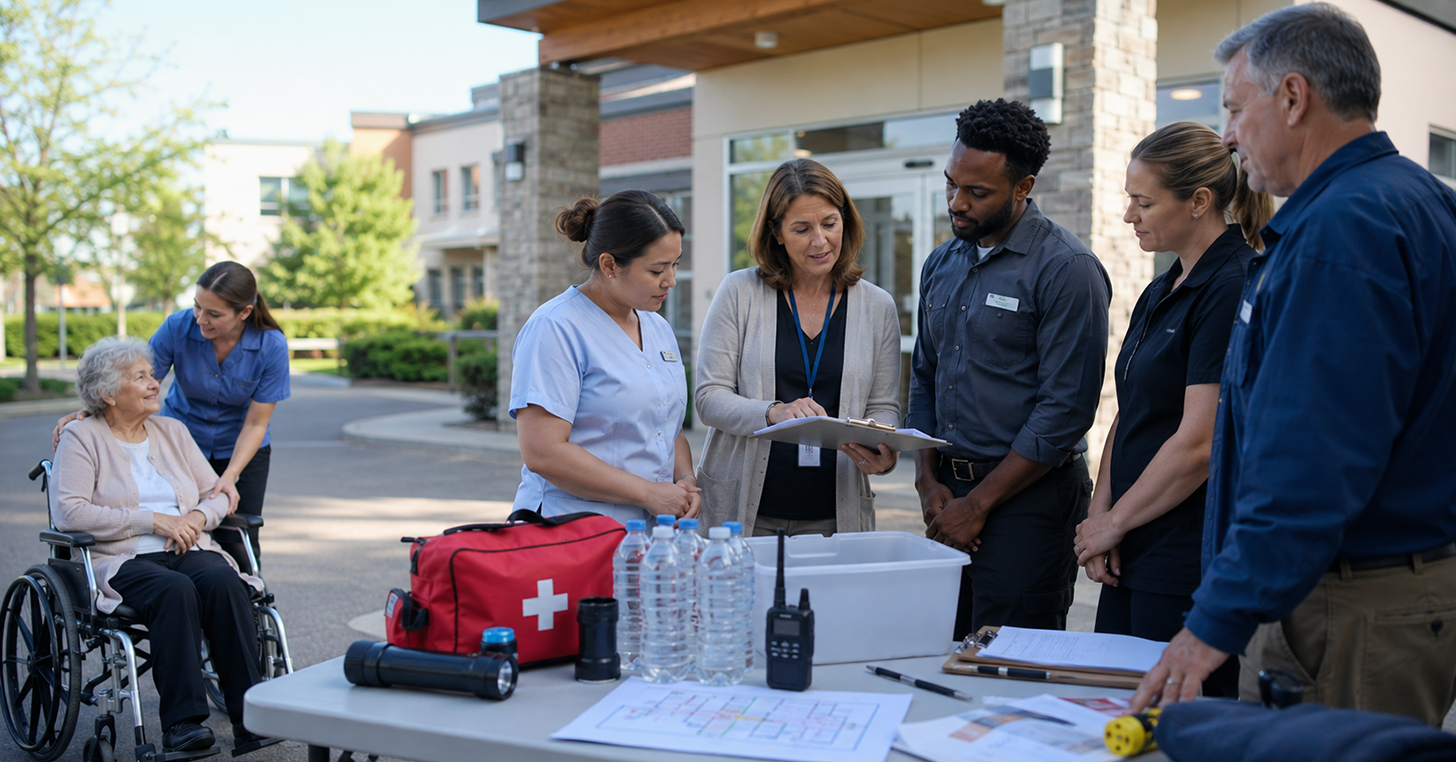
Emergencies can happen with little or no warning. Build or strengthen your emergency response plan to help your team respond clearly, safely, and with confidence.
Build an emergency response plan your team can act on
A clear emergency response plan helps protect workers, residents, clients, and visitors during a workplace emergency. It can help reduce confusion, speed response time, and guide people on what to do when every second matters.
In long-term care and home support, emergencies can take many forms. These may include wildfire, earthquake, fire, flood, power outage, medical emergency, chemical or drug exposure, biohazard cleanup, extreme weather, air pollution, communication loss, or loss of water supply.
Whether you are a front-line worker or part of the leadership team, everyone has a role in emergency preparedness.
Why emergency response planning matters
Employers are responsible for planning and preparing for workplace emergencies. A strong emergency response plan helps people respond safely and in an organized way. It can help save lives, prevent or reduce injuries, and protect property and operations from further harm.
It also helps workers know what to expect. When people understand the plan, where to go, who to contact, and what steps to take, there is less panic and less confusion during an emergency.
What workers need to know
Workers need to know their organization's emergency response plan and be trained on how to respond safely. They should understand:
The different parts of the emergency response plan
The types of emergencies that could happen in the workplace
What steps to take in different emergency situations
How emergency notifications will be shared
Who is on the emergency response team and how to contact them
Where emergency equipment is located and how to use it
Where to go during an evacuation, including the muster station or assembly area
What leaders need to plan for
Leaders play a key role in ensuring emergency response planning is practical, comprehensive, and understood across the workplace. This includes,
Identifying the emergencies that could happen in your workplace
Creating clear procedures for each type of emergency
Outlining roles and responsibilities
Setting up emergency communication methods
Identifying primary and secondary evacuation routes
Posting emergency procedures and maps where workers can access them
Reviewing first aid procedures and keeping supplies current
Making sure emergency supplies are available
Establishing procedures to support people with disabilities
Choosing an assembly area and a head-count process
Providing orientation and refresher training
Running drills at least once a year
Reviewing and updating the plan when gaps are found, when the workplace changes, or when regulatory requirements change
Include workers in the plan
Emergency response planning should not happen in isolation. Under the OHS Regulation, employers must involve the joint health and safety committee (JOHSC), worker representative, or other workers when developing key parts of the emergency response plan, including those related to hazardous substances.
Workers bring direct knowledge of day-to-day risks, routines, and challenges. Their input can help make the plan more practical and easier to follow in a real emergency.
Education opportunity
WHMIS Works
eLearning
This course familiarizes you with the WHMIS 2015 system and its workplace use. Learning about WHMIS 2015 is part of the knowledge you need to protect yourself and your co-workers from hazardous products.
An emergency response plan is a workplace plan that outlines what to do before, during, and after an emergency. It helps workers and leaders respond safely and clearly.
Everyone in the workplace should know the plan. Workers need to understand what to do in an emergency, and leaders need to make sure the plan is in place, communicated, and reviewed regularly.
The plan should reflect the risks in your workplace. Examples may include fire, earthquake, wildfire, flood, power outage, medical emergency, chemical exposure, biohazard cleanup, extreme weather, or communication loss.
Workers understand the workplace, the daily routines, and the risks. Their input can help make the plan more practical and easier to follow in a real emergency. Be sure to also consult your Joint occupational health and safety committee.
Workers should be trained on emergency procedures, communication methods, evacuation routes, muster stations, emergency equipment, and who to contact during an emergency.
Review and update your emergency response plan during annual reviews, when deficiencies are identified, when workplace changes occur, and when regulatory changes are made.
Yes. You should conduct emergency drills at least once a year and after any significant change to the emergency response plan for the workplace. Some examples of emergency drills include: fire, earthquake, and first-aid drills.
SafeCare BC offers general occupational health and safety consultation. This can include reviewing and supporting the development of an emergency preparedness plan.
You can find them on the WorkSafeBC website in the OHS Regulation, sections 4.13 to 4.18, along with the related guidelines.
Yes. Organizations can contact us at info@safecarebc.ca for support with creating an emergency response plan or with emergency preparedness questions.
Need support with your emergency response plan?
Reach out to us at info@safecarebc.ca for support with emergency preparedness planning, including review and development support for your emergency preparedness plan.
Emergency events such as severe flooding and landslides can occur with very little warning. When creating an emergency response plan for the workplace, considerations need to include planning for evacuation, rescue, and re-entry, when safe to do so.
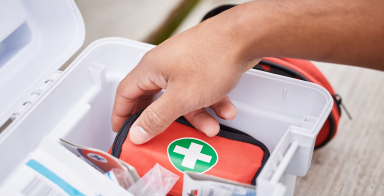
First aid drill package for care workplaces: plan annual drills, test response procedures, spot gaps, and document corrective actions before real emergencies.
Enhance workplace safety with our comprehensive First Aid Policy Template. Designed for businesses of all sizes, this essential document outlines critical first-aid procedures, equipment requirements, and employee training guidelines.
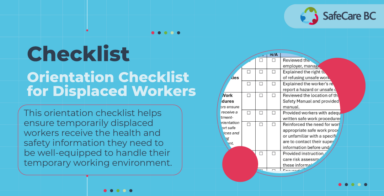
This orientation checklist helps ensure temporarily displaced workers receive the health and safety information they need to be well-equipped to handle their temporary working environment.
Hot summer weather brings increased potential for wildfires, resulting in poor air quality. Poor air quality impacts all British Columbians but can be particularly difficult for seniors, those that need to work in smoky conditions, and those with underlying health conditions - including respiratory illness.
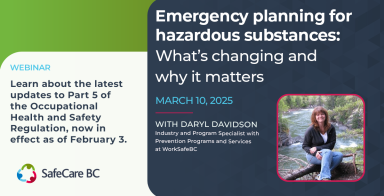
Join us for this important webinar on the latest updates to Part 5 of the Occupational Health and Safety Regulation, now in effect as of February 3, 2025.
Emergency plans in long-term care and home support need to account for care workers who may be affected by the same wildfire, flood, or evacuation. Leaders can strengthen preparedness by planning for accommodation, transportation, expenses,...
Emergencies can happen with little or no warning. That's why Rosemary Dunne of the Broadway Group wanted to be prepared for the unexpected. Her level of detail and commitment to creating a strong emergency plan...
Explore practical emergency planning resources, save 50% on WHMIS Works, celebrate Support Services Appreciation Day, and discover upcoming training opportunities.
It’s a sweltering July afternoon in Kamloops during a record-breaking heatwave. Temperatures climb above 40°C, air conditioners struggle to keep up, and staff in a long-term care home move quickly to help residents stay cool....
Emergencies such as floods, wildfires, power outages, and severe weather can occur without warning. Older adults are often the most vulnerable during these events because of health, mobility, and cognitive challenges. For workers in long-term...
In this edition 👇Trellis Seniors taps into something big at Safety Den👇Are you prepared for an emergency?👇 Where would you be without support services workers? 👇 Hearts and Hands sponsor spotlight 👇 Why can’t I sleep? Understanding...
Let's face it: emergencies don't wait for a convenient time. As a healthcare leader in British Columbia, you're responsible for the safety and well-being of your staff and those you care for. But are you...
As the amount of daylight increases and the frigid winter months come to an end, daylight saving time finally allows us to "spring forward." But have you ever considered the effects that one-hour change has...
A significant snowstorm has been forecast for your area. Snow has started falling heavily, making roads increasingly treacherous. Some staff members who live further away are already concerned about getting home safely, while others scheduled...
Stay up to date
Subscribe to our newsletter and stay up to date with all of SafeCare BC’s latest news.
To empower workplaces that provide care to create a culture of safety through evidence-based education, advocacy for safer workplaces, leadership, and collaboration
Stay up to date
Subscribe to our newsletter and stay up to date with all of SafeCare BC’s latest news.