Newsletter Issue
Health and Safety Matters - September 1, 2026
Infection Prevention and Control
Infection prevention starts with everyday practices.





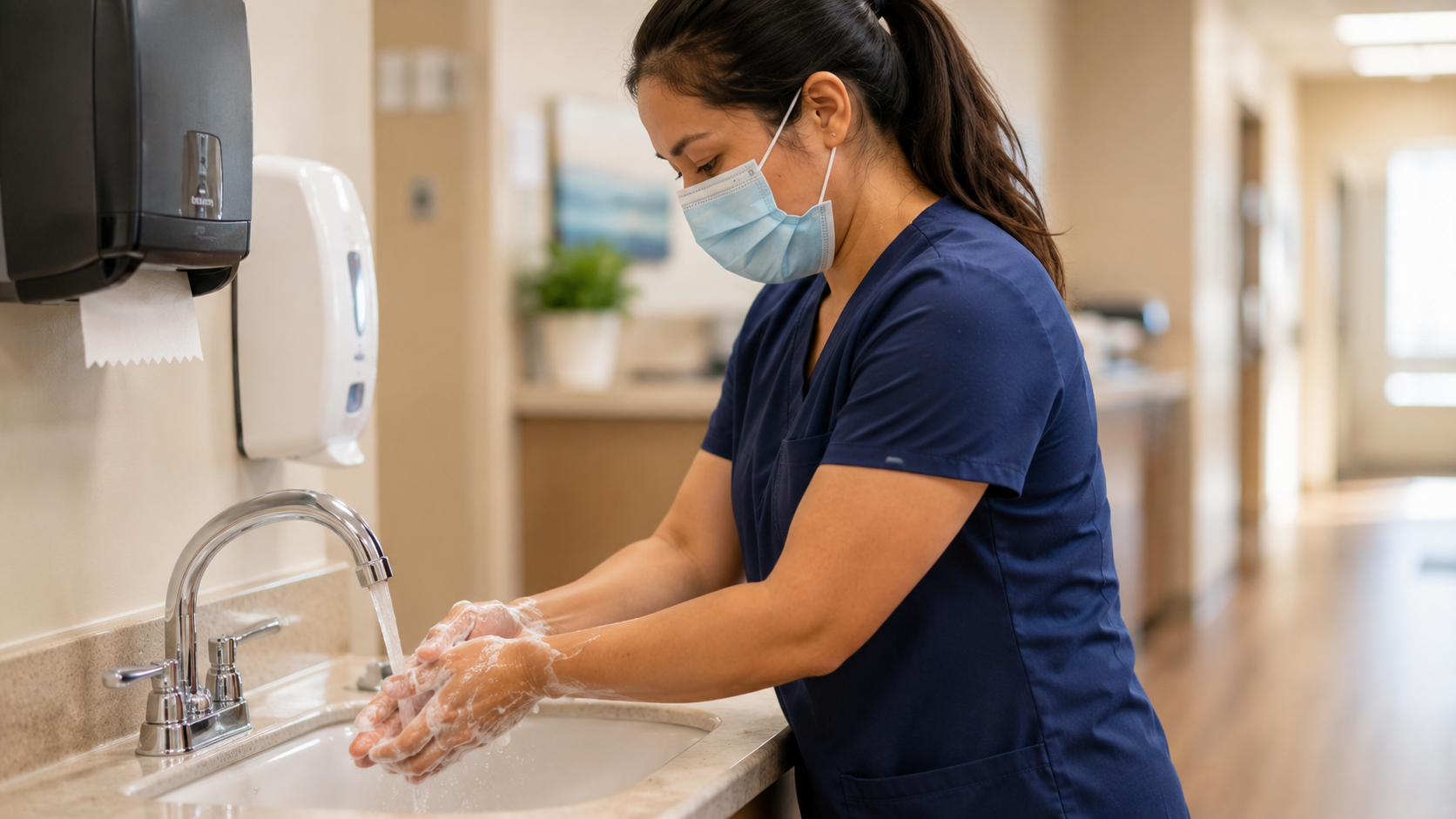
Infection prevention and control is part of safe care and safe work every day. It helps reduce the spread of infectious diseases among residents, clients, workers, visitors, and families.
No single action can prevent every exposure. Safer workplaces use several measures together, including risk assessment, workplace controls, hand hygiene, vaccination, cleaning and disinfection, safe sharps handling, personal protective equipment, training, reporting, and clear procedures.
Use current guidance. Follow your workplace procedures and any direction from your local health authority, the BC Centre for Disease Control, or public health. Infection-control measures may change during periods of increased risk or an outbreak.
Infectious diseases can spread in different ways. The controls you need depend on the infectious agent, the task, the care setting, and how exposure could happen.
Routine practices apply to every resident or client interaction. Additional precautions may be needed when a specific infection is suspected or confirmed, or when the point-of-care risk assessment identifies a higher risk.
Workers bring training, experience, and moment-to-moment judgement to each interaction. Employers are responsible for assessing workplace risks and providing the systems workers need to work safely. These include suitable controls, safe work procedures, supplies, equipment, education, supervision, and a clear way to report concerns and exposures.
Safety is not an individual task. Workers should not be expected to manage an infectious-disease risk without the information, time, equipment, staffing, training, and support needed to follow workplace procedures.
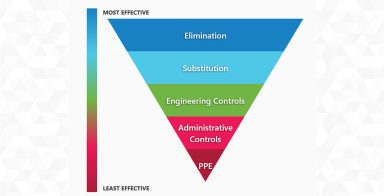
The hierarchy of controls helps workplaces choose ways to eliminate or reduce exposure. Start with the most effective controls that are reasonably possible, then use several controls together. Personal protective equipment is an important layer, but it should not be the only layer.
Use the setting-specific SafeCare BC hierarchy of controls for examples that can support an organization-specific risk assessment.
A point-of-care risk assessment is a quick safety check before and during an interaction. It helps you consider the person in care, the environment, the task, and yourself. Use it to decide whether it is safe to proceed and which controls or PPE you need.
Questions to ask before care
If the task is not safe, pause when you can. Follow workplace procedures, get help, use additional controls, and report the hazard. Do not continue with an unsafe task without the support needed to reduce the risk.
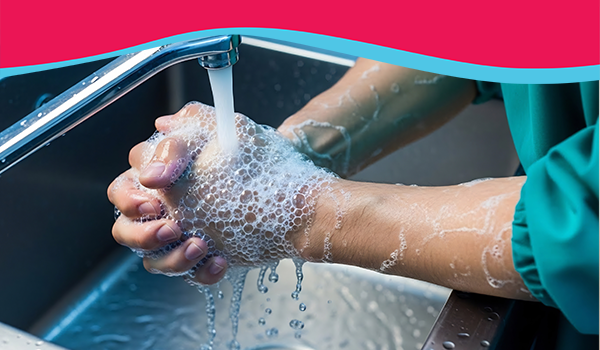
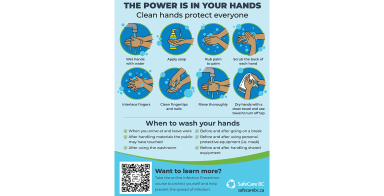
Hand hygiene is one of the most effective ways to reduce the spread of infection. Follow your workplace hand hygiene procedure. Clean your hands before and after caring for someone who is sick, after coughing or sneezing, after using or helping someone use the washroom, and after handling shared objects. Health care workers should also follow the hand hygiene moments and practices set by their workplace.
Immunization is one part of a layered prevention approach. Vaccines can help protect against severe illness from respiratory viruses that spread most often during fall and winter. Follow current provincial recommendations and your workplace requirements for influenza, COVID-19, and any other vaccines recommended for your role or personal health needs.
Follow your workplace cleaning schedule and safe work procedures. Clean and disinfect shared equipment and high-touch surfaces using products that are suitable for the task. Follow the product label, required contact time, ventilation instructions, and PPE requirements.
Choose PPE based on the point-of-care risk assessment, the task, the route of transmission, additional precautions, and workplace procedures. Put PPE on and remove it in the correct order to avoid contaminating yourself, your clothing, equipment, or the environment.
Long-term care brings many people together in shared living, care, dining, and work spaces. An infection can move through a home quickly if several layers of control are not in place.
In home and community health, the workplace changes from visit to visit. Workers may have less control over ventilation, space, household members, pets, cleaning supplies, and the home's condition. Planning before arrival is an important control.
Under section 6.34 of the Occupational Health and Safety Regulation, an employer must develop and implement an exposure control plan when a worker has or may have occupational exposure to a biological agent. The plan must be based on a workplace risk assessment and developed using the precautionary principle.
A plan is useful only when workers understand it and can follow it in real working conditions. Employers and leaders should:
Plan for changing risk. A workplace may need additional measures during an outbreak, a period of increased community transmission, or when public health issues new direction. Keep roles, decision points, supplies, and communication steps clear before risk increases.
A possible exposure can include a needlestick or sharps injury, a splash to the eyes, nose, or mouth, unprotected contact with blood or body fluids, or another incident identified in the workplace exposure control plan.
Employers should make post-exposure instructions easy to find and should not leave workers to navigate an exposure on their own.
Use the SafeCare BC tools on this page to assess risk, strengthen workplace controls, practice key skills, and build or review your exposure control plan. When conditions change, pause, reassess, and follow current workplace and public health guidance.
Infection prevention and control is a set of workplace practices and controls used to reduce exposure to infectious agents and help prevent their spread. It includes risk assessment, safe work procedures, hand hygiene, environmental cleaning, PPE, vaccination, education, reporting, and additional precautions when needed.
It is a quick safety check before and during care. The worker considers the person in care, the environment, the task, and themselves to decide whether it is safe to proceed and what controls or PPE are needed.
PPE depends on the task, the potential exposure, the route of transmission, additional precautions, and workplace procedures. Complete a point-of-care risk assessment and follow the current direction for your setting.
No. Clean your hands at the required times before putting on gloves and after removing them. Follow your workplace hand hygiene procedure.
Everyone has a role, but responsibilities are not the same. Workers follow procedures, assess risk, use controls, and report concerns. Employers assess workplace risks and provide effective controls, plans, procedures, equipment, supplies, education, training, supervision, and follow-up.
WorkSafeBC requires applicable exposure control plans to be reviewed at least annually and updated as needed. Review sooner when work, hazards, guidance, or controls change, or when an incident or evaluation shows the plan is not working as intended.
Use current information from BCCDC and the Provincial Infection Control Network, and follow direction from your local health authority, public health, and workplace infection-control team.


Infection prevention starts with everyday practices.
Discover the best way to celebrate your staff. Learn how you can mitigate the challenges of respiratory season.
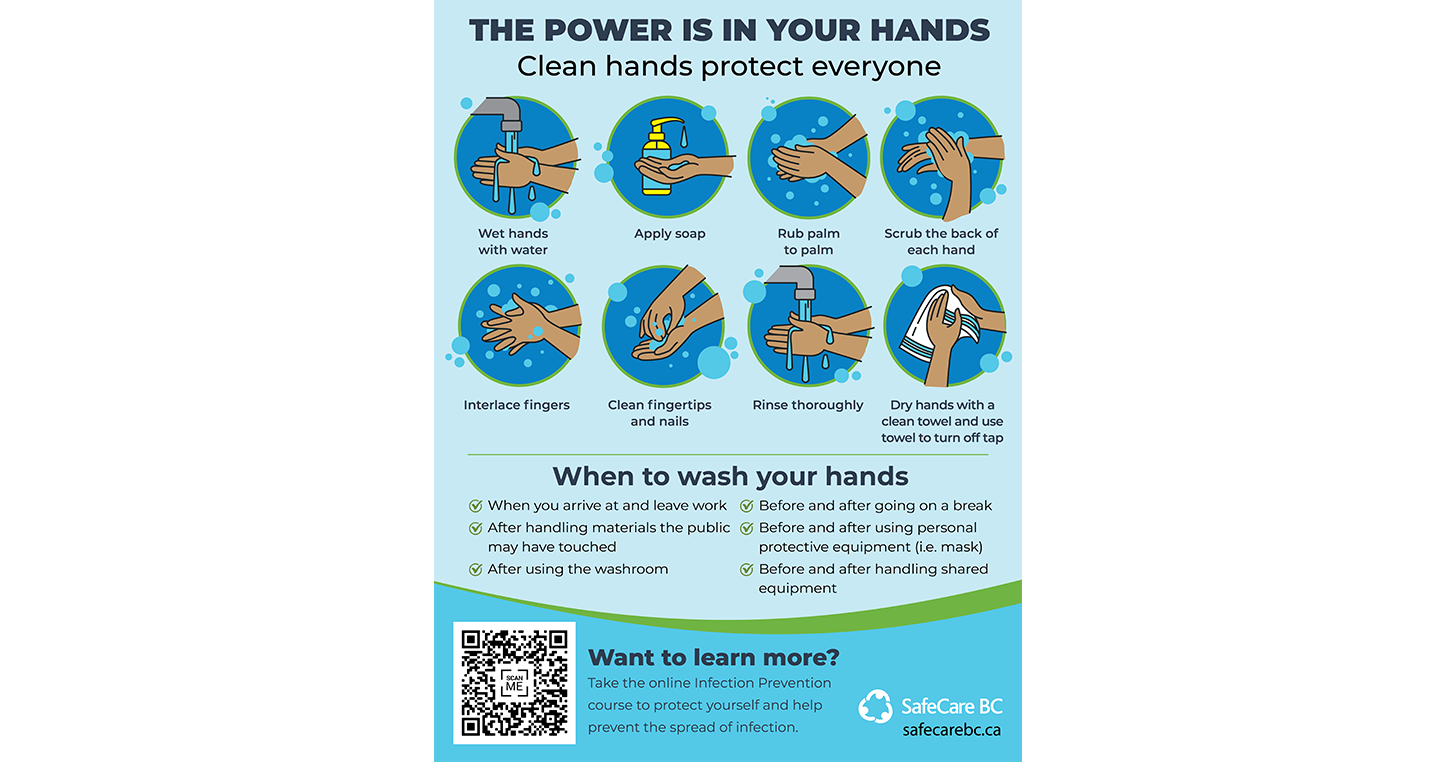
Use this poster to show the proper handwashing process.
In this huddle, we’ll review safe and effective cleaning and disinfecting practices in the workplace. Staff will learn how to follow workplace policies, clean and disinfect shared equipment and high-touch areas, and select the right...
Fall is just around the corner—and so is respiratory illness season. In this edition of Health and Safety Matters, find out how you can keep yourself and your community safe.
BC has declared the 2024-2025 respiratory illness season officially over.
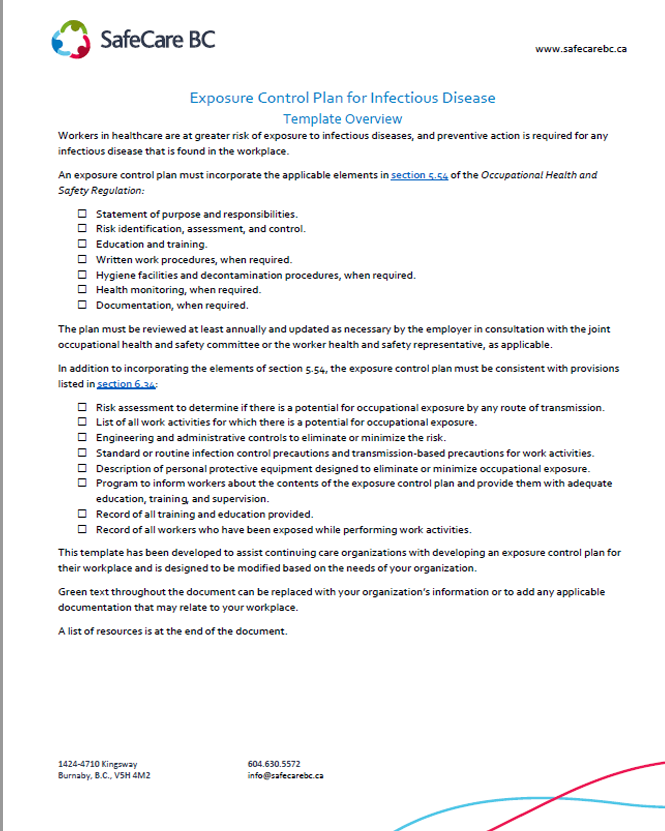
Workers in healthcare are at greater risk of exposure to infectious diseases, and preventive action is required for any infectious disease found in the workplace.