What if your words could build trust and boost teamwork?
It happened again—your colleague forgot to lock the supply cabinet. You’re frustrated. You want to tell them: “You always forget to lock the cabinet!”
But what if there was a better way to express your concerns? One that not only solved the problem but strengthened your working relationship?
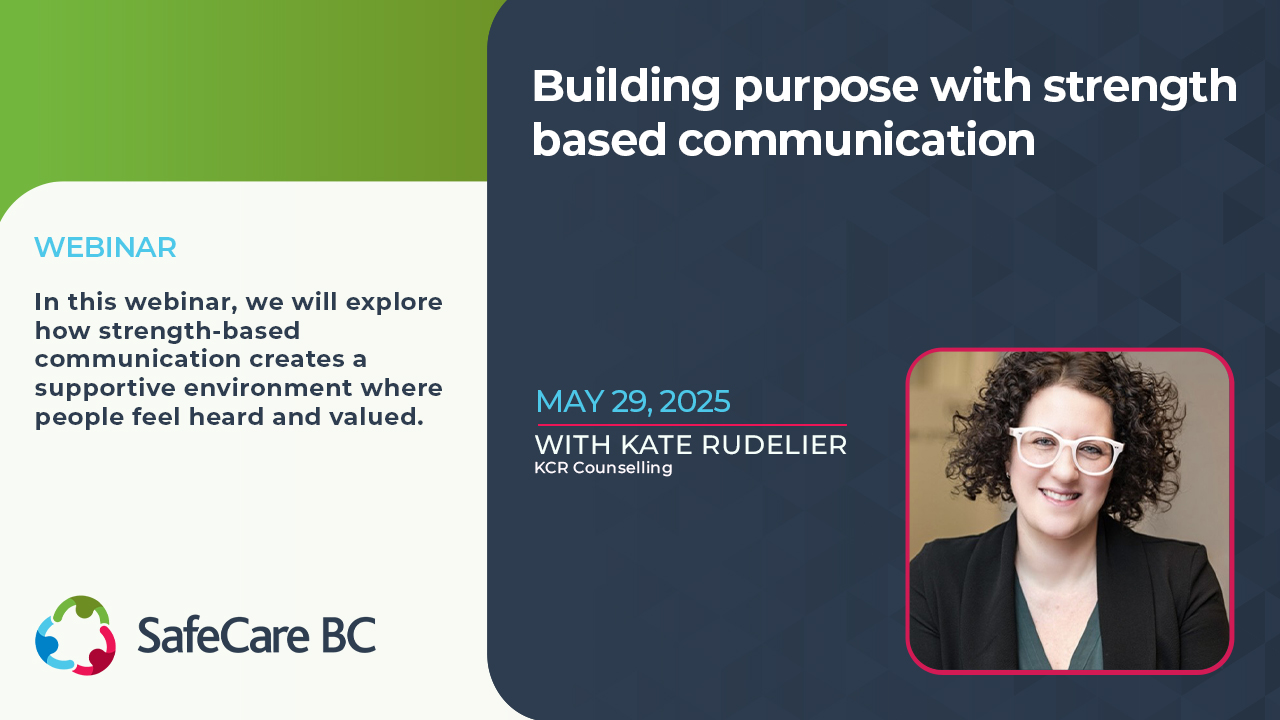
This is the power of strength-based communication—an approach that focuses on people’s strengths, abilities, and potential instead of their mistakes or shortcomings. Whether you’re supporting a teammate or providing feedback as a leader, strength-based communication helps build mutual respect and effective collaboration.
With this approach, you might instead say: “You’re really consistent with resident care and routines. Let’s use that same attention to detail to make sure supplies are secure after use.”
Notice the difference?
By shifting the focus from what is not working to what is working, strength-based communication creates a more positive, resilient, and collaborative workplace. It builds motivation, empowerment, trust, and a sense of being valued and recognized.
These outcomes directly support and foster psychological health and safety in the workplace. It also supports a trauma-informed workplace by reducing shame, building trust, and helping people feel emotionally safe.
How can you use strength-based communication in your day-to-day work?
- Be objective and descriptive: Focus on what you observe, not on judgments or assumptions.
- Avoid blame or criticism: Use respectful, collaborative language that focuses on solutions.
- Notice and name strengths: Recognize the positive actions of your colleague.
- “I appreciated how you helped out during the lunch rush.”
- “You responded so quickly to that spill—it kept everyone safe.”
And here’s an easy challenge:
Notice one strength in a colleague today, and tell them. A few words of recognition can go a long way.