SafeCare BC Logo
SafeCare BC Logo
Programs & Services

Programs and Services

View All
We are dedicated to providing comprehensive occupational health and safety (OHS) consulting services tailored to your needs.
View Service

Psychological health and safety, often called workplace mental health, encompasses principles and practices to foster a supportive, respectful, and psychologically safe work environment.
View Service

The Provincial Violence Prevention Curriculum is recognized as best-practice in violence prevention training for health care workers.
View Service
Toolkit

First aid drill package

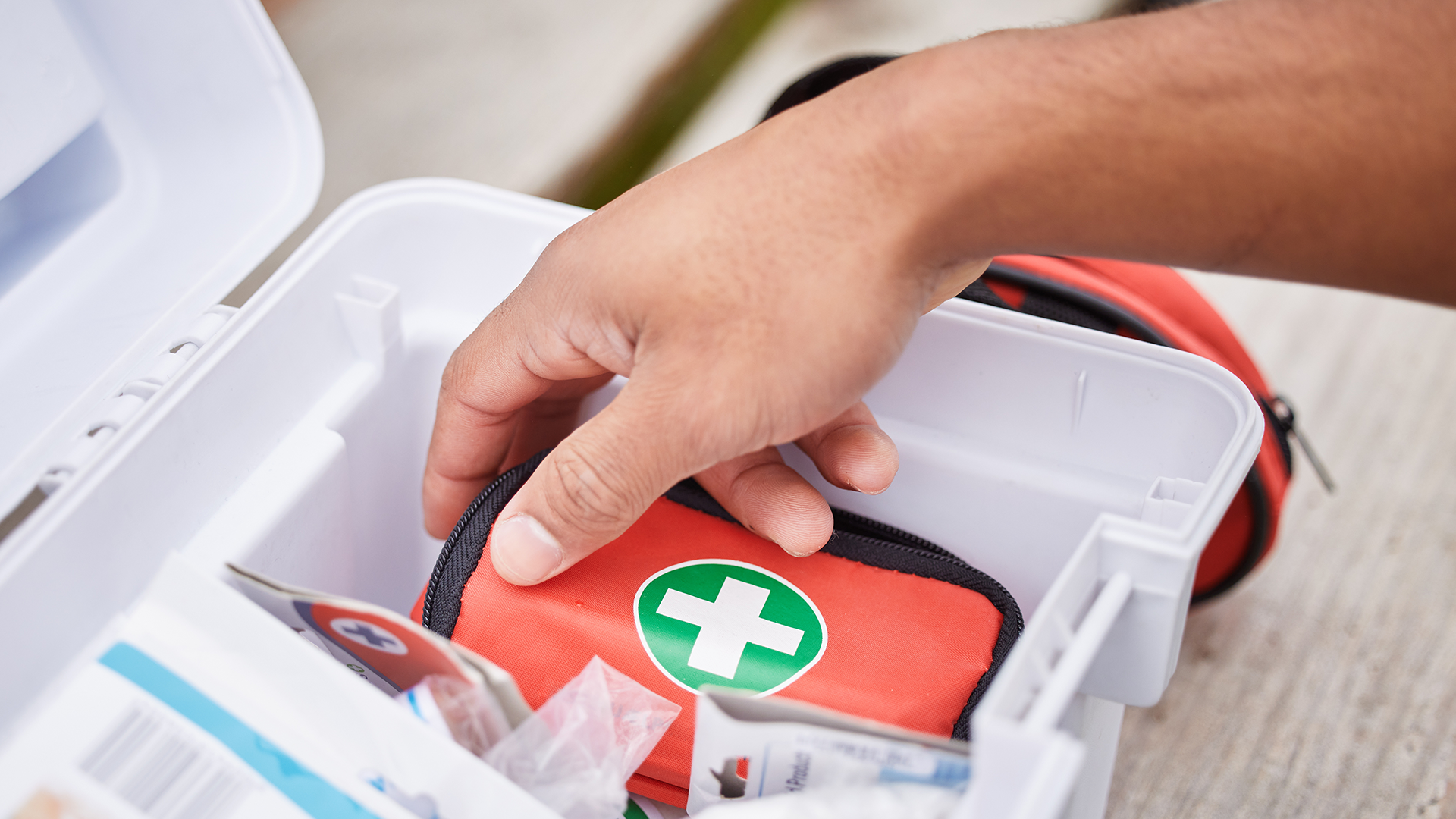
First aid drill package for care workplaces: plan annual drills, test response procedures, spot gaps, and document corrective actions before real emergencies.
First aid drill package

First aid drill package for care workplaces: plan annual drills, test response procedures, spot gaps, and document corrective actions before real emergencies.

Identify and improve first aid systems and procedures

This first aid drill package has been developed to help you identify and improve systems and procedures. First aid attendants are already certified - you are testing your workplace’s response procedures, not their clinical skills.

Downloads
First aid drill package
First aid drill package for care workplaces: plan annual drills, test response procedures, spot gaps, and document corrective actions before real emergencies.
  • Improve response time: Practice helps staff react quickly and calmly in real emergencies.
  • Build confidence and skill retention: Practice and repetition of first aid skills and techniques allow for increased comfort in using first aid kits and equipment and allow for skill retention.
  • Reinforce reporting procedures: Teach when and how to report injuries, even minor ones.
  • Test emergency systems and equipment: Ensure communication works and equipment is accessible and functional.
  • Identify gaps in training, procedures or equipment: Reveal issues like missing supplies, unclear roles, or slow responses.
  • Improve teamwork and communication: Clarify roles and improve communication so staff know exactly what to do.
  • Meet legal requirements: Meet WorkSafeBC’s annual requirement of conducting a first aid drill.
  • Promote a culture of safety: Encourage early reporting and show that safety is everyone’s responsibility.

Under Section 3.17 of the Occupational Health and Safety Regulation (OHSR) employers are required to:

  • Have clear, written first aid procedures that are communicated to workers.
  • Provide required first aid supplies, equipment, facilities, attendants, and services based on the workplace first aid assessment.
  • Prepare a written First Aid Assessment in consultation with the Joint Occupational Health and Safety (JOHS) Committee or worker health and safety representative.
  • Train workers on first aid procedures.
  • Conduct drills at least once per year and whenever procedures change, to test and confirm effectiveness.
  • Maintain confidential first aid records for a minimum of three (3) years.

Learn more about first aid requirements on the WorkSafeBC website.

A first aid drill is a structured practice activity that simulates a workplace injury and tests your organization’s response. The goal is to make sure your first aid procedures are effective and that everyone involved in responding to a worker injury (including first aid attendants, coworkers, supervisors, and those arranging  transport) understands and can perform their roles.

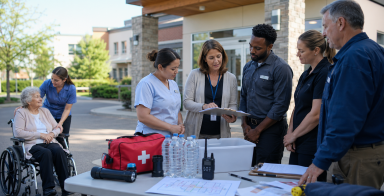
These drills are designed for use in long-term care and home care settings. They can be run by any designated facilitator, and participants should include any staff who would be involved if a worker were injured. This may include managers, team leads, care staff, and members of your JOHS Committee or Health and Safety  Representative.

Each drill begins with a realistic workplace injury scenario. The drill is acted out or discussed, and participants respond as if it were happening in real time. Drills can be facilitated by anyone designated, such as a manager, supervisor, JOHS committee member, health and safety representative, or clinical educator.

The facilitator:

  • Guides the team through the drill
  • Observes how the situation is handled
  • Notes how the injury is reported, how the first aid attendant responds, communication effectiveness, equipment access, and documentation procedures
  • Leads a debrief discussion to identify what went well and what needs improvement
  • Completes an action plan to address any gaps

Drills can be run with a full team or in smaller groups and conducted during safety meetings, education days, or safety huddles. The goal is to ensure your  workplace is prepared to respond quickly and effectively when a worker is injured.

First aid drill package

Additional Resources

Enhance workplace safety with our comprehensive First Aid Policy Template. Designed for businesses of all sizes, this essential document outlines critical first-aid procedures, equipment requirements, and employee training guidelines.
Files Attached
View Template
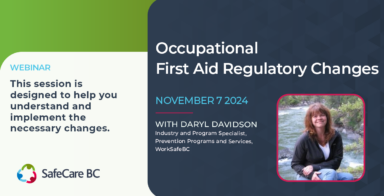
Have you integrated the new first aid requirements that came into effect on November 1? Join us on Thursday, November 7, from 11 a.m. – noon for a WorkSafeBC webinar on the new occupational first aid requirements. This session is designed to help you understand and implement the necessary changes. Join us, to learn more […]
View Webinar
Amendments to WorkSafeBC’s Part 3, Rights and Responsibilities, in the Occupational Health and Safety Regulation (OHSR) will be effective November 1, 2024. Some changes include: *WorkSafeBC defines long-term care and community health support services first aid requirements as a low hazard rating. While the related guidelines are not yet developed, find additional information on first […]
View News Story

More Toolkits

The Home Care and Community Health Support Pocketbook was created to bring awareness to several health and safety issues faced in home and community care.
Files Attached
View Toolkit
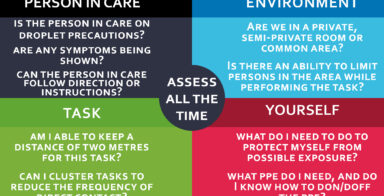
Viral respiratory illness introduces a new series of risks that change the way healthcare workers must work. We have created a new tool — a viral respiratory-specific version of the Point of Care Assessment — to help you stay on top of your workplace safety. The Point of Care Assessment serves as an informal reminder, […]
Files Attached
View Toolkit
Browse by Resource Type
SafeCare BC Logo
©2026 SafeCare BC | All rights reserved.
To empower workplaces that provide care to create a culture of safety through evidence-based education, advocacy for safer workplaces, leadership, and collaboration
crosschevron-down