SafeCare BC Logo
SafeCare BC Logo
Resources & Tools

Resources and Tools

View All
October 27 @ 12:00pm to 1:00pm
Learn practical communication tools to navigate challenging interactions while fostering a more respectful and psychologically healthy workplace.
View Webinar
Quality care is difficult to achieve when we do not routinely engage with one another in a positive, or civil, manner.
View Resource
Programs & Services

Programs and Services

View All
We are dedicated to providing comprehensive occupational health and safety (OHS) consulting services tailored to your needs.
View Service
Psychological health and safety, often called workplace mental health, encompasses principles and practices to foster a supportive, respectful, and psychologically safe work environment.
View Service
The Provincial Violence Prevention Curriculum is recognized as best-practice in violence prevention training for health care workers.
View Service
Guidelines & Regulations

Guidelines and Regulations

View All
WorkSafeBC has paused its consultations on proposed changes to the Occupational Health and Safety Regulation addressing psychological health and safety, harassment, and violence. The pause is due to the provincial election and is procedural; it does not indicate that a decision has been made about the proposed changes.  The proposals would introduce significant new and […]
View News Story
WorkSafeBC has paused its consultations on proposed changes to the Occupational Health and Safety Regulation addressing psychological health and safety, harassment, and violence. The pause is due to the provincial election and is procedural; it does not indicate that a decision has been made about the proposed changes.
View News Story
Get PSyched! - October 2026

Grief in caregiving work

A guide to understanding grief, recognizing its impact and supporting oneself and others after the loss or significant change of a resident or client.

Grief is a normal response to death or loss, and it can affect care workers in different ways. This guide explains how grief may show up in long-term care and home support, why acknowledging grief and loss matters, and how workers, teams, and leaders can support themselves and others.

Grief is part of caregiving work

Grief is the emotional, psychological and physical reaction to death or loss. In caregiving work, the death of a resident or client can be deeply difficult. Grief can also follow a significant change or decline in a person's condition, or when services are discontinued.

Caregiving is relational. Workers may spend weeks, months or years getting to know the people they support. Some relationships become close and may feel like family. Because of that connection, a loss can have a significant impact. Some losses may affect a worker more than others depending on the closeness or length of the relationship.

Repeated exposure to loss can also affect worker wellbeing. Staff should not be expected to become immune to grief or to stop feeling the impact of loss over time.

Grief can look different for everyone

There is no right or wrong way to grieve. A person's grief may be visible, quiet, or difficult for others to recognize. It may bring a range of feelings, including:

  • Anger
  • Sadness
  • Feelings of depression
  • Loneliness
  • Hopelessness
  • Numbness

People may respond differently to the same loss. Making room for those differences can help reduce judgement and stigma and also create more space for a person to work through their experience of loss.

Why recognition and support matter

Grief is an expected and normal part of caregiving work, but it should not be overlooked. When grief is not recognized, acknowledged or supported, it can affect a worker's physical and psychological wellbeing and may contribute to feelings of burnout.

Without appropriate support, caregivers may be left to navigate grief alone. Acknowledgement from coworkers and workplace leaders can help create space for grief and make support easier to access.

Ways workers can care for themselves and one another

Grief support begins with acknowledging that the feelings connected to loss are real. These strategies can help workers and teams respond with care:

  • Acknowledge your feelings. What you feel is valid, even if your response differs from someone else's.
  • Make room for other people's feelings. A coworker's grief may look different from yours. Hold space for their response without judgement or stigma.
  • Reflect on the value of your work. You may find meaning in the care and company you provided, the difference you made, the bond you shared, the appreciation you received or the honour of supporting someone at the end of life.
  • Use available supports. Ask what workplace grief supports and resources are available, including an employee assistance program (EAP), if offered by your workplace.
    [https://safecarebc.ca/topics/wellness-and-support-guide/]
  • Practise self-care at work and at home. Choose forms of care that are meaningful and realistic for you. Self-care can be one part of support, alongside the support from your coworkers.

How workplaces can support staff through grief

Workplaces can help by recognizing loss, making support visible, and giving staff opportunities to acknowledge what has happened. Depending on the workplace and the needs of the team, this may include:

  • Formal or informal debriefings
  • Peer support gatherings
  • Memorial rituals or services
  • Grief support for staff
  • Education and training related to death, dying and grief
  • Clear information about available resources, including the employee assistance program, where available

Support should recognize that people grieve differently. Staff should be able to access help without judgement or pressure to respond in a particular way.


Grief is the emotional, psychological, and physical reaction to death or loss. It is an expected human response, and each person may experience it differently.

Yes. Grief may follow a significant change or decline in a resident's or client's condition. It may also happen when services are discontinued, and the caregiving relationship ends.

Yes. Loss is an inevitable part of caregiving work, and grief is a normal response. Staff should not be expected to become immune or desensitized to it.

The impact of a loss may be shaped by how close the relationship was and how long you knew or supported the person. A strong reaction to one loss does not mean you responded incorrectly to another.

Grief can include anger, sadness, feelings of depression, loneliness, hopelessness, or numbness. It is not always visible, and there is no single right way to experience it.

Acknowledge that their feelings are valid, even if their response looks different from yours. Make space for them without judgement or stigma and remind them of available workplace supports when appropriate.

Workplaces can recognize the passing of a resident or client, offer formal or informal debriefings, support peer gatherings or memorial practices, provide education about death and grief, and make staff support resources easy to find.

Ask your supervisor or workplace contact about grief support and other available resources, including an employee assistance program, if your workplace offers one.

Check our our Wellness and Support Guide for more resources.

Grief in caregiving work

Featured Resources

Providing compassionate end-of-life care is a profound part of the job, but it can also lead to grief and loss for frontline staff. This can impact well-being and team morale. Fostering a workplace culture where open conversations about grief are supported is crucial for the health and safety of your team. Discover how to recognize grief in the workplace and provide essential support to your healthcare staff.
Files Attached
View Safety huddle
Share a reflection with staff that providing end-of-life care is one of the most important and compassionate parts of the work they do in long-term care.
Files Attached
View Safety huddle
Resources and services to support your well-being and psychological safety at work.
View Safety Topic
Grief in caregiving work

Videos

Learn about the emotional side of coping with grief and change.
View Webinar
In this one-hour session with registered Nurse Sosa Eweka, we explore the question: "How much does stress impact how we show up every day?"
View Webinar
Explore how grief presents itself in care environments and find ways to support both yourself and others through the experience.
View Webinar
Build resilience, find strength in community, and use innovation to support your well-being.
View Webinar
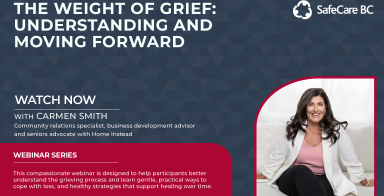
This compassionate webinar is designed to help participants better understand the grieving process and learn gentle, practical ways to cope with loss, and healthy strategies that support healing over time.
View Webinar
Filter

Grief in caregiving work resources

Resource Types

Resource Post Type Filter
  • Posts (327)

Audiences

Post

Jody Braam on listening beyond words in dementia care 

Alzheimers, Communication, Dementia, Grief, Mental Health, Person-centered care, Psychological Health and Safety, Resilience, Self-talk, Stigma, Stress

This fall, the Hearts and Hands conference for health care assistants will bring frontline care workers together for a day of learning, connection and celebration. In Langley, Jody Braam will lead a breakout session exploring...

Post

Brandi Heather on making space for play at Hearts & Hands 

Balance, Boundaries, Burnout, Civility and respect, Clear leadership, Collective Care, Communication, Emotional Intelligence, Empathy, Engagement, Grief, Growth and development, Harassment, Leadership, Mental Health, Moral distress, Organizational culture, Psychological Health and Safety, Resilience, Self-care, Self-talk, Stigma, Stress, Suicide, Trauma, Work-life balance

There’s a strange thing that happens when you become very good at holding everything together. People stop asking if you are okay.  You show up, do the work, care for the people who need you...

SafeCare BC Logo
©2026 SafeCare BC | All rights reserved.
To empower workplaces that provide care to create a culture of safety through evidence-based education, advocacy for safer workplaces, leadership, and collaboration
cross