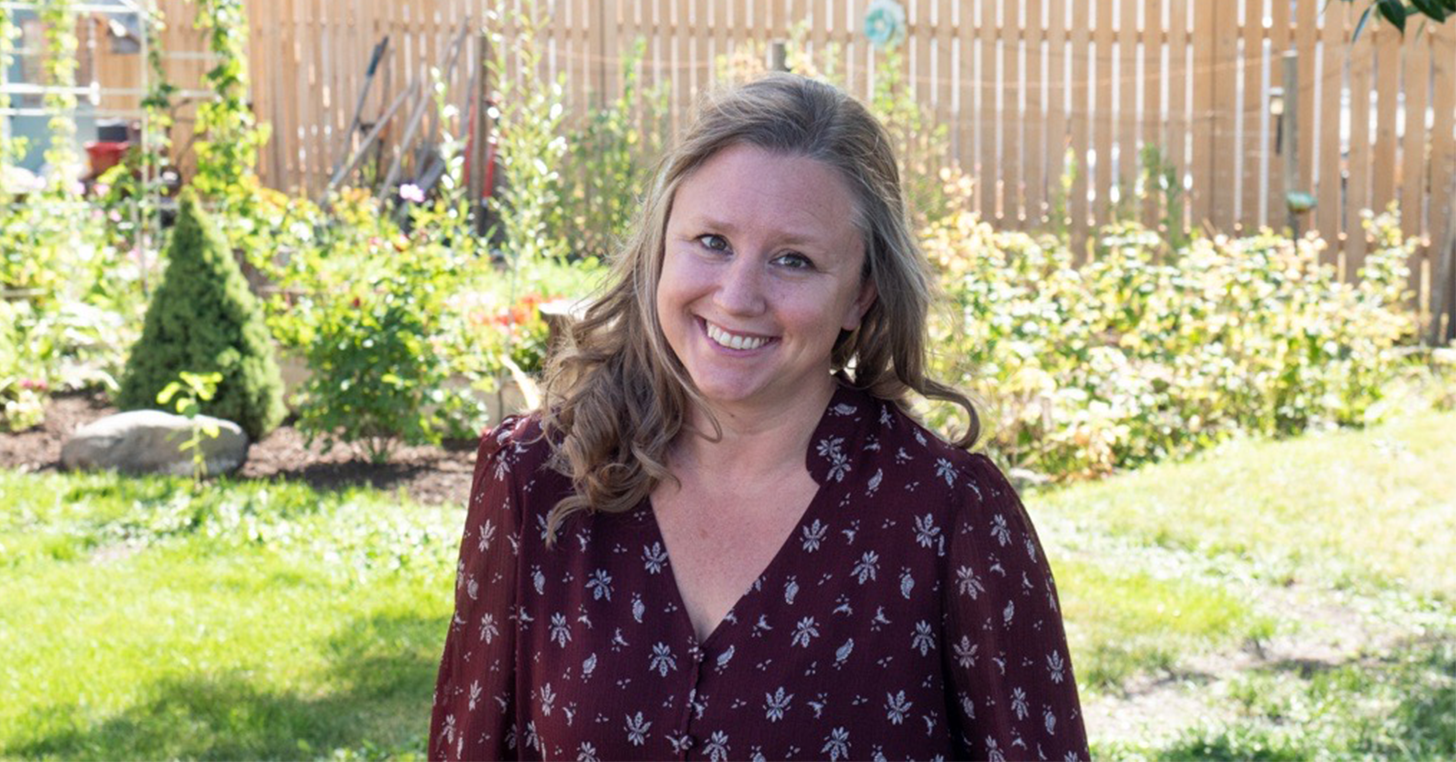
This fall, the Hearts and Hands conference for health care assistants will bring frontline care workers together for a day of learning, connection and celebration. In Langley, Jody Braam will lead a breakout session exploring what it means to truly listen in dementia care, even when words are no longer there.
Jody Braam was 15 when she first realized something was changing with her dad.
Initially, she thought it was the kind of tension many teenagers have with a parent. He was becoming harder to understand; relationships were strained and some of his decisions didn’t make sense. Then, her family learned he had Huntington’s disease, a progressive neurological condition that would go on to reshape much of their lives.
Understanding what was happening to her dad was only one part of it. Jody soon learned she had a 50 per cent chance of inheriting the disease herself. At 18, she travelled to Alberta to be tested and learned, thankfully, she didn’t carry the gene. It was a relief, but one tempered by the fact that other members of her family did.
The experience left Jody with questions that consumed her. She wanted to understand what was happening in the brain, why behaviour could change so dramatically and how families could cope with something they had so little control over.
Her curiosity eventually led her to psychology, then deeper into mental health and health care. She earned a psychology degree and is now completing a master’s degree in health care leadership. Even with all that formal education, some of the lessons that shaped her most came from years spent beside her dad.
As Huntington’s progressed, the way they communicated began to change.
Her dad could no longer speak and had very little intentional movement. Conversations as Jody had once known them were gone. Still, she could tell he was trying to reach her.
So, she started listening differently.
Instead of waiting for words, she began watching his eyes and facial expressions. She listened for the small sounds he could still make and gave him enough time to process what she was saying. Gradually, she realized he was in pain.
“I was like, yes, you are communicating. I’m here. I’m listening. I love you, Dad. I got this,” she remembers.
Jody advocated for him, he received the care he needed and became more comfortable. It wasn’t that long till Jody saw him smile again.
It was one of the last smiles she remembers seeing from him.
Her dad had taught her something she would carry forward: when words change or disappear, communication is still happening.
“He taught me how to communicate and listen to his behaviour as communication,” she says.
Today, that understanding is woven through Jody’s work with the Alzheimer Society of B.C. and Yukon. She works with people across care homes, including health care assistants, nurses, dietary staff, administrators and others, helping them strengthen person-centred care.
For Jody, standing in those rooms means something personal. She spent close to a decade alongside her dad in care and saw how hard it could be for staff to understand him. She saw turnover, difficult days and moments when everyone was trying to figure out what his behaviour meant. Through it all, she developed a deep appreciation for the people who kept showing up.
Now, those same care workers are teaching her.
In her workshops, Jody hears stories about what staff notice on the floor and the small decisions that can change a resident’s day. One story involved a brand-new health care assistant graduate who questioned what was happening with a long-term resident. Others knew the resident well, but the new graduate noticed something different and kept asking questions. Her observations helped uncover what was really going on and ultimately changed the resident’s care.
Stories like that stay with Jody because they show how much knowledge health care assistants build simply by knowing the people they care for.
They notice when someone who usually chats becomes quiet. They recognize the expression that means discomfort, the routine that helps someone settle or the reaction that feels slightly different today. Over time, those details become a kind of language.
Jody wants health care assistants to trust the value of that knowledge.
She also knows how easily fear can get in the way. Having lived with Huntington’s in her family for decades, Jody understands the instinct to protect someone from everything that might happen next. But when fear takes over, she says, it can become harder to see the person who is still right in front of you.
“They miss the joy and they miss all of the absolute gold that is still there,” she says.
Jody calls the alternative “radical acceptance”: making room for the person’s choices, personality, humour and way of experiencing the world, even as their needs change.
That perspective will be the core of her breakout session at Hearts & Hands in Langley. Through interactive activities, Jody hopes participants experience person-centred care in a way that feels familiar because, in many cases, they’re already practicing it.
She wants them to leave recognizing that taking time to understand a resident is part of the expertise they bring to their work. A demanding shift may end with sore feet and a list of things that didn’t go perfectly. Yet Jody says there can still be one moment you carry home with you: I got them to smile today.
“It’s satisfying on a soul level,” she says.
For the health care assistant who notices something others miss, who waits a few extra seconds for an answer or who finds a way to understand a resident on a difficult day, Jody hopes her session offers some validation.
“Taking that time is exceptional professional care,” she says.
Because in dementia care, the difference between being cared for and being understood can come down to one person who pays attention.
Hear more from Jody at Hearts and Hands in Langley. Join health care assistants from across B.C. for a day of learning, connection and celebration.
Purchase your tickets at heartsandhands.ca.