Webinar
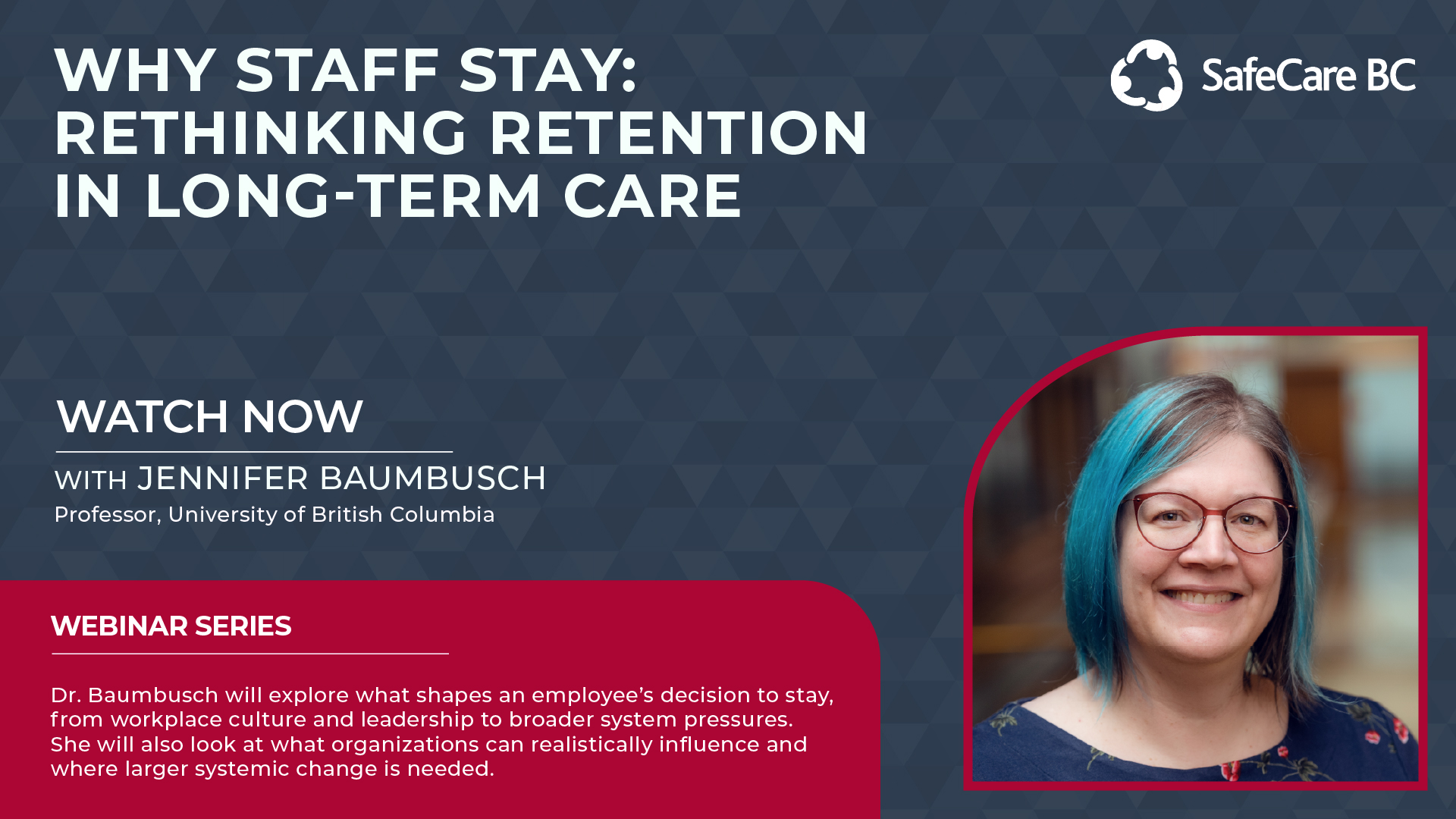
Why staff stay: Rethinking retention in long-term care
Organizational culture, Psychological Health and Safety
This webinar explores what organizations can realistically influence and where larger systemic change is needed.







This webinar explores what organizations can realistically influence and where larger systemic change is needed.
There’s a strange thing that happens when you become very good at holding everything together. People stop asking if you are okay. You show up, do the work, care for the people who need you...
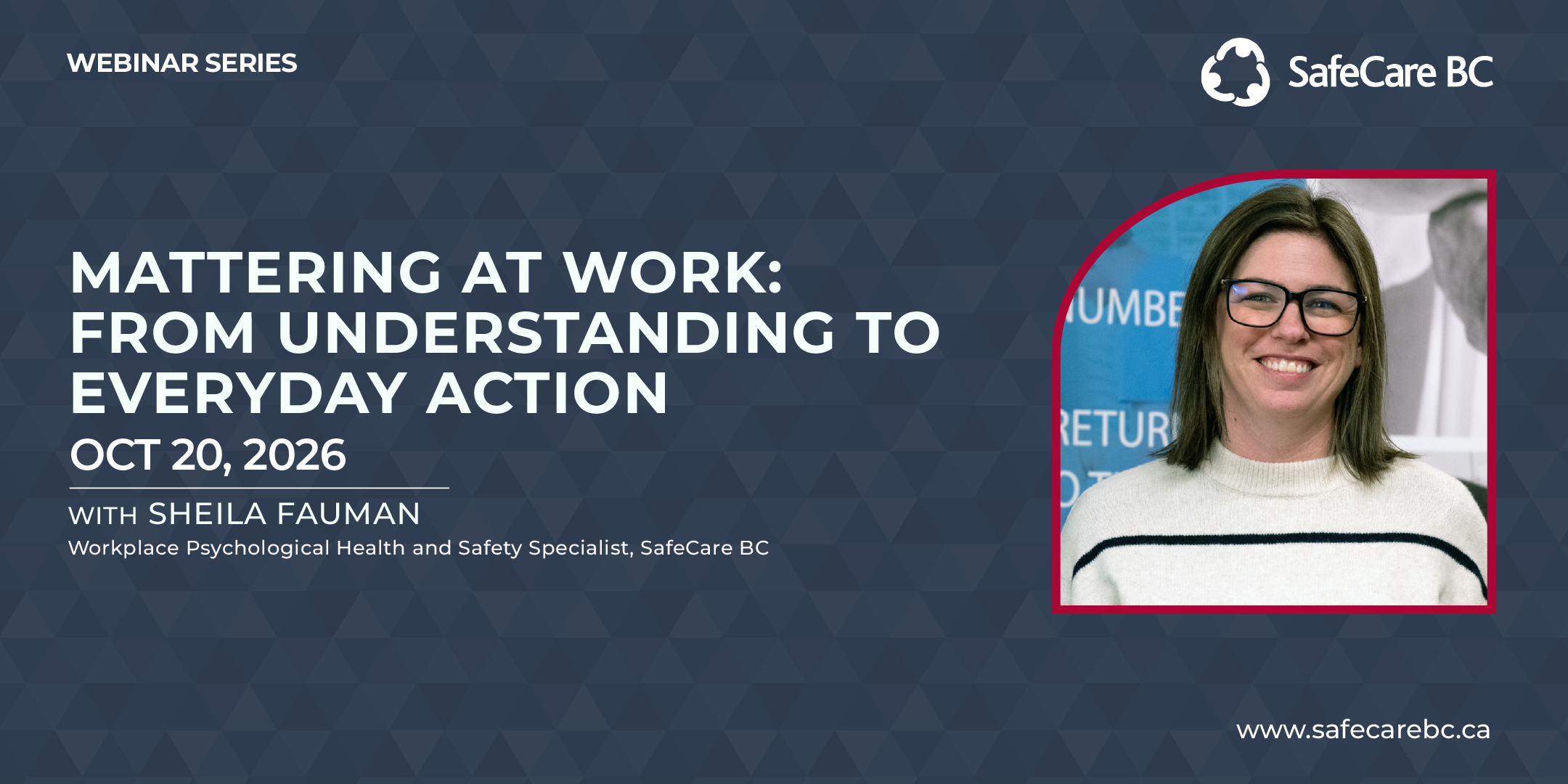
In this Ask Me Anything session, we will explore what mattering means in the workplace, why it is particularly important in work centred on caring for others, and how it can influence employee wellbeing, connection,...
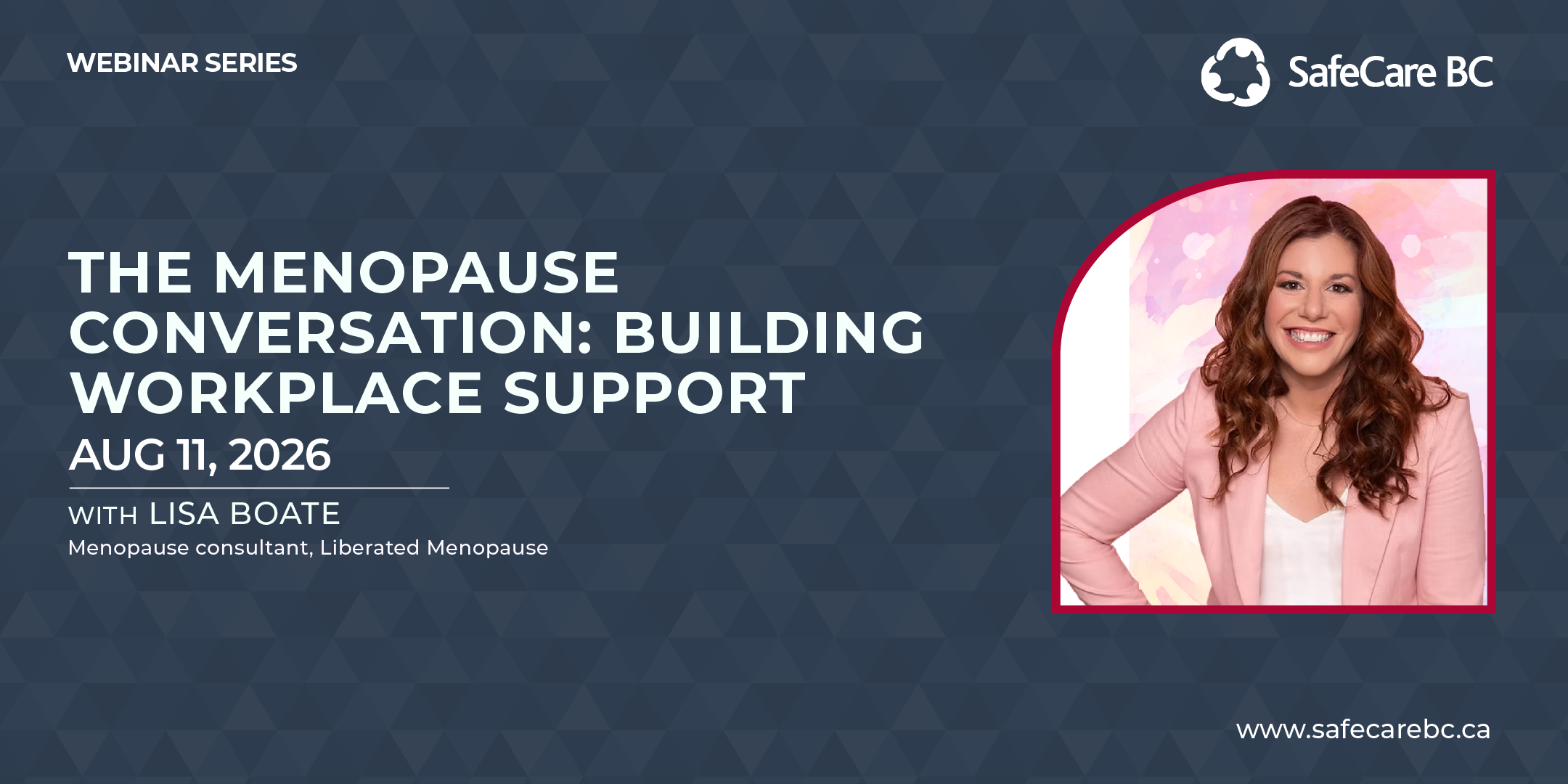
This practical and engaging session breaks down what every worker and leader needs to know about menopause.
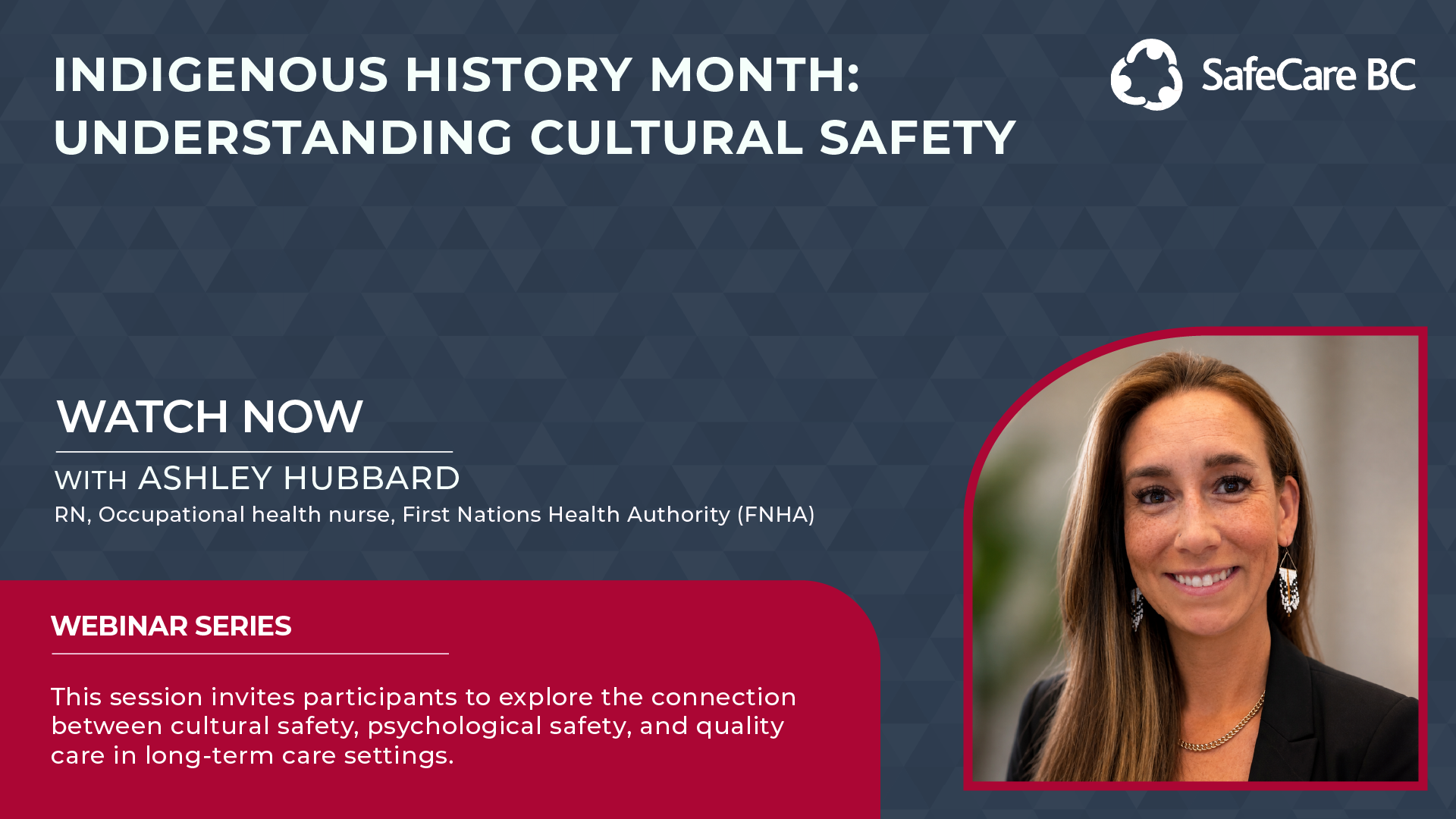
This session invites participants to explore the connection between cultural safety, psychological safety, and quality care in long-term care settings.
It didn’t start with leadership. Karen Tasker’s journey at Sienna Senior Living’s Lakeview Lodge Community, in West Kelowna, began in 2013, when she returned to the workforce after 14 years as a stay-at-home mom. Her...
“When I saw the participation rate, which was way above 90 per cent of our care staff who took the training, I thought, okay, there is something here,” says Loren Tisdelle, human resources director at Louis Brier...
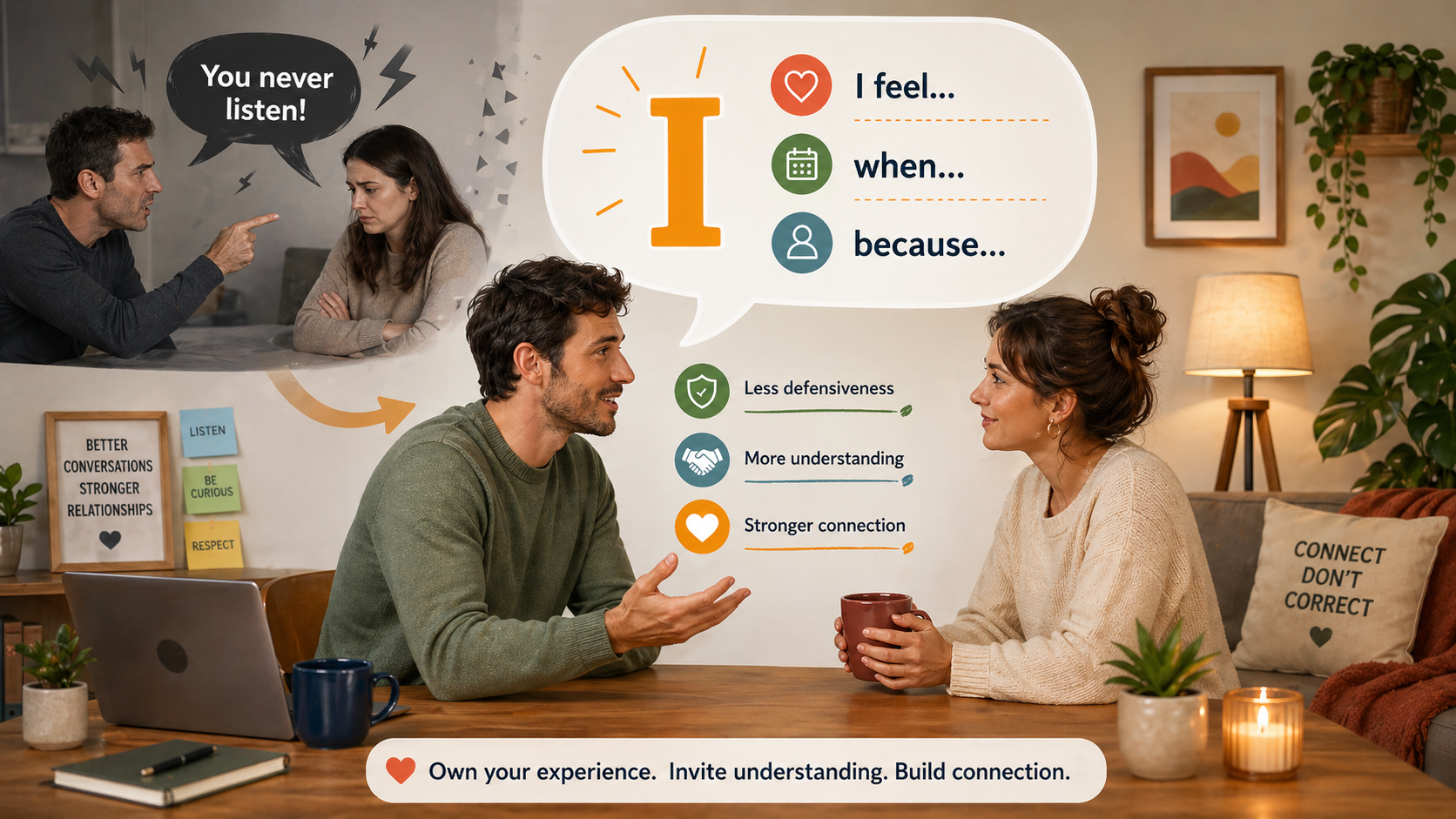
Workplace communication improves when teams use strength-based language, I statements, objective words, and curiosity to build trust.
“I” statements help shift difficult conversations from blame to connection. By focusing on your own feelings, the situation, and its impact, you can reduce defensiveness, improve understanding, and build healthier communication habits at work and...
This safety huddle can be used to lead a discussion on how assuming positive intent can reduce workplace tension.