SafeCare BC Logo
SafeCare BC Logo
Programs & Services

Programs and Services

View All
We are dedicated to providing comprehensive occupational health and safety (OHS) consulting services tailored to your needs.
View Service
Psychological health and safety, often called workplace mental health, encompasses principles and practices to foster a supportive, respectful, and psychologically safe work environment.
View Service
The Provincial Violence Prevention Curriculum is recognized as best-practice in violence prevention training for health care workers.
View Service
Guidelines & Regulations

Guidelines and Regulations

View All
WorkSafeBC is holding a second public hearing this month on proposed changes to the Occupational Health and Safety Regulation related to combustible dusts.
View News Story
Amendments to the Occupational Health and Safety Regulation (OHSR), Part 5: Chemical Agents and Biological Agents – Emergency Planning came into effect on February 3, 2025. Changes include additional requirements to minimize the risk, likelihood, and harm caused by an emergency involving hazardous substances.   Hazardous substances include biological, chemical or physical hazards that may reasonably […]
View News Story
Safety huddle

Refusal of unsafe work

Learn when workers can stop unsafe tasks, report concerns, and follow the right process to stay safe.
Refusal of unsafe work | Safety huddle

Learn when workers can stop unsafe tasks, report concerns, and follow the right process to stay safe.

After this huddle, staff should be able to:

  • Recognize when a worker has the right to refuse unsafe work.
  • List the first steps to take when they believe work is unsafe.
  • Locate the formal process for refusing unsafe work.

How to run the safety huddle

As the huddle leader, do the following:

Before the Huddle

  • Review the huddle content and huddle leader notes.
  • Prepare copies of the SafeCare BC Refusal of Unsafe Work Toolkit.
  • Prepare copies of your organization’s written work refusal procedure.

During the huddle

  • Review your organization’s process for reporting unsafe or harmful acts or conditions.
  • Review the three-step process for investigating a refusal of unsafe work from the toolkit.

Leading the discussion

  • Select a scenario relevant to your workplace and read it aloud to participants.
  • Allow time for participants to work through the scenario using the toolkit.
  • Use guiding questions and huddle leader notes to facilitate the discussion.
  • Keep the discussion focused and within 5–10 minutes.

Scenario for long-term care

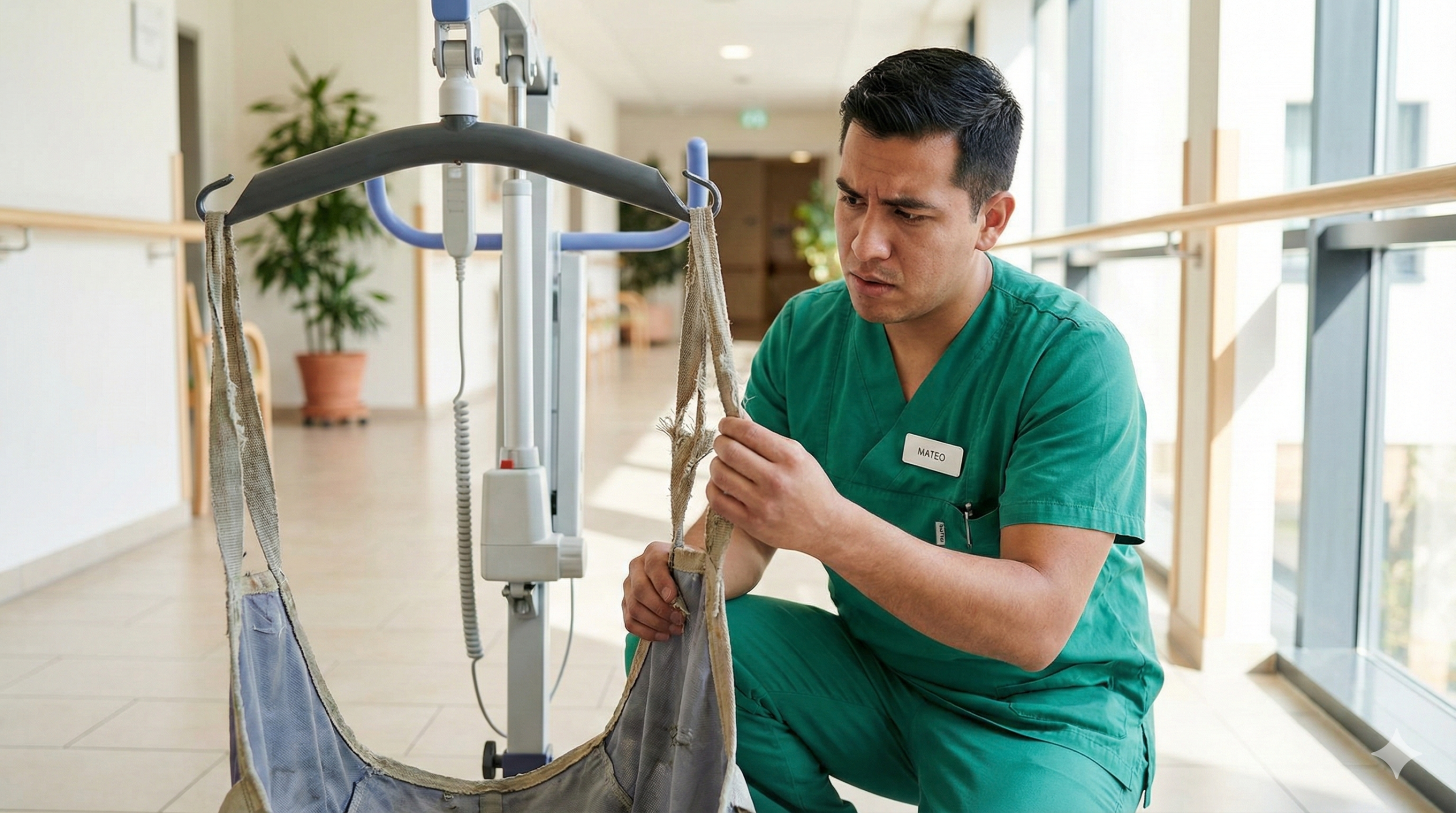
  1. Jenna is assigned to transfer a resident using a ceiling lift. As she prepares for the task, she notices the ceiling lift is not functioning properly. The ceiling lift jerks while moving and makes unusual noises. Concerned for both her safety and the resident’s, Jenna stops the task and reports the issue to her supervisor, stating that she does not feel safe using the equipment.
  2. Aaron is tasked to transfer a resident using a sit-to-stand lift. He has not received any training on how to use the lift and feels unsafe completing the transfer. He reports his concern to his supervisor, saying that he feels unsafe using equipment he hasn’t been trained to use.

Scenario for home care

  1. Maria, a health care assistant, arrives at a client’s home and finds the client’s adult son visibly intoxicated and yelling angrily about the home care agency. He blocks the hallway and moves towards her, and Maria feels at risk of violence. She tells the client she cannot stay because she feels unsafe, leaves the home, and immediately calls her supervisor to report the situation.

Guiding questions

  • Why did the worker in the scenario stop work and report this issue?
  • What steps should the supervisor take after the worker reports the issue?
  • What other steps should be taken if the issue is not resolved?
  • If you were unsure about the refusal of unsafe work process, where would you go or who would you ask for help?
  1. Create a safe space:
    • Listen, respect all views, and be mindful of others’ challenges.
    • Guide the discussion to focus on what participants can control.
    • Move the conversation from complaints to solutions, strengths, and helpful actions.
    • Invite anyone with specific concerns to talk with you after the huddle.
  2. Key discussion points: Use the objectives and key discussion points below to guide the huddle if needed.
    • What does the right to refuse unsafe work mean? Workers in British Columbia have the right to refuse work they believe is unsafe. If a worker observes a task or condition that appears unsafe or harmful, they must stop the task and report the concern to their supervisor as soon as possible.
    • Reinforce with staff that the first step in refusing unsafe work is to not do the task and report it as soon as possible to
      their supervisor.
    • Show staff where they can find your organization’s written work refusal procedure and the SafeCare BC Refusal of Unsafe Work Toolkit for future reference


Huddle leader notes

  1. Create a safe space:
    • Listen, respect all views, and be mindful of others’ challenges.
    • Guide the discussion to focus on what participants can control.
    • Move the conversation from complaints to solutions, strengths, and helpful actions.
    • Invite anyone with specific concerns to talk with you after the huddle.
  2. Key discussion points: Use the objectives and key discussion points below to guide the huddle if needed.
    • What does the right to refuse unsafe work mean? Workers in British Columbia have the right to refuse work they believe is unsafe. If a worker observes a task or condition that appears unsafe or harmful, they must stop the task and report the concern to their supervisor as soon as possible.
    • Reinforce with staff that the first step in refusing unsafe work is to not do the task and report it as soon as possible to their supervisor.
    • Show staff where they can find your organization’s written work refusal procedure and the SafeCare BC Refusal of Unsafe Work Toolkit for future reference

Downloads
Refusal of unsafe work | Safety huddle
Learn when workers can stop unsafe tasks, report concerns, and follow the right process to stay safe.
Download
204.1KB
Refusal of unsafe work

Additional Resources

Understand the right to refuse unsafe work. Follow the step-by-step process from initial work refusal, through investigation, and contacting WorkSafeBC. Includes templates and resources.
Files Attached
View Toolkit

More Safety huddles

Learn when workers can stop unsafe tasks, report concerns, and follow the right process to stay safe.
Files Attached
View Safety huddle
Equip your team with the skills to spot workplace hazards before they cause an injury. This safety huddle guides staff through conducting an environmental scan, a key part of any point of care risk assessment. Discover how to build a proactive safety culture and protect your healthcare team.
Files Attached
View Safety huddle
In this huddle, we’ll review safe and effective cleaning and disinfecting practices in the workplace. Staff will learn how to follow workplace policies, clean and disinfect shared equipment and high-touch areas, and select the right personal protective equipment (PPE) for different cleaning tasks. We’ll also cover where to find important information such as safety data sheets and product labels, which explain safe handling and spill response procedures. Use the guiding questions to spark discussion about common high-risk areas, frequently shared items, and strategies for reducing the spread of infectious diseases.
Files Attached
View Safety huddle
Providing compassionate end-of-life care is a profound part of the job, but it can also lead to grief and loss for frontline staff. This can impact well-being and team morale. Fostering a workplace culture where open conversations about grief are supported is crucial for the health and safety of your team. Discover how to recognize grief in the workplace and provide essential support to your healthcare staff.
Files Attached
View Safety huddle
When a critical incident impacts your team, it's vital to have a safe space to talk and heal. Our critical incident debriefing tools provide leaders and frontline staff in BC's long-term care and home support sectors with a structured way to discuss what happened, ensuring everyone feels supported with dignity and respect. Discover how to create a culture of psychological safety, identify available resources, and learn to navigate these challenging conversations to promote recovery and well-being.
Files Attached
View Safety huddle
Working with clients or residents and their families is not always easy. You may not be able to control how others act, but you can control how you respond.
Files Attached
View Safety huddle
This SafeCare BC safety huddle provides guidance on how to utilize your Joint Occupational Health and Safety (JOHS) Committee to improve workplace safety. Learn how to report safety hazards, understand the role of the JOHS committee, and find JOHS resources. Ideal for healthcare workers and safety training.
Files Attached
View Safety huddle
A strong organizational culture fosters employee engagement, collaboration, and productivity, while a weak or toxic culture can lead to dissatisfaction and high turnover.
Files Attached
View Safety huddle
Browse by Resource Type
SafeCare BC Logo
©2026 SafeCare BC | All rights reserved.
To empower workplaces that provide care to create a culture of safety through evidence-based education, advocacy for safer workplaces, leadership, and collaboration
cross