SafeCare BC Logo
SafeCare BC Logo
Programs & Services

Programs and Services

View All
We are dedicated to providing comprehensive occupational health and safety (OHS) consulting services tailored to your needs.
View Service

Psychological health and safety, often called workplace mental health, encompasses principles and practices to foster a supportive, respectful, and psychologically safe work environment.
View Service

The Provincial Violence Prevention Curriculum is recognized as best-practice in violence prevention training for health care workers.
View Service
Get PSyched! - June 2025

Incivility

Dedicated to providing the best care in BC's long-term care or home health sectors, but find yourself navigating the daily drain of workplace incivility? Those seemingly small acts – such as eye-rolling, hushed gossip, or feeling ignored – can create a heavy atmosphere, impacting both team morale and your well-being. You're not imagining it, and you're not alone. We see you, and we're here with practical tools to help you and your team foster a truly respectful, supportive, and psychologically safer workplace. Learn how to turn the tide on incivility and create a more positive environment for everyone.

Feeling the strain or workplace incivility? You're not alone, and we can help.

We know that you're passionate about providing exceptional care, dedicated to your residents and clients, and committed to your team. But let's be honest, some days the biggest challenge isn't the work itself, but the way we work together.

We’re talking about incivility – that all-too-common undercurrent of rudeness or disrespect that can make even the best days feel heavy. It’s the eye-rolling in a meeting, the gossip that spreads like wildfire, the feeling of being purposefully ignored, or that condescending tone that just grates on you. Sound familiar?

Because it's often subtle and indirect, mostly verbal, it can be tricky to pinpoint, let alone address. Before you know it, these behaviours can get baked into the workplace culture, becoming "just the way things are". This doesn't just affect the individuals involved; it sends ripples through the entire team, impacting morale and even the well-being of those who simply witness it. It's like a bad cold – contagious, spreading from one person to another and undermining the amazing teamwork that’s so crucial in when caring for others.

The truth is, while it might seem like "low-level" stuff, incivility chips away at everything. It strains collaboration, making it challenging to work together effectively. This can compromise the quality of care and even increase safety risks for staff. Additionally, it’s a significant drain, leading to decreased job satisfaction, reduced commitment to the organization, increased sick days, and valued colleagues leaving. And let's not forget the toll on our physical and psychological well-being, from anxiety and sleep problems to actual physical ailments.

Here’s the good news: you don’t have to just put up with it. We see the incredible work you’re doing, and we’re here to partner with you to foster workplaces where everyone feels valued, safe, and respected. A truly psychologically healthy and safe workplace isn't just about avoiding the bad stuff; it's about deliberately and consistently building up the good.

What you can do

  • Recognize the critical role of leadership in setting the tone for workplace culture and eliminating incivility.
  • Equip leaders with the skills to foster healthy team dynamics by providing access to relevant training and education.
  • Model the respectful and professional behaviors you expect to see in others. Consistent leadership modeling reinforces positive norms.
  • Maintain a visible leadership presence on the floor to observe team interactions, support positive relationships, intervene early when issues arise, and seek feedback from staff about how they experience respect at work.
  • Set clear and consistent expectations for workplace conduct and hold all staff accountable to those standards.
  • Create a safe environment for reporting incivility, bullying, and workplace violence by encouraging open communication, protecting those who speak up, and enforcing appropriate policies.
  • Implement team-building initiatives that strengthen collaboration, communication, and trust among coworkers.
  • Engage in self-reflection to assess whether your own behavior contributes to or helps resolve workplace incivility.

Ready to turn the tide on incivility? We’ve developed resources specifically designed to help leaders and frontline staff like you create a more positive and respectful work environment. Check out the resources in the carousel below. 👇

Creating a culture of civility isn't a one-time fix, it's an ongoing commitment. But with the right approach and shared effort, we can make a real difference – for ourselves, for our colleagues, and for the people we care for.

Incivility

Featured Resources

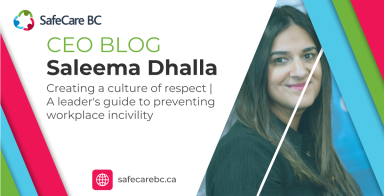
A blog post from SafeCare BC CEO Saleema Dhalla The foundation of healthcare is compassion, yet within many organizations, workplace incivility is an underrecognized threat that impacts staff well-being, team collaboration, and, ultimately, resident outcomes. Respect, professionalism, and kindness should not just be "nice to haves." Research has shown that incivility among healthcare workers can […]
View News Story
When it comes to workplace incivility and bullying, are you part of the problem? Review the questions in the checklist and tick-off those situations that you have actively participated in.
Files Attached
View Checklist
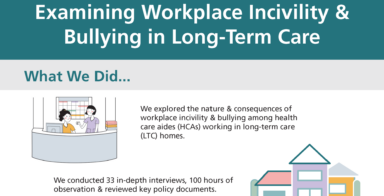
We explored the nature and severity of workplace bullying amongst care aides working in long-term care homes. Explore the infographic to see what we learned.
Files Attached
View Infographic
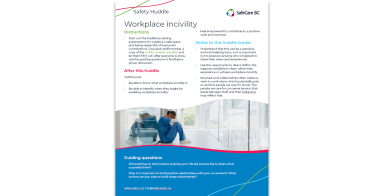
Learn about what workplace incivility is, be able to identify your role and how to feel empowered to contribute to a positive work environment.
Files Attached
View Safety huddle
This safety huddle is designed to equip staff with the skills to foster a more respectful work environment by teaching them to differentiate between workplace incivility—such as rude or discourteous actions—and bullying, which involves a persistent pattern of harmful mistreatment.
Files Attached
View Safety huddle
This safety huddle aims to foster a positive work environment for healthcare workers by promoting civility and respect. It aims to help staff define civility and respect, understand the impact of uncivil behaviour on individuals, teams, and resident/client care, and identify strategies for respectful communication and constructive responses to disrespect.
Files Attached
View Safety huddle
Dr. Heather Cooke has more than 20 years of experience working in dementia care in both a front-line and research capacity. Her current research focuses on the workplace relationships of front-line care staff, including workplace incivility and bullying. Heather’s work is supported by the Alzheimer Society of Canada, the Michael Smith Foundation for Health Research, and WorkSafeBC.
View News Story
What is workplace incivility?  Ever walk away from work feeling exhausted, not because of the tasks, but because of how people treated each other? A dismissive comment, a silent snub, or a passive-aggressive email that lingers. These moments may seem small, but they slowly chip away at your energy and focus. This is workplace incivility, […]
View News Story
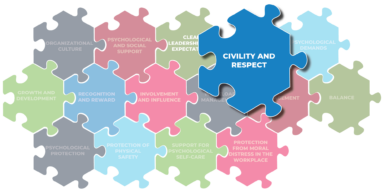
Civility and respect are based on showing esteem, care and consideration for others, and acknowledging their dignity.
View Safety Topic
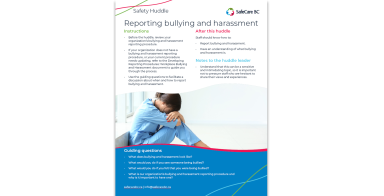
Learn about what bullying and harassment is and when to report it.
Files Attached
View Safety huddle
This safety huddle will help you develop a bullying and harassment policy for your organization.
Files Attached
View Safety huddle
Incivility

Videos

Filter

Incivility resources

Resource Types

Resource Post Type Filter
  • Webinars (7)
  • Posts (6)
  • Presentations (2)
  • Videos (1)

Audiences

Resources Audince Filter
  • All Audiences (10)
Info Sheet

Words matter

Civility and respect, Communication, Organizational culture

Workplace communication improves when teams use strength-based language, I statements, objective words, and curiosity to build trust.

Info Sheet

The power of "I" statements

Civility and respect, Communication, Organizational culture

“I” statements help shift difficult conversations from blame to connection. By focusing on your own feelings, the situation, and its impact, you can reduce defensiveness, improve understanding, and build healthier communication habits at work and...

Safety huddle

Using “I” statements to build team trust

Communication, Psychological Health and Safety

Strong communication is essential for a safe and respectful healthcare workplace. Learn how using “I” statements can reduce conflict, build trust, and support better teamwork during high-stress situations.

Resource

Words matter

Communication, Psychological Health and Safety

Communication is a skill that everyone can practice and improve. This info sheet offers four practical tool you can use to help build health workplace relationships.

Resource

The power of "I" statements

Communication, Psychological Health and Safety

Use this info sheet to learn how “I” statements can be used to shift your workplace communication from blame to connection.

Safety huddle

Supporting work-life balance

Balance, Psychological Health and Safety, Work-life balance

Mastering work-life balance is essential for healthcare safety. Discover practical strategies to prevent burnout, manage busy shifts, and improve care for those you support.

SafeCare BC Logo
©2026 SafeCare BC | All rights reserved.
To empower workplaces that provide care to create a culture of safety through evidence-based education, advocacy for safer workplaces, leadership, and collaboration
cross