SafeCare BC Logo
SafeCare BC Logo
Programs & Services

Programs and Services

View All
We are dedicated to providing comprehensive occupational health and safety (OHS) consulting services tailored to your needs.
View Service
Psychological health and safety, often called workplace mental health, encompasses principles and practices to foster a supportive, respectful, and psychologically safe work environment.
View Service
The Provincial Violence Prevention Curriculum is recognized as best-practice in violence prevention training for health care workers.
View Service
Topic

Person-centered care

Filter

Person-centered care

Resource Types

Resource Post Type Filter
  • Posts (28)
  • Safety Topics (28)
  • Webinars (13)
  • Web links (11)
  • Safety Huddles (10)
  • Assorted Resources (4)
  • Services (4)
  • Info Sheets (3)
  • Infographics (3)
  • Presentations (2)
  • Templates (2)
  • Videos (2)
  • Checklists (1)
  • Innovations (1)
  • People (1)
  • Posters (1)
  • Q&As (1)
  • Workshop Topics (1)
  • Workshops (1)

Audiences

Resources Audince Filter
  • All Audiences (78)
  • Managers and Supervisors (11)
  • Assisted and Independent Living (4)
  • All Audiences (2)
Post

Building safer spaces

De-escalation, Engagement, Growth and development, Organizational culture, Protection of physical safety, Violence Prevention

“When I saw the participation rate, which was way above 90 per cent of our care staff who took the training, I thought, okay, there is something here,” says Loren Tisdelle, human resources director at Louis Brier...

Info Sheet

Words matter

Civility and respect, Communication, Organizational culture, PHS Days

Workplace communication improves when teams use strength-based language, I statements, objective words, and curiosity to build trust.

Info Sheet

The power of "I" statements

Civility and respect, Communication, Organizational culture, PHS Days

“I” statements help shift difficult conversations from blame to connection. By focusing on your own feelings, the situation, and its impact, you can reduce defensiveness, improve understanding, and build healthier communication habits at work and...

Post

The love story no one saw coming

Engagement, Mental Health, Organizational culture, Other, Psychological social support, Recognition and reward, Self-care

This story is told from the perspective of Billie Askelend, Senior Executive Director at Nicola Lodge.  No one expected a love story to begin at Nicola Lodge, least of all Roy. At eighty-nine, he had...

Webinar

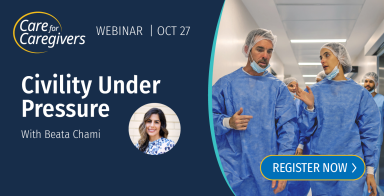
Managing workplace conflict

conflict resolution, Mental Health, Organizational culture, Safety Culture

Explore the underlying causes of workplace conflict and learn how to manage them using a psychological health and safety framework.

Post

The incivility epidemic: Why workplace rudeness is on the rise and what we can do about it 

Boundaries, Bullying, Burnout, Civility and respect, Emotional Intelligence, Growth and development, incivility, Mental Health, Moral distress, Organizational culture, Psychological demands, Psychological Health and Safety, Psychological injuries, Psychological self-care, Psychological social support, Resilience, Self-care, Self-talk, Stigma

It often starts small.  A co-worker cuts you off during a report. Someone ignores your “good morning.” A team member sends a blunt message with no context. It’s not as obvious as yelling or name-calling,...

Post

What is trauma-informed care? A guide for healthcare professionals 

Accessibility, Clear leadership, De-escalation, Dementia, Emotional Intelligence, Engagement, Growth and development, Mental Health, Organizational culture, Psychological Health and Safety, Psychological social support, Safe Handling, Safety Basics, Trauma

Think about the last time you felt genuinely safe and understood in a challenging situation. That sense of comfort and trust is at the heart of trauma-informed care.   This approach recognizes that many people carry...

Browse by Resource Type
SafeCare BC Logo
©2026 SafeCare BC | All rights reserved.
To empower workplaces that provide care to create a culture of safety through evidence-based education, advocacy for safer workplaces, leadership, and collaboration
cross