SafeCare BC Logo
SafeCare BC Logo
Programs & Services

Programs and Services

View All
We are dedicated to providing comprehensive occupational health and safety (OHS) consulting services tailored to your needs.
View Service

Psychological health and safety, often called workplace mental health, encompasses principles and practices to foster a supportive, respectful, and psychologically safe work environment.
View Service

The Provincial Violence Prevention Curriculum is recognized as best-practice in violence prevention training for health care workers.
View Service
Guidelines & Regulations

Guidelines and Regulations

View All
Changes to WorkSafeBC’s Occupational Health and Safety Regulation take effect on January 4, 2027. The amendments clarify what combustible dust is and strengthen requirements for identifying, assessing, and controlling fire and explosion risks.  What does this mean for you?  Using flour or sugar in a kitchen does not automatically mean a new combustible dust management […]
View News Story
WorkSafeBC has paused its consultations on proposed changes to the Occupational Health and Safety Regulation addressing psychological health and safety, harassment, and violence. The pause is due to the provincial election and is procedural; it does not indicate that a decision has been made about the proposed changes.  The proposals would introduce significant new and […]
View News Story
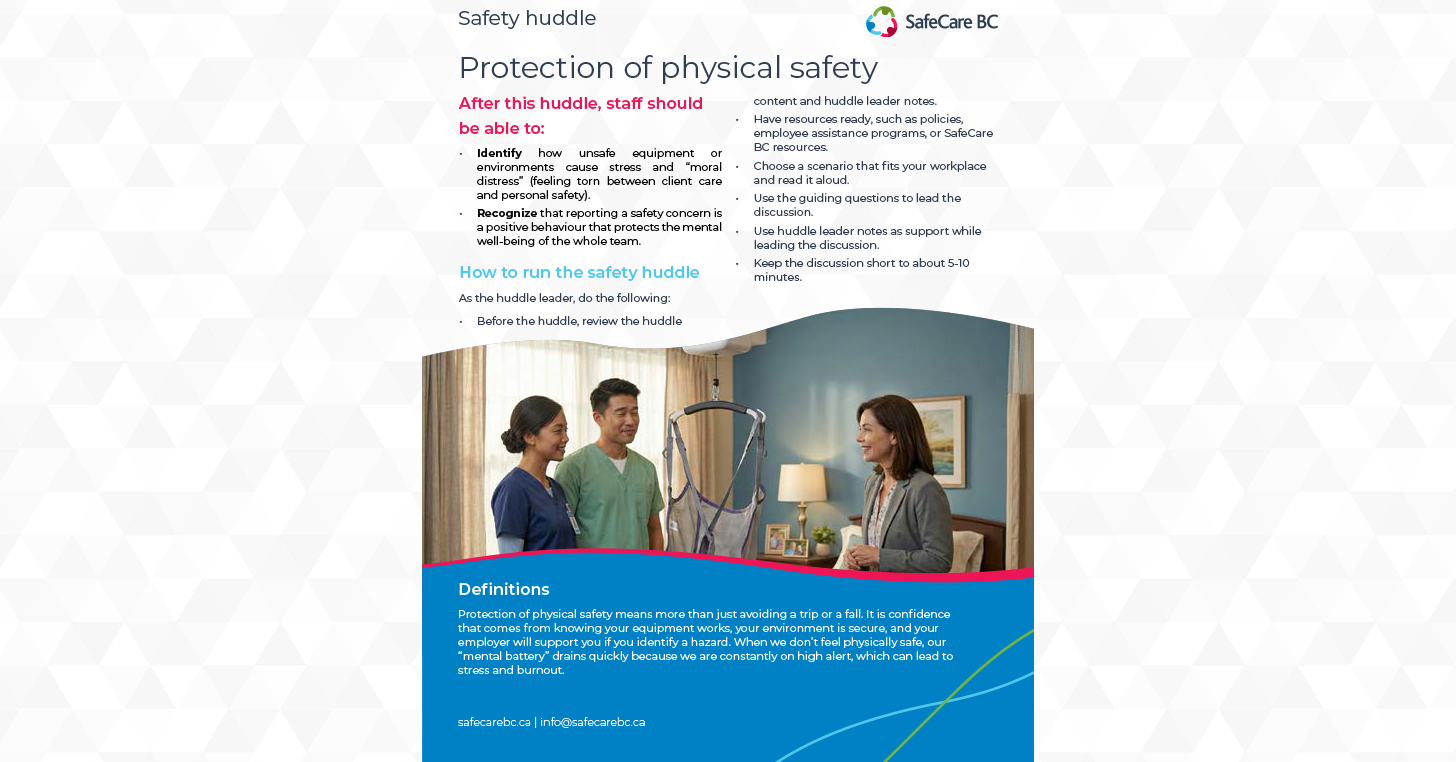

Safety huddle

Staying safe and finding peace of mind 

Use this Safety Huddle to start a conversation about the connection between physical and psychological safety, and how teams can support one another in speaking up about unsafe working conditions.
Staying safe and finding peace of mind - Safety huddle

Use this Safety Huddle to start a conversation about the connection between physical and psychological safety, and how teams can support one another in speaking up about unsafe working conditions.

After this huddle, staff should be able to: 

  • Identify how unsafe equipment or environments cause stress and “moral distress” (feeling torn between client care and personal safety).
  • Recognize that reporting a safety concern is a positive behaviour that protects the mental well-being of the whole team.

How to run the safety huddle

As the huddle leader, do the following:

  • Before the huddle, review the huddle content and huddle leader notes.
  • Have resources ready, such as policies, employee assistance programs, or SafeCare
    BC resources.
  • Choose a scenario that fits your workplace and read it aloud.
  • Use the guiding questions to lead the discussion.
  • Use huddle leader notes as support while leading the discussion.
  • Keep the discussion short to about 5-10 minutes.

Definitions

Protection of physical safety means more than just avoiding a trip or a fall. It is confidence that comes from knowing your equipment works, your environment is secure, and your employer will support you if you identify a hazard. When we don’t feel physically safe, our“mental battery” drains quickly because we are constantly on high alert, which can lead to stress and burnout.

Scenario for long-term care

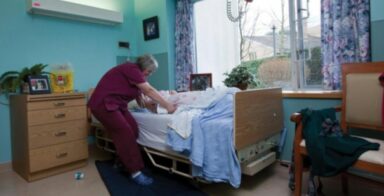
Mateo is a care aide at a care home. It is a hectic morning, and the team is working short-staffed. Mateo is 20 minutes behind and goes to use the mechanical lift for a resident. He notices the strap is fraying and the battery light is red. He feels a knot of anxiety. He knows finding a new lift will take time and might frustrate his busy coworkers. He feels torn between staying on schedule and the fear that the lift might fail during the transfer. 

Guiding questions for long-term care

  • Mateo is feeling time pressure. How does this pressure make it harder for him to make a safe choice for himself? 
  • If you were Mateo’s teammate, what could you say to show him that his safety is more important than being on time? 
  • How does using unsafe equipment affect your mood and mental energy for the rest of your shift? 

Facilitation tip: Empathize with the stress of being behind schedule. Acknowledge that everyone feels pressure to rush, but remind the group that an injury creates much greater disruption for the team than a 10-minute equipment swap. 

Scenario for home care

Sarah, a community health worker, is at Mrs. Kato's home for a shower assist. The bathroom light is burnt out, and the specialized bath chair has a bent leg. Mrs. Kato is upset and says, "Please, Sarah, I really need this shower. I can't wait another day." Sarah wants to help, but she's concerned about her own safety — working in a dark bathroom with faulty equipment puts her at real risk of a slip or strain injury. Working alone, she has to decide how to handle the situation. 

Guiding questions for home care

  • How can Sarah explain the safety risk to Mrs. Kato in a way that is kind but firm? 
  • What kind of support does Sarah need from her supervisor at this moment to feel she made the right call?  
  • Why is offering a safer alternative, like a sponge bath, a professional and caring choice in this situation? 

Facilitation tip: Focus on the "alone" aspect of home support. Ask the group how they handle the guilt of saying "no" to a client for safety reasons, and remind them that they are legally protected when refusing unsafe work. 

Huddle leader notes

  1. Create a safe space: 
  • Listen, respect all views, and be mindful of others’ challenges. 
  • Guide the discussion to focus on what participants can control. Move the conversation from complaints to solutions, strengths, and actionable next steps. Invite anyone with specific concerns to talk with you after the huddle. 
  1. Key discussion points: Use the objectives and key discussion points below to guide the huddle if needed. 
  • The "mental battery": Constant worry about safety is a major cause of burnout. Fixing a minor safety issue today saves significant mental energy tomorrow. 
  • Trust your gut: If a task feels "off" or unsafe, your body is giving you a warning sign. We want a culture where stopping to double-check is celebrated, not judged. 
  • Report minor problems: Small annoyances (like a sticky door or a dim hallway) are like pebbles in your shoe—eventually, they cause a blister (injury). Reporting them early keeps the whole team safe. 

Downloads
Staying safe and finding peace of mind - Safety huddle
Use this Safety Huddle to start a conversation about the connection between physical and psychological safety, and how teams can support one another in speaking up about unsafe working conditions.

More Safety huddles

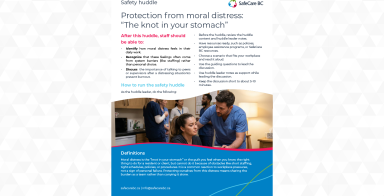
This huddle will help you lead a discussion on moral distress and the importance of talking to peers or supervisors after a distressing situation to prevent burnout.
Files Attached
View Safety huddle
This safety huddle can be used to lead a discussion on how assuming positive intent can reduce workplace tension.
Files Attached
View Safety huddle
Mastering work-life balance is essential for healthcare safety. Discover practical strategies to prevent burnout, manage busy shifts, and improve care for those you support.
Files Attached
View Safety huddle
Learn when workers can stop unsafe tasks, report concerns, and follow the right process to stay safe.
Files Attached
View Safety huddle
Equip your team with the skills to spot workplace hazards before they cause an injury. This safety huddle guides staff through conducting an environmental scan, a key part of any point of care risk assessment. Discover how to build a proactive safety culture and protect your healthcare team.
Files Attached
View Safety huddle
In this huddle, we’ll review safe and effective cleaning and disinfecting practices in the workplace. Staff will learn how to follow workplace policies, clean and disinfect shared equipment and high-touch areas, and select the right personal protective equipment (PPE) for different cleaning tasks. We’ll also cover where to find important information such as safety data sheets and product labels, which explain safe handling and spill response procedures. Use the guiding questions to spark discussion about common high-risk areas, frequently shared items, and strategies for reducing the spread of infectious diseases.
Files Attached
View Safety huddle
When a critical incident impacts your team, it's vital to have a safe space to talk and heal. Our critical incident debriefing tools provide leaders and frontline staff in BC's long-term care and home support sectors with a structured way to discuss what happened, ensuring everyone feels supported with dignity and respect. Discover how to create a culture of psychological safety, identify available resources, and learn to navigate these challenging conversations to promote recovery and well-being.
Files Attached
View Safety huddle
Working with clients or residents and their families is not always easy. You may not be able to control how others act, but you can control how you respond.
Files Attached
View Safety huddle
Browse by Resource Type

Resources Related to , ,

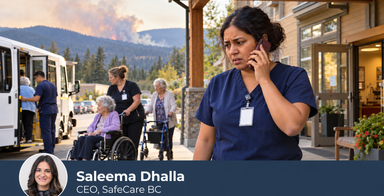
Emergency plans in long-term care and home support need to account for care workers who may be affected by the same wildfire, flood, or evacuation. Leaders can strengthen preparedness by planning for accommodation, transportation, expenses, relief, rest, and recovery support.
View News Story
This fall, the Hearts and Hands conference for health care assistants will bring frontline care workers together for a day of learning, connection and celebration. In Langley, Jody Braam will lead a breakout session exploring what it means to truly listen in dementia care, even when words are no longer there.   Jody Braam was […]
View News Story
There’s a strange thing that happens when you become very good at holding everything together. People stop asking if you are okay.  You show up, do the work, care for the people who need you and become the person others can rely on. Somewhere along the way, carrying too much can start to look a […]
View News Story
This huddle will help you lead a discussion on moral distress and the importance of talking to peers or supervisors after a distressing situation to prevent burnout.
Files Attached
View Safety huddle
SafeCare BC Logo
©2026 SafeCare BC | All rights reserved.
To empower workplaces that provide care to create a culture of safety through evidence-based education, advocacy for safer workplaces, leadership, and collaboration
cross