SafeCare BC Logo
SafeCare BC Logo
Programs & Services

Programs and Services

View All
We are dedicated to providing comprehensive occupational health and safety (OHS) consulting services tailored to your needs.
View Service

Psychological health and safety, often called workplace mental health, encompasses principles and practices to foster a supportive, respectful, and psychologically safe work environment.
View Service

The Provincial Violence Prevention Curriculum is recognized as best-practice in violence prevention training for health care workers.
View Service
Webinar

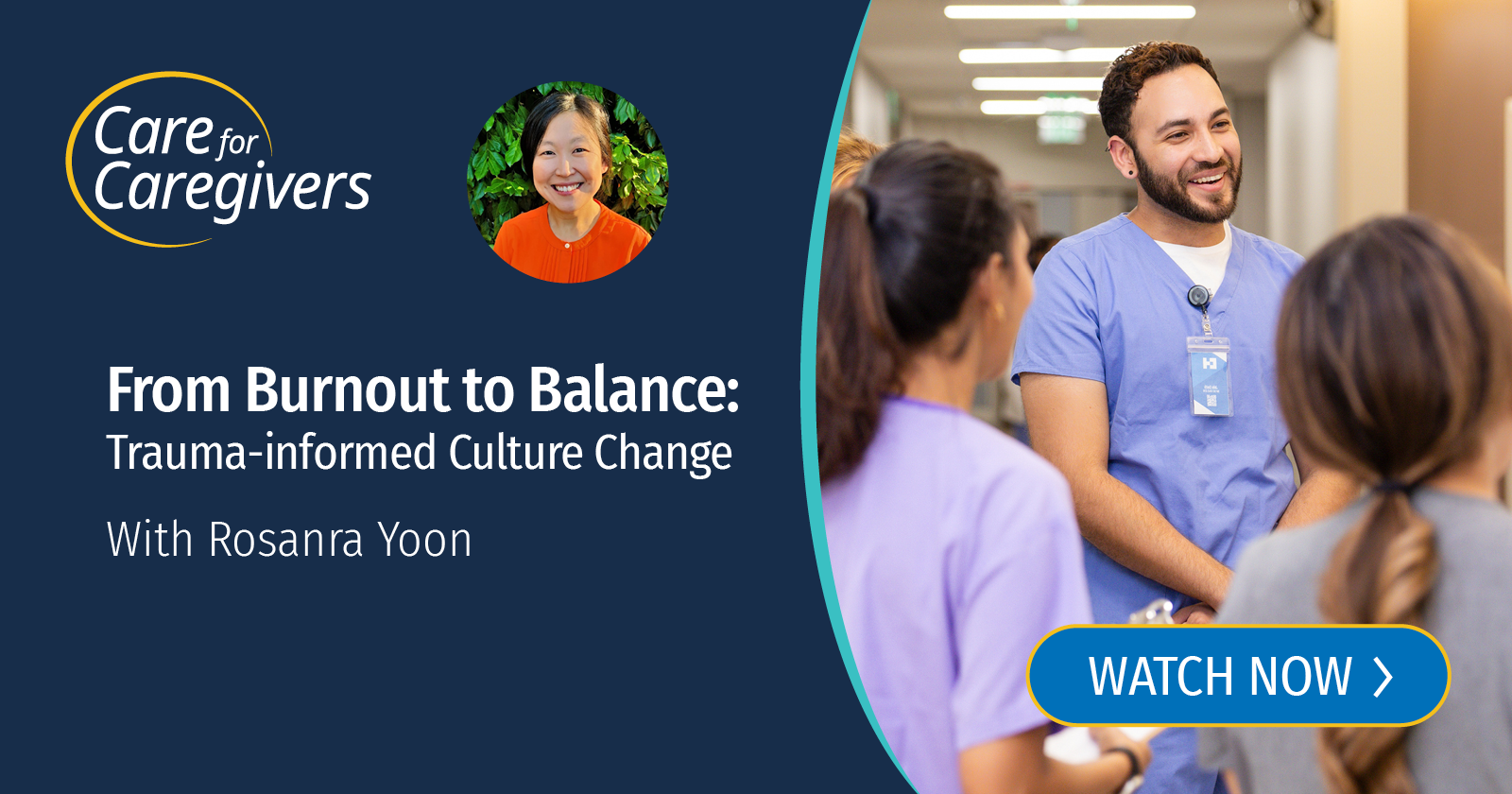
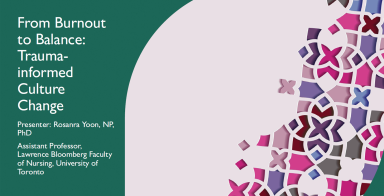
From burnout to balance: Trauma-informed culture change

Trauma-informed organizational culture is key to psychological safety. Learn concrete tools to shift from reactive to responsive and help care workers thrive!

The cultures in which we work significantly influence our well-being and are critical to fostering workplace psychological safety.

In healthcare settings where demands and pressures are high, how can we intentionally create organizational cultures that support and promote the psychological safety and well-being of care workers? This webinar will examine how a trauma-informed approach to organizational culture can help shift workplaces from reactive to responsive, enabling care workers to thrive while addressing their psychological and emotional needs.

Learning outcomes

By the end of this webinar, participants will be able to:

  • Understand how trauma-informed principles enhance psychological safety, well-being, and thriving for care workers, and why these approaches matter for sustainable workplace health.
  • Examine how leadership behaviours, policies, and organizational norms can sustain, strengthen, and model a supportive and trauma-informed culture.
  • Use concrete methods, frameworks, and implementation tools to embed trauma-informed organizational practices and create environments where care workers feel safe, valued, and supported.
  • Recognize the critical drivers and steps needed to build and maintain responsive, resilient, and psychologically safe workplaces through trauma-informed approaches.

RESOURCES

Featured in this Webinar

This webinar will examine how a trauma-informed approach to organizational culture can help shift workplaces from reactive to responsive, enabling care workers to thrive while addressing their psychological and emotional needs.
Files Attached
View Presentation
Speakers

Presented by

Assistant Professor, Lawrence Bloomberg Faculty of Nursing, University of Toronto & Lead, Better Together Research Hub
Rosanra (Rosie) Yoon's (she/her) research area focuses on health services evaluation with a particular focus in integrated care for people experiencing structural vulnerabilities, substance use and mental health challenges and trauma-informed cultures of care. Her work also involves building trauma-informed organizational cultures that support workforce psychological safety. Yoon employs participatory and collaborative evaluation methods for system improvement through her Better Together Research Hub. As a nurse practitioner, her clinical area of expertise is in the areas of substance use, concurrent mental health conditions, trauma, and gender-informed care. Bridging between community-based grassroots programs and larger systems -- to collaboratively meet the needs of people and communities -- is a core value that guides her clinical and research work. Her firm belief is that health is achieved through our communities where we all work, live, play and belong.

Resources Related to ,

Caregivers often offer compassion freely to others, but struggle to extend that same care to themselves. Learn why self-care can feel difficult, why it matters, and how practical self-care can help sustain care workers in the work they value.
View Safety Topic
It didn’t start with leadership. Karen Tasker’s journey at Sienna Senior Living’s Lakeview Lodge Community, in West Kelowna, began in 2013, when she returned to the workforce after 14 years as a stay-at-home mom. Her first role was as a dietary aide, handling meals, laundry, and housekeeping, but it quickly became clear that there was […]
View News Story
“When I saw the participation rate, which was way above 90 per cent of our care staff who took the training, I thought, okay, there is something here,” says Loren Tisdelle, human resources director at Louis Brier Home and Hospital. “That kind of participation is rare with regular in-person sessions.”  That moment signalled that a new way of learning […]
View News Story
SafeCare BC Logo
©2026 SafeCare BC | All rights reserved.
To empower workplaces that provide care to create a culture of safety through evidence-based education, advocacy for safer workplaces, leadership, and collaboration
cross