In long-term care it is increasingly apparent that who is on shift is just as important as how many staff are on shift. Quality care is difficult to achieve when we do not routinely engage with one another in a positive, or civil, manner.
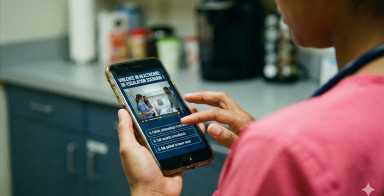
Ready to tackle violence prevention in healthcare? Discover our immersive, scenario-based training that identifies hidden risks and boosts your team's competency!
Psychological health and safety, often called workplace mental health, encompasses principles and practices to foster a supportive, respectful, and psychologically safe work environment.
WorkSafeBC is holding a second public hearing this month on proposed changes to the Occupational Health and Safety Regulation related to combustible dusts.
Amendments to the Occupational Health and Safety Regulation (OHSR), Part 5: Chemical Agents and Biological Agents – Emergency Planning came into effect on February 3, 2025. Changes include additional requirements to minimize the risk, likelihood, and harm caused by an emergency involving hazardous substances. Hazardous substances include biological, chemical or physical hazards that may reasonably […]
Think of your workplace — or your household, or your circle of friends — as a garden. Every day, you plant something. The words you choose are the seeds. When you plant a flower, you create something beautiful, for yourself and for everyone around you. When you plant a weed, you create something that, over time, makes it harder for anything healthy to grow. The choice of what to plant is yours.
Every day, before you have finished your morning coffee, you may have already shaped someone's experience. A quick message, a comment in passing, a response to a question — each of these small moments is a choice. And the words you choose in those moments matter far more than most of us realize.
Think of your workplace — or your home, or your circle of friends — as a garden. Your words are the seeds. Choose a flower, and you create something beautiful for yourself and everyone around you. Choose a weed, and you create a space where healthy things struggle to grow. Every day, in every interaction, that choice is yours.
This is not about being careful or performative. It is about something much more practical: the words we use are the primary tool we have to build trust, reduce friction, and create the kind of environment where people — including us — want to show up. And the good news is that communication is a skill. That means it can be learned, practised, and improved.
Why the words we choose matter more than we think
Communication is something most of us do all day without much thought. We send a message, join a meeting, respond to a colleague, leave a voicemail. It all happens automatically. But that ease can hide something important: language is not neutral. The way we speak to each other directly sets the tone for any environment — a team, a family, a friend group.
Think about a time when a single comment at work changed how you felt about your day–a conversation that left you feeling seen and supported, or one that left you feeling dismissed. The content of those conversations may have been identical. What made the difference was the words.
When communication is respectful and clear, something important happens–people feel safe. They feel safe enough to ask questions, admit they do not know something, raise concerns, or disagree — without fear of embarrassment or judgment. This is what psychological safety means, and it is one of the most powerful predictors of whether a team functions well.
"When communication feels unsafe, unclear, or dismissive, people protect themselves. They choose to stay quiet, withdraw, or become defensive. Over time, that self-protection turns into disengagement, conflict, and toxicity."
The important thing to understand is this: you do not have to control anyone else to change this dynamic. You only have to make different choices with your own words.
It is not just what we say — it is what we say about people
There is an aspect of communication we often overlook: how we talk about the people around us when they are not in the room.
Most of us have heard it. Maybe we have participated in it. Someone on the team makes a mistake, leaves at an inconvenient time, or works differently than you do — and the conversation around it is less than generous.
"She always leaves right on time. I can't believe she never stays a minute late."
"He's always on his phone. He clearly doesn't care."
These kinds of comments feel harmless in the moment. But they create a culture of judgment where people feel watched, whispered about, and unsafe. And they often reflect a limited view. The colleague who leaves exactly at closing time may have children to pick up, an elderly parent to check on, or a second job. The person who seems distracted may be managing something no one knows about.
Consider a different lens
Choosing curiosity over judgement is one of the most powerful shifts you can make. Instead of "He is so lazy," try "He seems really tired lately — I wonder what is going on for him?" This small shift changes the entire energy of the conversation — and it is more likely to lead to understanding than resentment.
The way we speak about our colleagues shapes what we and others believe about them — and what we allow ourselves to expect. When we talk about people generously, we create space for generosity to come back.
Start where you are
None of this requires perfection. It does not require you to be someone different, or to become artificially upbeat, or to pretend that every day and every interaction is easy. It simply asks for a bit more intention.
Most of us learned to communicate the way we do from the environments we grew up in and the people around us. That means many of us are working with habits we did not consciously choose. The good news is that we can choose differently — starting now, one conversation at a time.
Reflection
Think about a recent interaction. What words did you choose? How might that conversation have felt from the other person's perspective? Is there anything you would do differently?
Three tools that work
Changing how we communicate does not require a personality overhaul. It just takes practice. You won't always get it right — and that's okay. The more you notice these patterns and try them out, the easier they become. And when others see you doing it, it gives them permission to try too. Here are three tools to get you started, with examples from both personal and work scenarios.
1. Strength-based language
Strength-based communication means focusing on what someone is doing well, the effort they are making, and the potential they have — rather than leading with what is wrong, missing, or falling short.
Strength-based language in action
Instead of saying...
Try saying...
"If you only got 75% on that test, that means you could have done 25% better."
"I noticed you have been putting a lot of effort into your study habits lately. Your effort is paying off. Keep up the good work."
"Why is Mrs. Smith still in her room? She should be downstairs for breakfast already."
"You have done a wonderful job at getting so many residents dressed before breakfast. I really appreciate how organized and efficient you are. It is such a busy part of the day, especially when we are working without a float."
"You left your stuff all over the house again. I'm always the one cleaning up after you."
"I noticed you tidied up the kitchen after dinner last night — that was thoughtful. It makes such a difference when we all pitch in."
"You keep forgetting to document your assessments."
"Documentation can be hard to keep on top of on busy days. I've noticed you're great at the hands-on care — let's talk about what might help make the charting feel more manageable."
2. Objective and descriptive language
One of the most common ways communication breaks down is when we fill in the gaps — assuming we know why someone did something, or deciding what kind of person they are based on a single moment.
Instead of saying…
Try saying…
“Why does she always have to get so dressed up when we all go for lunch? Is she just trying to show off or act better than the rest of us?”
“She clearly enjoyed expressing herself through how she dresses. It is nice that people bring their own style.”
"He's always on his phone and never does his work."
"I notice that when phones are out during team meetings, some people's attention seems to be elsewhere."
"Why is that kid so poorly behaved?"
"Every child is different. They are learning and growing in their own way."
Staying objective and descriptive takes practice. The more you reach for it, the more naturally it comes — and the more it shapes the kind of communicator you become.
3. "I" statements
An "I" statement shifts the focus from what someone else did wrong to how you are experiencing the situation. This matters because it removes blame from the equation — and without blame, most people stop being defensive and start being able to hear you.
The structure is simple:
"I feel… when… because…"
"I notice…"
"I would like…"
"I prefer…"
“I believe…”
Instead of saying…
Try saying…
"You can never be on time. You're being inconsiderate to everyone."
"I feel frustrated when we can't start on time. It makes it harder for me to stay organized and support the rest of the team."
"You are being disrespectful."
"I feel disrespected when my messages are not answered. Can we find a way to stay in touch?"
"You are not explaining this well at all."
"Thanks for sharing that with me. Could you tell me a bit more about how it started? I want to make sure I understand."
A note on using "I" statements properly
Simply starting a sentence with "I" is not enough. "I feel that you are being selfish" is still a judgement — it is just disguised. A genuine "I" statement focuses on your own experience, not on a verdict about the other person.
Make space for feelings: validating what others feel
One of the most underrated communication skills is the ability to acknowledge that another person's experience is real — even if you see things differently. Validation does not mean you agree. It means you recognize that how the other person is feeling makes sense to them, given what they are going through. That recognition alone can de-escalate a tense moment and open a door to real conversation.
Instead of saying…
Try saying…
"You're overreacting. It is not a big deal."
"I can understand why that feels frustrating, especially with everything else on your plate."
"I don't know why you're so upset about this."
"That sounds really challenging. I can see why you are feeling upset."
"You need to toughen up."
"I can see this really matters to you. Do you want to talk about what is going on?"
What is in it for you?
When you communicate in ways that are strength-based, objective, and focused on your own experience rather than the other person's faults, you become easier to work with. That opens doors — to better working relationships, to greater influence on your team, and to being the kind of colleague or friend people seek out rather than avoid.
You also reduce your own stress. Conflict is exhausting. The low-grade tension of working alongside someone you have talked about badly, or who you know has talked badly about you, is a drain.
The words we use at work are often the same words we use at home. With our families, our partners, our friends. The practice of speaking to people's strengths, staying curious rather than judgmental, and using "I" statements instead of accusations — these habits travel. They change not just how team culture feels, but how your relationships feel.
"This idea that words matter does not just apply to the workplace. The words we choose impact every interaction and every relationship we have — with our parent, our child, our partner, or our friend."
One action to try this week
Pick one communication habit to work on — whether it is reaching for a strength-based comment instead of a criticism, trying an "I" statement the next time you feel frustrated, or simply noticing when you are making a judgment about someone and asking what else might be true.
Stay up to date
Subscribe to our newsletter and stay up to date with all of SafeCare BC’s latest news.
To empower workplaces that provide care to create a culture of safety through evidence-based education, advocacy for safer workplaces, leadership, and collaboration
Stay up to date
Subscribe to our newsletter and stay up to date with all of SafeCare BC’s latest news.