What could your organization do with $282,000? This was the question posed during a presentation last month at the BC Care Providers conference.
I’m certain you can make a long list of things to spend that money on. Let’s ask the question a different way. What would be the impact if you lost $282,000 from your budget? Ouch. A whole different conversation.
In long-term care, the injury rate is four times higher compared to the average of all professions in the province. And workplace injuries are eating away at the budgets of many organizations and they aren’t even aware.
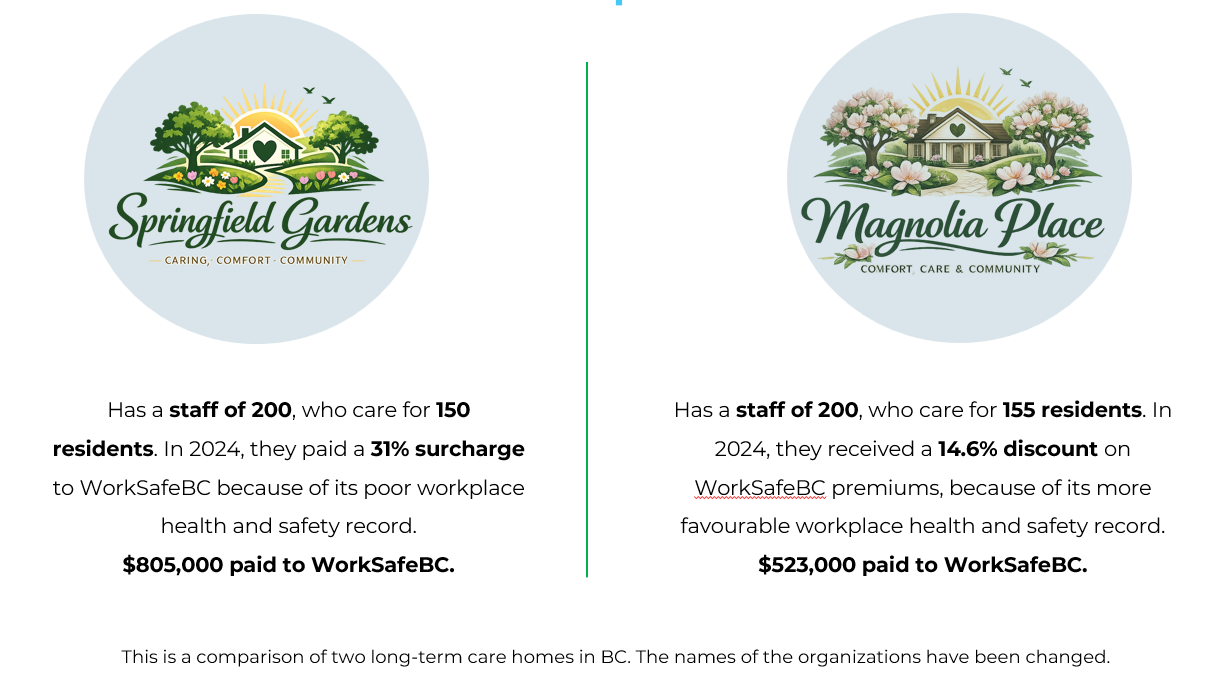
Two similarly sized long-term care homes in BC were profiled (the names were changed to protect the innocent). In 2024, Springfield paid a 31% surcharge and $805,000 in WorkSafeBC premiums, because of its poor safety record. In contrast, Magnolia Gardens received a 14.6% discount on its premiums, because of its more favourable safety record and paid $523,000. That’s $282,000 less than what Springfield paid.
Over four years, Springfield paid almost $800,000 more in premiums than Magnolia. Imagine what they could have done with that money. Do you know if your organization pays a surcharge or receives a discount? Do you know what your annual assessment to WorkSafeBC is? You can find this information and more in WorkSafeBC’s Employer Health & Safety Planning Tool Kit.
The cost of poor workplace health and safety is not just increased WorkSafe premiums. It leads to staffing challenges, increased overtime, inconsistent care delivery, damage to your organization’s reputation, and not being able to invest in your people and buildings.
If you want to learn how to understand your organization’s data in the Employer Health & Safety Tool Kit, book a consultation with our occupational health and safety team.
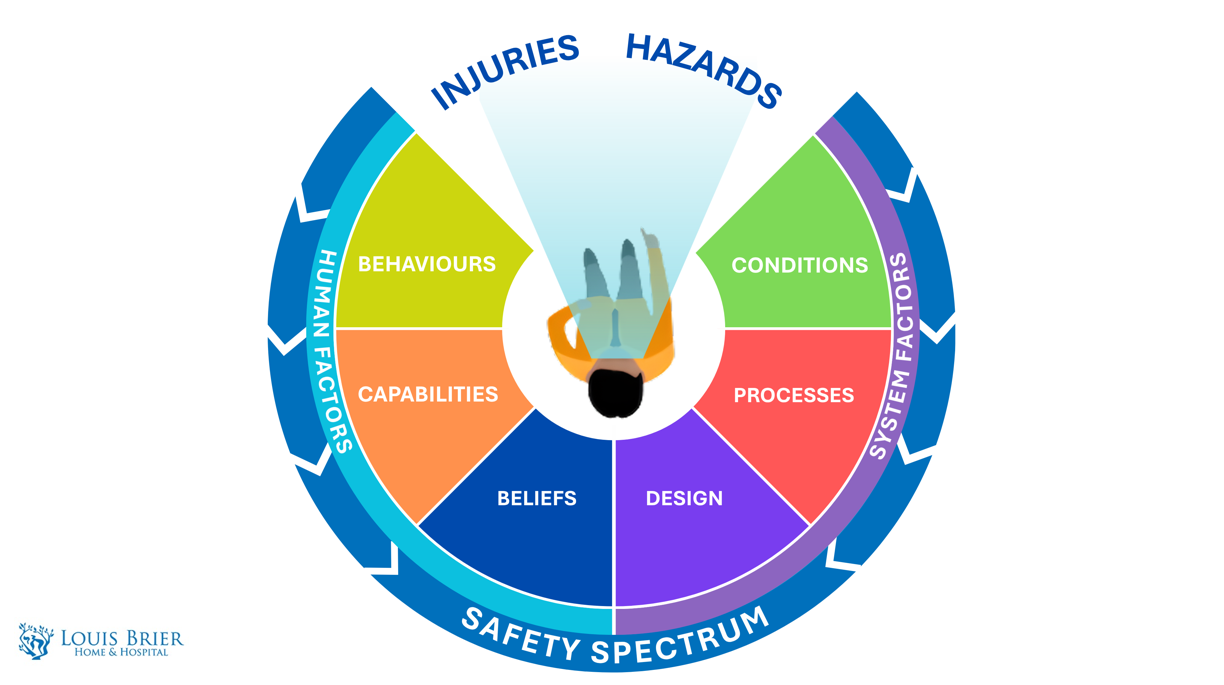
Increasing your field-of-view with the Safety Spectrum model
Increasing your field-of-view is key to understanding the factors that lead to workplace injuries. Many organizations manage health and safety based on what’s most visible—obvious hazards and reported injuries. But that narrow view captures only a small portion of the risk, meaning healthcare leaders can miss the pressures, assumptions, workaround, and conditions shaping decisions.
The presenters, SafeCare BC’s Ken Donohue and Loren Tisdelle, Director of HR, Louis Brier Home & Hospital, introduced the Safety Spectrum model to help leaders like you increase your field of view. It has two parts: human factors and system factors. The human side includes behaviours, capabilities, and beliefs, while the system side includes conditions, processes, and design. It’s important to know, the factors don’t work in isolation. Conditions shape behaviours, Processes shape capabilities, Design influences beliefs.
Loren has written more about how the model works and how you can use it to enhance your organization’s workplace health and safety.
There are several tools that can help expand your field-of-view, but there is one in particular that takes the guesswork out of health and safety.
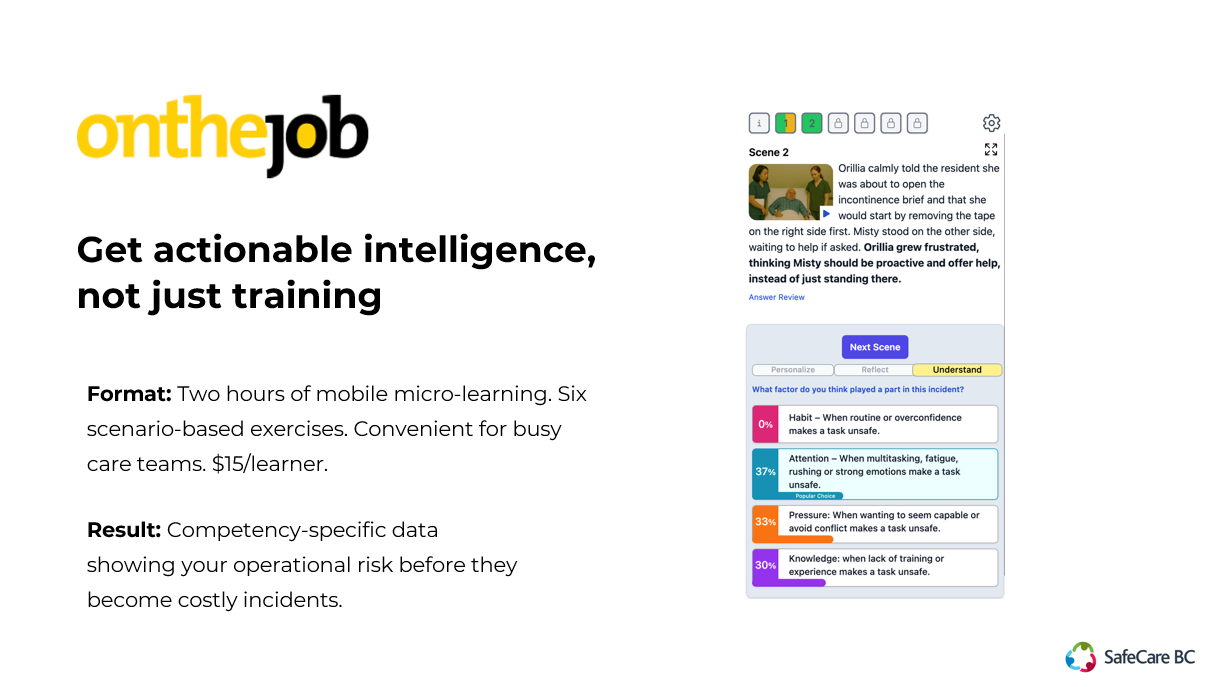
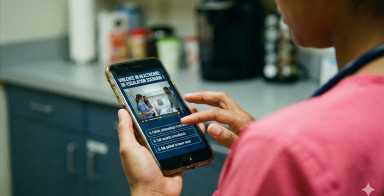
SafeCare BC partnered with OntheJob to create a unique learning experience. Learners work through six online scenario-based exercises focused on violence prevention that follow a real story of a workplace injury that ended someone’s career. They reflect and answer what they would do if confronted with the same situation. This micro-learning experience is mobile-friendly and takes less than two hours to complete at one’s own pace.
Not only do workers like this learning experience, but as leaders you get actionable intelligence in the form of competency-specific data that shows your operational risk, allowing you to act before they become costly incidents.
Four SafeCare BC members participated in a pilot of the scenarios. What we learned is staff recognized unsafe practices but often felt they had no better options. They were often caught between entrenched habits, time pressure, and system constraints that made safer choices harder to choose
The data allowed leaders to see these patterns, without pointing fingers. And countered some of the assumptions we have by showing that safety issues often stemmed from processes and culture, not individual carelessness
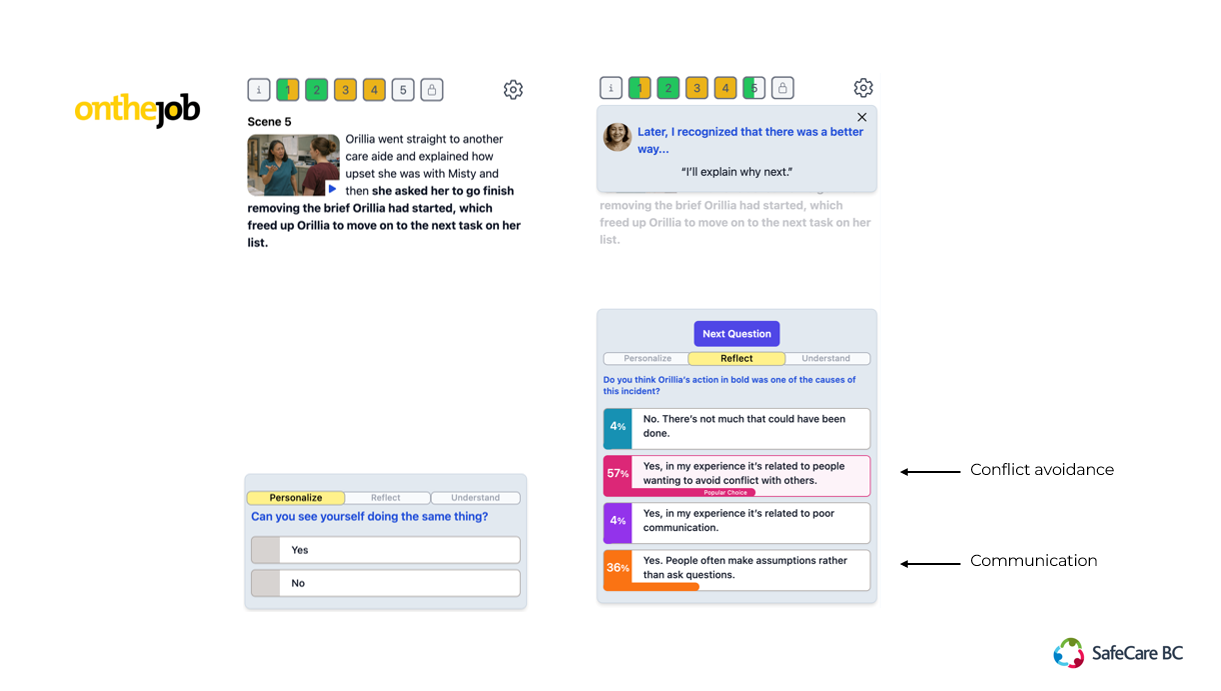
Having your teams participate in the scenarios will help you better understand some of the human and system factors we introduced in the Safety Spectrum model.
In one scenario, 57% of learners would do the same thing that that led to a workplace injury. Their reasoning is that in their experience, or in their workplace, people want to avoid conflict. Thirty-six percent said they’d do the same thing, because in their workplace people make assumptions, rather than ask questions.
People see others doing unsafe work. They do unsafe work themselves. And it’s often not about a lack of training, but in this case a fear of conflict and a fear of being seen as incompetent for asking questions. With this information, you’d be able to look at your organization’s culture and identify areas of improvement.
The power of OntheJob is the data organizations get. Nothing in your current toolbox gives you this level of insight. It’s indispensable. OntheJob learning is easy, accessible, and at just $15 per learner, it’s cost effective. We are now working with them to create a series of safe handling scenarios that will launch later this year.
Learn how your staff can participate in this unique learning experience and give you actionable data to improve your organization’s workplace health and safety.