







Question 1
Responding in the moment
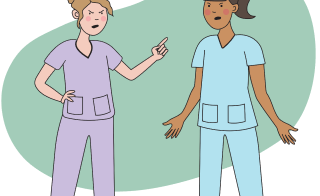
In that moment at the medication cart, what is the most appropriate way for Jordan to respond to Pat’s comment?
Why this can escalate the situation
It’s reasonable for Jordan to feel upset, but confronting Pat publicly in the moment can increase tension and make residents more uncomfortable. Whenever possible, it’s better to move the conversation to a more private setting while still addressing the behaviour.
Staying grounded and planning a follow-up
This response keeps residents at the centre, avoids a public argument, and still leaves room to address the behaviour later. Jordan doesn’t have to accept being spoken to that way, but choosing the timing and setting can make the conversation safer and more productive for both people.
Why silence can send the wrong message
Avoiding the conflict might feel easier in the moment, but it can send the message that this kind of public criticism is acceptable. Over time, this can harm trust and psychological safety on the team.
Sarcasm usually adds fuel, not clarity
Sarcasm may feel like a quick way to defend yourself, but it often makes the interaction more tense and less clear. It doesn’t communicate what you need or invite a different way of talking to each other.
