





SafeCare BC Logo
SafeCare BC Logo
Programs & Services

Programs and Services

View All
We are dedicated to providing comprehensive occupational health and safety (OHS) consulting services tailored to your needs.
View Service
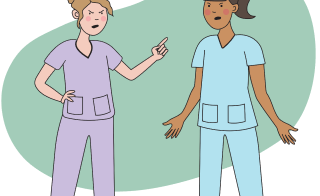
Psychological health and safety, often called workplace mental health, encompasses principles and practices to foster a supportive, respectful, and psychologically safe work environment.
View Service
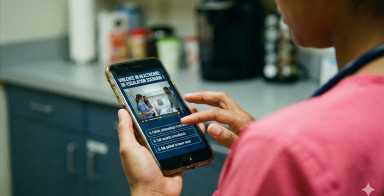
The Provincial Violence Prevention Curriculum is recognized as best-practice in violence prevention training for health care workers.
View Service
Guidelines & Regulations

Guidelines and Regulations

View All
WorkSafeBC is holding a second public hearing this month on proposed changes to the Occupational Health and Safety Regulation related to combustible dusts.
View News Story
Amendments to the Occupational Health and Safety Regulation (OHSR), Part 5: Chemical Agents and Biological Agents – Emergency Planning came into effect on February 3, 2025. Changes include additional requirements to minimize the risk, likelihood, and harm caused by an emergency involving hazardous substances.   Hazardous substances include biological, chemical or physical hazards that may reasonably […]
View News Story

SCENARIO

Blamed for a System Issue

It's late afternoon on a busy medication round. The computer workstation freezes for the second time this shift — a problem everyone on the unit has been struggling with for weeks. Ravi tries the usual fixes, but the system just hangs. He steps over to the team lead and quietly reports it, hoping they might have heard an update from IT.

Instead, the team lead sighs loudly and says, in front of two coworkers and a resident,

“Ravi, you always find a way to slow things down. Just get it done.”


The comment hits Ravi unexpectedly. His stomach drops. He wasn’t trying to make excuses — the system genuinely froze, and the delay is outside his control. One coworker looks away, another raises their eyebrows, and nobody says anything. Ravi suddenly feels alone in the room.

He still needs to get the medication labels printed, and he still has to finish rounds. But now he’s also trying to push through the sting of being blamed for a system problem he can’t fix.

Question 1

Responding in the moment

When the team lead publicly blames Ravi for the slow-down, even though the computer is frozen, what is Ravi’s most constructive first step?
single_choice
Question 2

Addressing impact on the workflow

Once Ravi has clarified that the system froze, what should he do next to keep residents safe and prevent the situation from getting worse?
single_choice
Question 3

Following up with the team lead

Later in the shift, Ravi considers whether to address the comment with the team lead. What is the most effective approach?
single_choice
Question 4

Preventing future issues

What is one productive step Ravi and the team can take to reduce future tension around system failures?
single_choice

Why system issues shouldn’t become personal

When technical problems are treated as personal failings, staff feel blamed for things outside their control. This damages trust, increases stress, and makes it harder for people to speak up about real safety concerns. By addressing misunderstandings respectfully and focusing on teamwork and data—not blame—we create an environment where system issues can be reported early and resolved sooner.
System failures are not performance failures.
Clarifying misunderstandings respectfully protects psychological safety.
Teams that report patterns together get faster system support.
Explore Scenarios
Discover more workplace situations and different ways to respond.
View More Scenarios
Have a real-life situation to share?
Have a workplace situation that could become a civility scenario? Share it anonymously. Your experience may inspire future content on the SafeCare BC website.
Share Your Scenario
SafeCare BC Logo
©2026 SafeCare BC | All rights reserved.
To empower workplaces that provide care to create a culture of safety through evidence-based education, advocacy for safer workplaces, leadership, and collaboration
cross