




SafeCare BC Logo
SafeCare BC Logo
Programs & Services

Programs and Services

View All
We are dedicated to providing comprehensive occupational health and safety (OHS) consulting services tailored to your needs.
View Service
Psychological health and safety, often called workplace mental health, encompasses principles and practices to foster a supportive, respectful, and psychologically safe work environment.
View Service
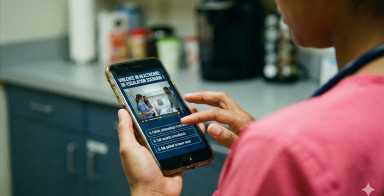
The Provincial Violence Prevention Curriculum is recognized as best-practice in violence prevention training for health care workers.
View Service
Guidelines & Regulations

Guidelines and Regulations

View All
WorkSafeBC is holding a second public hearing this month on proposed changes to the Occupational Health and Safety Regulation related to combustible dusts.
View News Story
Amendments to the Occupational Health and Safety Regulation (OHSR), Part 5: Chemical Agents and Biological Agents – Emergency Planning came into effect on February 3, 2025. Changes include additional requirements to minimize the risk, likelihood, and harm caused by an emergency involving hazardous substances.   Hazardous substances include biological, chemical or physical hazards that may reasonably […]
View News Story

SCENARIO

Giving Feedback in a Busy Morning Huddle

It’s the start of a busy day on a long-term care unit. Staff are gathered in the small report room for morning huddle. People are standing shoulder-to-shoulder with their coffees, trying to mentally sort through all the tasks coming their way.

The charge nurse has just asked if anyone has safety concerns before they start rounds. A new care aide, Priya, hesitates for a moment and then speaks up. She explains that she’s noticed a resident’s transfer belt is often missing from their room, and she worries that people might be improvising when they’re in a rush.

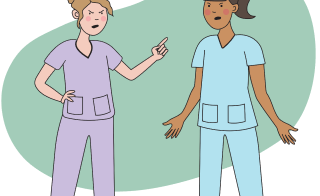
Before Priya can finish, Renee, an experienced team member, lets out a loud eye-roll and says, “Here we go again,” under her breath—but loud enough that a few people hear. The room goes quiet. Priya immediately looks down at her hands and stops talking. A couple of people exchange glances, and the charge nurse quickly moves the huddle along to the next topic.

Sam, another care aide, watches this happen and feels their stomach drop. They’ve been encouraging newer staff to speak up about safety, and this is exactly the kind of reaction that makes people second-guess themselves. Sam can see that Priya looks embarrassed, and the moment passes without anyone really addressing her concern.

As the group breaks up and people head to their assignments, Sam is left with a knot in their chest. They want to support Priya and they also know Renee has been under a lot of stress. Sam doesn’t want to embarrass Renee in front of the team, but they also doesn’t want this kind of reaction to become “normal” in their workplace.

Sam starts to think: What could I have done differently in that moment? And how can I follow up with Renee in a way that builds a more respectful team culture, instead of adding more tension?

Question 1

First reaction in the moment

Sam notices that their colleague, Renee, gives a sarcastic eye-roll and says, "Here we go again," as a new care aide shares a safety concern in morning huddle. The room goes quiet and the new care aide shuts down. What is the most constructive first step for Sam in this moment?
single_choice
Question 2

Following up with the colleague

Later that morning, Sam is still thinking about the eye-roll and sarcastic comment. They want to follow up with Renee in a way that supports a more respectful team culture. What is the best next step?
single_choice

Why this moment matters for psychological safety

Small moments, like an eye-roll or sarcastic comment, can have a big impact on whether people feel safe to speak up. When we redirect the conversation in the moment and follow up respectfully with our colleagues, we help build a culture where concerns are heard instead of shut down. That makes it more likely that staff will raise issues early, which supports both resident safety and team wellbeing.
Validate and protect people who speak up about safety, especially newer staff.
Address disrespectful behaviour, but choose timing and tone that support learning, not shame.
Use “I” statements and focus on impact rather than accusing or labelling a colleague.
Explore Scenarios
Discover more workplace situations and different ways to respond.
View More Scenarios
Have a real-life situation to share?
Have a workplace situation that could become a civility scenario? Share it anonymously. Your experience may inspire future content on the SafeCare BC website.
Share Your Scenario
SafeCare BC Logo
©2026 SafeCare BC | All rights reserved.
To empower workplaces that provide care to create a culture of safety through evidence-based education, advocacy for safer workplaces, leadership, and collaboration
cross