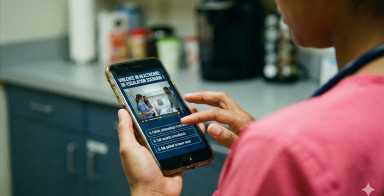
Ready to tackle violence prevention in healthcare? Discover our immersive, scenario-based training that identifies hidden risks and boosts your team's competency!
Psychological health and safety, often called workplace mental health, encompasses principles and practices to foster a supportive, respectful, and psychologically safe work environment.
WorkSafeBC has paused its consultations on proposed changes to the Occupational Health and Safety Regulation addressing psychological health and safety, harassment, and violence. The pause is due to the provincial election and is procedural; it does not indicate that a decision has been made about the proposed changes. The proposals would introduce significant new and […]
WorkSafeBC has paused its consultations on proposed changes to the Occupational Health and Safety Regulation addressing psychological health and safety, harassment, and violence. The pause is due to the provincial election and is procedural; it does not indicate that a decision has been made about the proposed changes.
People need to know they matter. Recognition is one of the most direct ways a workplace can meet that need.
People need to know they matter.
Feeling valued, seen, and significant to others is a basic human need, not a workplace nicety. When that need goes unmet, people can begin to feel invisible, discounted, or like “just another number.”
Recognition is one of the most direct ways a workplace can meet that need. It does not require a big budget or a formal program. Often, the recognition that matters most happens in everyday moments between people.
What recognition means
Recognition shows up in two forms:
Appreciation is the feeling that you and what you do are valued and matter.
Attention is the feeling that you and what you do are noticed by others.
Both speak to the same need. People need to know they are seen and that what they do counts.
The CSA Standard (Z1003, Psychological Health and Safety in the Workplace) defines a recognized workplace as one in which workers' efforts are acknowledged and appreciated in a fair and timely manner. That includes celebrating shared accomplishments, marking milestones and years of service, paying people fairly, and showing appreciation for the commitment and passion people bring to their work.
Why recognition matters in care work
Effort without acknowledgment can become stress
Healthcare workers carry a lot. In long-term care and home health support, people often bring skill, patience, compassion, and emotional effort to demanding work. Care workers are often willing to give extra effort when needed. When that effort goes unnoticed, it can take a toll.
Over time, people may begin to feel that what they do does not matter, or that their contribution is only noticed when something goes wrong.
This pattern is connected to effort-reward imbalance, a recognized source of workplace stress. When people give sustained effort without fair acknowledgment, support, or reward, it can contribute to burnout.
Recognition does not replace fair pay, safe staffing, respectful leadership, or healthy working conditions. But it is an important part of a psychologically healthy and safe workplace, and something every team can strengthen.
What changes when people feel valued
When recognition is consistent and genuine, the difference shows up across a workplace:
People feel more connected, supported, and motivated
Job satisfaction goes up
Burnout goes down
Trust gets stronger
More people stay in their jobs
The workplace culture is more respectful and psychologically safe
What recognition can look like in everyday work
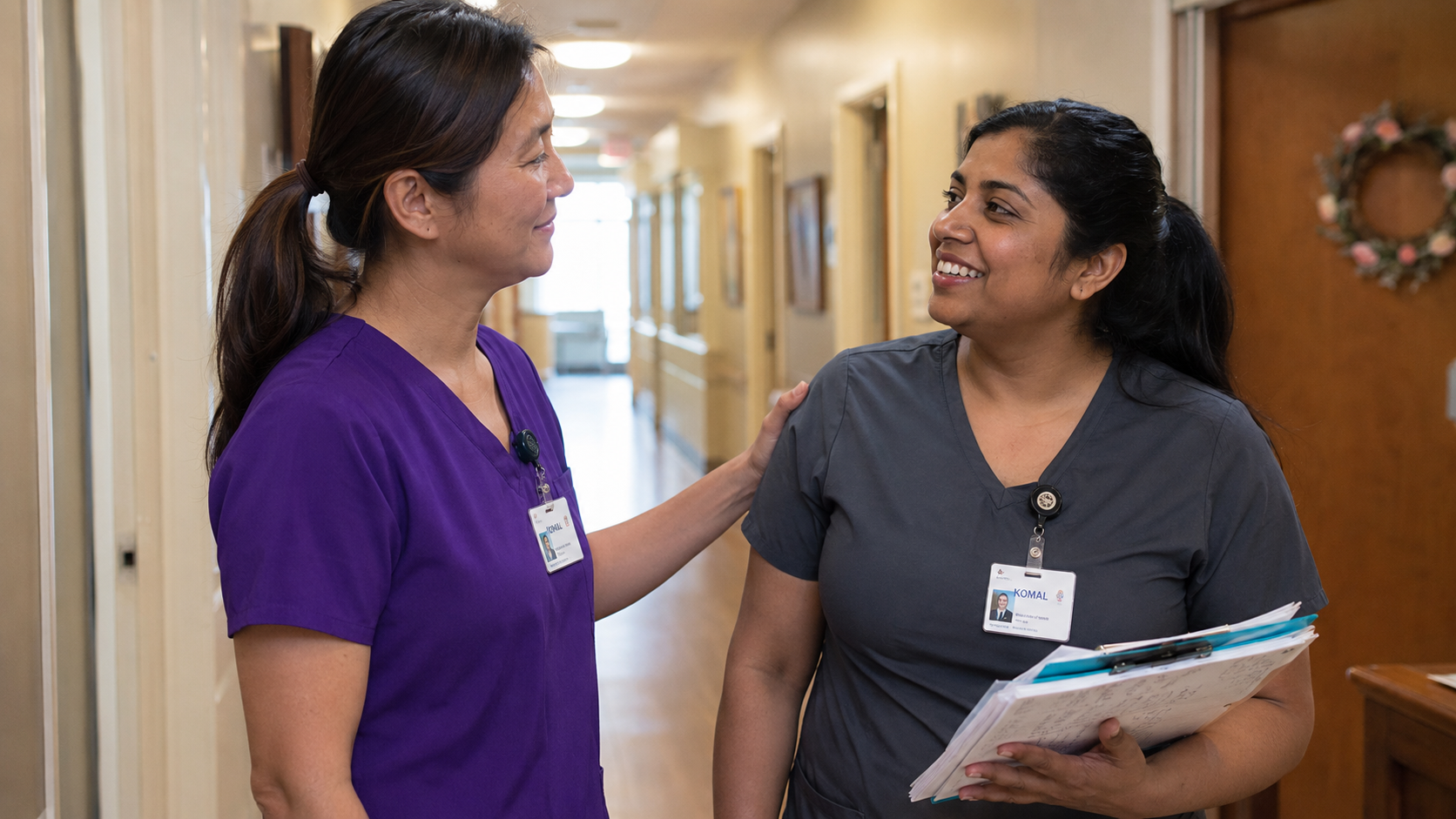
Most meaningful recognition costs little or nothing. It does not have to be formal or complex. It can happen in everyday moments between coworkers, supervisors, managers, residents, clients, families, and teams.
For coworkers, recognition can look like:
Saying thank you when someone helps you during a busy shift.
Telling a coworker you noticed how calmly they handled a difficult moment.
Passing along positive feedback from a resident, client, family member, or colleague.
Acknowledging effort, not only outcomes.
Noticing someone’s strengths and naming them.
Celebrating small wins as a team.
Recognizing someone who quietly supports others but may not often be acknowledged.
For leaders, recognition can look like:
Offering specific, timely feedback when you see good work.
Making sure recognition reaches every role, shift, site, and kind of contribution.
• Asking people how they prefer to be recognized (and honouring that). Not everyone wants public recognition.
Marking milestones, anniversaries, and years of service.
Sharing positive feedback from residents, clients, families, and coworkers.
• Creating peer-nominated recognition opportunities. Coworkers often see the everyday moments of teamwork, respect, patience, and support that may not be visible to leaders, residents, clients, or families.
Highlighting staff contributions in team meetings, newsletters, intranet posts, or social media, with consent.
Supporting professional development and learning opportunities.
Building recognition into daily practice, not saving it for formal events.
What recognition sounds like
Recognition is most meaningful when it is specific. Instead of “good job,” try naming what you noticed:
“I noticed how calmly you supported the elder during that difficult moment. That made a difference.”
“Thank you for helping me finish that task when the shift got busy.”
“You explained that so clearly to the family. I appreciated how patient you were.”
“I know that situation was difficult. You handled it with care.”
“You are often the person who quietly keeps things moving. I want you to know it is noticed.”
What makes recognition meaningful
Recognition is most effective when it is inclusive, meaningful, and shaped by employee input.
Here are a few practical tips to make recognition land with your teams.
Be consistent. Recognition should not be rare or reserved for the same few people.
Be inclusive. Make sure recognition reaches every role and every kind of contribution.
Ask people what feels meaningful to them. Take time to get to know your team. Not everyone wants public recognition. Some prefer it private or shared with the team.
Check in regularly to find out whether people feel appreciated.
Keep it genuine. Recognition should feel sincere, not performative.
Vary your approach. Different people value different forms of recognition.
Remember that simple, low-cost gestures are often the most impactful.
Make it a practice. In busy or high-stress environments, it is easy to overlook the chance to acknowledge others. Build it into how you work.
Reflection questions
Who on your team tends to get overlooked? Often, it's the people who quietly carry their share of the work without asking for attention. They're essential to how things get done, and they need to feel seen, valued, and appreciated, too.
What is one specific thing you can recognize in someone today?
Yes. Peer-to-peer recognition carries real weight. Telling a coworker that you saw what they did, or that you appreciated how they handled something, is recognition. The most impactful gestures usually happen between people on the same team, not from above.
Some people don't, and that's worth knowing. Ask. Some prefer recognition that's private, written, or shared just within the team. Different people value different forms.
Often enough that it isn't rare. Recognition reserved for a few people or for once-a-year moments doesn't meet the need. Build it into how you work.
Fair pay matters, and the CSA Standard names it. But most meaningful, day-to-day gestures cost nothing and unfold in everyday moments.
They often need recognition the most. They are frequently the ones holding the work together without asking for credit.
Why does recognition matter? Recognition is essential when work is demanding and emotionally challenging. When faced with complex situations, appreciation can serve as motivation and encouragement to endure. How does recognition psychologically affect us? Understanding the psychological effects of recognition is essential in the workplace, as it directly impacts employee motivation and satisfaction. According to […]
The schedules were on track. Shifts were covered, tasks were completed, and on paper, everything looked fine. But anyone paying attention could feel it — something was missing. At one long-term care home, that something turned out to be psychological safety, and closing the gap would take more than an appreciation lunch.
Emergency plans in long-term care and home support need to account for care workers who may be affected by the same wildfire, flood, or evacuation. Leaders can strengthen preparedness by planning for accommodation, transportation, expenses,...
WorkSafeBC has paused its consultations on proposed changes to the Occupational Health and Safety Regulation addressing psychological health and safety, harassment, and violence. The pause is due to the provincial election and is procedural; it...
Alzheimers, Communication, Dementia, Grief, Mental Health, Person-centered care, Psychological Health and Safety, Resilience, Self-talk, Stigma, Stress
This fall, the Hearts and Hands conference for health care assistants will bring frontline care workers together for a day of learning, connection and celebration. In Langley, Jody Braam will lead a breakout session exploring...
WorkSafeBC has paused its consultations on proposed changes to the Occupational Health and Safety Regulation addressing psychological health and safety, harassment, and violence. The pause is due to the provincial election and is procedural; it...
Balance, Boundaries, Burnout, Civility and respect, Clear leadership, Collective Care, Communication, Emotional Intelligence, Empathy, Engagement, Grief, Growth and development, Harassment, Leadership, Mental Health, Moral distress, Organizational culture, Psychological Health and Safety, Resilience, Self-care, Self-talk, Stigma, Stress, Suicide, Trauma, Work-life balance
There’s a strange thing that happens when you become very good at holding everything together. People stop asking if you are okay. You show up, do the work, care for the people who need you...
Everything you need to know about the changes to WorkSafeBC's Occupational Health and Safety Regulation, Part 8, Personal Protective Clothing and Equipment — Respirators: Face Seal
For Jo Sedman, health and safety has always started with people. Long before she stepped into leadership roles, before policy development, safety huddles, and education planning became part of her everyday work, she remembers being...
We are sharing a compliance reminder from WorkSafeBC With the recent job action by the BC Nurses Union, WorkSafeBC has become aware that some employers have noted they will not be able to participate in occupational...
The Provincial Infection Control Network of BC has released an updated Provincial Guidance on Return to Work and Exposure Management for Health-Care Workers with Viral Respiratory Illness(VRI). While the June 2026 update does not introduce...
WorkSafeBC is proposing a change to how it corrects employer classifications when information was missing or incorrect, but there was no intent to mislead. They want to create a new category called “Firm Non-Compliance” for...
Stay up to date
Subscribe to our newsletter and stay up to date with all of SafeCare BC’s latest news.
To empower workplaces that provide care to create a culture of safety through evidence-based education, advocacy for safer workplaces, leadership, and collaboration
Stay up to date
Subscribe to our newsletter and stay up to date with all of SafeCare BC’s latest news.