SAFECARE BC ANNUAL REPORT 2025


Thriving together

Safety is more than the absence of harm. It is the presence of conditions where people feel supported, valued, and equipped to do their best work. This year, SafeCare BC deepened its commitment to building those conditions — for the workers who provide care, and the organizations that support them.

Land Acknowledgement

SafeCare BC is located on the traditional, ancestral, and unceded territories of the xʷməθkʷəy̓əm (Musqueam), Sḵwx̱wú7mesh (Squamish), and səlilwətaɬ (Tsleil-Waututh) Nations. Our work reaches across British Columbia, carried out on the lands of many First Nations, Métis, and Inuit peoples — each with distinct languages, histories, and sovereignty that predates and persists beyond colonial boundaries.

We offer this acknowledgement not as a formality, but as a reminder to ourselves that workplace health and safety cannot be separated from the broader context of justice and belonging. Indigenous workers in continuing care — care aides, nurses, support workers — face compounding risks when their cultural safety is not part of the conversation. We are committed to making it part of ours.

Reconciliation is not a destination. It is reflected in whose voices shape our work, whose knowledge we seek, and whose wellbeing we centre. We are grateful to the communities and knowledge holders who have guided and challenged us, and we remain accountable to doing better.

Message from the

CEO

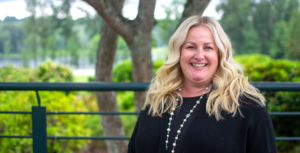
Saleema Dhalla

CEO
SafeCare BC
As I reflect on the past year, one theme stands out: people. Health and safety is often described in terms of systems, standards, and compliance — but this work is ultimately human. It is about care aides, community health workers, nurses, and leaders who show up every day to support some of the most vulnerable people in our province.

This year brought real momentum — a full year with no staff turnover, consultative services up nearly 60 percent, a record 46 webinars, and continued declines in injury rates. But the numbers only tell part of the story.
Read message

Message from the

Board Chair

Michele Thomson

Chair
SafeCare BC
Before anything else, on behalf of the Board of Directors — thank you.

Thank you to our members, who show up every day in complex, demanding environments and still choose to lead with care and commitment to safety. Thank you to our sector partners, peers, and facilitators who lend their expertise and time to strengthen this collective work. And thank you to our Board and committee members, whose thoughtful governance and willingness to wrestle with difficult questions ensures SafeCare BC remains trusted, relevant, and responsive.
Read message

By the Numbers

Website
Visits
194,399
Views
users
77,094
users
Courses
Online
1,086
Enrolled
Instructor-Led
1,925
enrolled
Initiatives
Hearts and Hands
598
registrants
Safety Den
21
Submissions
Programs
leading from the inside out
6
cohorts
Webinars

48
unique events
11
JOHSC Refreshers delivered
2
New courses developed.
5,290
Webinar views

Member spotlight | The right partner to do safety well

An interview with Christine Shearer, Baptist Housing
“This work isn’t about checking boxes or meeting minimum requirements. It’s about having the right partner to help you do safety well.”
Christine Shearer, director of people and culture, labour relations and occupational health and safety at Baptist Housing, knows collaboration drives results. 

These words capture the essence of her approach to health and safety. Across long-term care, assisted living, independent living, and affordable housing, she is responsible for making sure that staff can understand, apply, and rely on the tools in their daily work.

In long-term care, assisted living, and housing, every decision around safety directly affects people’s lives. Misunderstood or ignored policies can cause real harm.

Organizations are tested not by their profits or efficiency, but by how they protect the vulnerable. And as the organization grew, Christine noticed a challenge.

New locations and teams brought energy and opportunity, but also differences in how policies and practices were applied. She wanted to be sure that safety standards were consistent, up to date, and truly reflective of the realities staff face every day. Partnering with us for a safety program review and gap analysis offered a chance to step back and align practice with policy.

The process was thorough and collaborative. All safety-related policies, procedures, and documentation were compiled into a single, centralized view. A health and safety specialist from SafeCare BC reviewed the materials, spoke with team members and management, and toured the buildings to see safety in practice.
“I felt comfortable right from the start. The focus was on continuous improvement rather than identifying deficiencies,” she recalls. “And while policies may be well intentioned, they don’t always reflect how work is actually being done or the realities team members face day to day,”
She understood people act with care when they feel supported, but retreat or make compromises when they don’t.
The review made it clear that safety cannot be set and forgotten. Policies must be living tools, revisited regularly and grounded in the realities of daily care. The experience reshaped her perspective, reinforcing that effective safety depends on curiosity, observation, and ongoing engagement.

And when one leader models thoughtful, engaged safety practices, it spreads.
SafeCare BC’s safety toolkit made the biggest difference to Christine’s team. It became an essential resource that streamlined compliance efforts across the organization. Whether it was the practical templates, clear guidelines, or Q&A materials, they focused on implementation rather than interpretation.

Since completing the review, there has been a noticeable cultural shift. Staff are more engaged in safety discussions, more confident in identifying hazards, and quicker to raise concerns. Policies are no longer rigid documents, but rather living tools guiding daily decisions. Safety has become a shared responsibility, embedded in the day-to-day life of every team member.

Going forward, Christine sees safety as an ongoing effort. Policies will continue to be revisited, conversations will remain active, and staff will be supported to confidently apply standards every day. For Christine, the work is about building trust, strengthening culture, and making sure the policies protect the people who rely on them. Through her partnership with us, Christine has shown that safety is something lived, every day, in every action.

Our Work

Programs and initiatives

Consultative Services

For seven years, SafeCare BC's Tailored Outreach Program (TOP) has helped organizations strengthen their health and safety programs through structured gap analyses, tailored action plans, and ongoing support. In 2025, we set a target of enrolling five organizations in TOP — what we observed instead told us something important about what members need right now.

Learn More >

Leading from the Inside Out

SafeCare BC's "Leading from the Inside Out" program continued to empower healthcare leaders in 2025. With six cohorts and 36 sessions, the program provided participants with valuable tools and insights to enhance their leadership skills and foster positive change in their workplaces.

Learn More >

Leaders Forum

SafeCare BC's third annual Leaders Health and Safety Forum was held at New Westminster's Anvil Centre.  More than 100 individuals, representing 55 organizations, registered for this dynamic event led by Mary Ann Baynton. Mary Ann is a leader in workplace psychological health and safety, with a practical approach to creating healthier workplaces.

Watch the video >
It is easy to think everything is fine when work gets done on time. The schedules were on track, but the mood in the building told a different story.

A workplace without psychological safety is a place without a human heart. People come to work and leave like ghosts. There is no energy, no care behind the tasks. No one speaks up, asks for help, or admits mistakes.
In care work, that is incredibly dangerous.

It affects not just staff, but also the residents they are supposed to protect. Psychological safety is what brings meaning back into work. It is what allows teams to notice small problems, step in for each other, and provide the care people truly need.

At one long-term care home, this tension became clear during an accreditation survey, which revealed that areas such as psychological wellbeing, harassment prevention, and engagement were weaker than expected. Leadership realized that small gestures, such as appreciation meals or recognition awards, while meaningful, were not enough. Acknowledgment could not fill the gap. What mattered was real support and a space where their voices could be heard.

At the time, the team was already showing up. They were logging into SafeCare BC webinars, asking questions in workshops, and looking for something that might help shift what they were seeing on the ground.

In October 2024, while attending the Enhancing Psychological Health, Wellness, and Resilience workshop, something clicked. They learned about the Psychological Health and Safety Pilot Project.

The Psychological Health and Safety Pilot Project is designed to support long-term care organizations in strengthening psychological health and safety in the workplace. Through coaching, practical resources, and structured guidance, the pilot helps teams better understand survey results, identify areas for improvement, and take meaningful steps toward building safer, more supportive workplaces. Realizing it could provide expert guidance at a critical moment, they decided to become the first organization to participate.

It felt like a way forward because the pilot meant they would not have to navigate the challenges on their own. They were paired with our Psychological Health and Safety coach, Sheila Fauman, who could help them unpack the workforce survey results and turn what felt overwhelming into something clear, practical, and actionable. After their first virtual meeting with their coach, the conversation moved beyond numbers on a page. Together, they unpacked what the survey results meant in their day-to-day work. They talked honestly about pressures, gaps, and what it felt like on the floor. It was the first time those realities were named out loud and met with practical support.
Sheila worked side by side with leaders and staff to understand their challenges, explore the survey results, and put actionable steps in place. Policies were updated to clarify expectations, responsibilities, and the handling of concerns. Staff received education and guidance to understand how they could contribute to a psychologically safe workplace.

One of the first steps was forming a working group with managers and frontline staff. This small group became the heartbeat of change. Different voices, experiences, and perspectives came together to create richer conversations and stronger solutions.

Along with our free resources and tools, including policy templates, webinars, and online forums that guided action planning and implementation, the Leaders Health and Safety Forum gave them a chance to connect with leaders from other organizations, exchange experiences, and learn new approaches to psychological health and safety.

One frontline leader involved in the pilot noted “the most valuable skill healthcare assistants bring is the ability to connect with people. When staff feel heard and supported, it changes the way they work together and the care they provide.”

Over time, the changes became part of their everyday.

Leaders reached beyond their own walls. Through webinars, shared tools, and the Leaders Health and Safety Forum, they sat in conversations with others facing the same pressures. They heard what had worked, what had failed, and what they wished they had tried sooner. Those exchanges sparked new ideas and gave them the confidence to bring fresh approaches back to their own teams and put them into action.

Through the pilot, leaders noticed real shifts in the workplace. Staff were more willing to speak up, share concerns, and ask for help, and team conversations became more open and collaborative. Small actions and changes started to make a difference in day-to-day work.

The pilot showed that real change begins when people stop carrying fear at work. When people are truly seen, the small acts of care they offer gather weight, whispers of concern become voices that can’t be ignored, and the workplace stops being a place that grinds you down. It becomes a place that holds you when you stumble, bears the weight you cannot, and reminds you that the work and you matter more than you ever realized.

Learn more about the pilot
3
CITIES
598
registrants
8
Presenters

Hearts and Hands turns ten - and the best is yet to come.

A milestone decade calls for celebration, and this year's Hearts and Hands conferences delivered exactly that. The tenth annual events — held in Nanaimo, Langley, and Kelowna — brought together 598 healthcare assistants from across British Columbia for a day of connection, learning, and recognition. 
Langley
Nanaimo
Kelowna
Learn More

10th

ANNUAL
At our tenth annual Hearts and Hands Conference, MC Brenda Robinson spoke about towels. Two people can look at the same towel and see something different. One sees it folded the wrong way, the other sees it ready to use. Both believe they are right. 

The towel itself is not the problem. The difference comes from how people see things.

For Jessica Ramgren, that story stayed with her long after the conference. Jessica works every day as a healthcare assistant at Gemstone, caring for residents and working closely with her coworkers. She knows that in a busy care environment, small differences in how people see things can cause big problems if they are ignored. A misunderstanding can quickly turn into frustration or even make it harder to give good care.

Jessica also knows that perception shapes nearly everything in healthcare. It affects how coworkers talk to each other during stressful moments, how problems are solved, and how decisions about residents are made. When teams take a moment to listen, understand, and accept different perspectives, tension eases and trust gradually climbs.

Back in 2016, when we created Hearts and Hands, our goal was simple. We wanted to celebrate HCAs, inspire reflection, and give them new ways to think about the care they provide every day. Over the years, the conference has grown substantially, but that mission has stayed the same. Jessica also saw another truth at the conference.

“The most valuable skill HCAs bring is the ability to connect with people,” she shared. “At times, that can mean the people whom we care for, or the coworker beside you. HCAs deliver their heart in all they do, by nature of the career.”


Connection is the foundation of safe and compassionate care. When staff feel connected, they speak up sooner and support one another more freely. They notice changes in residents more quickly. Small moments of connection can prevent larger problems.

In busy care environments, it is easy to focus on tasks. Beds must be made, medications must be given, and charts must be completed. Yet real care happens in relationships. When staff feel seen and valued, they bring their full selves to work. When coworkers understand one another’s perspectives, friction and tension decrease.

Jessica left our conference feeling empowered and confident in bringing these lessons back to her team. She encouraged open conversations, modelled curiosity rather than judgment, and reminded staff that every person in the building shared the same purpose: providing safe, respectful, compassionate care.

“Hearts and Hands always has shown how much the people we care for value us. It is the biggest reward that any HCA can ask for.”

Care is delivered by people, and each person brings their experiences, challenges, and heart to each shift. When teams connect, notice, and respond to one another, those small choices ripple outward and shape safer, stronger, and more compassionate care for residents.

From a towel to a resident, the way we notice, listen, and respond can make the difference between ordinary care and care that transforms a life.

4th annual Support Services Day | Celebrating the people who keep care running

Every clean room, every nourishing meal, every repaired piece of equipment — support services staff make safe, high-quality care possible. On June 26, 2025, SafeCare BC marked the fourth annual Support Services Appreciation Day with its biggest celebration yet — and two firsts: the event moved outside of its traditional September timing, and submissions hit a new record of 26, up from 20 the year before. Photos, videos, slideshows, and heartfelt messages poured in from across the sector, capturing the people behind the scenes who keep continuing care running every day.

The SafeCare team spotlighted three individuals whose stories captured the range and heart of support services work: Fabien Ma, a Physiotherapist; Tim Oben, a Housekeeper; and Buddy Delena, a Dietary Aide. In the weeks leading up to the day, a weekly social media campaign shone a light on every type of support services role, and a special video shared through a dedicated eNews edition brought the celebration to members province-wide.

What may be most meaningful is what the day has become beyond awareness. Member organizations — including Louis Brier Home and Hospital, Hilton Villa Care Centre, Clayton Heights Care Community, and Fair Haven Homes — hosted their own on-site celebrations, turning appreciation into action. Four years in, Support Services Appreciation Day has grown into something the sector genuinely looks forward to.

Safety Den

SafeCare BC's Safety Den returned to Victoria in 2025 with its strongest showing yet. A record 26 submissions — 17 from healthcare and 9 from commercial organizations — competed for top honours in a Dragon's Den-style format that has quickly become one of the sector's most anticipated events.

In the Healthcare Category, Trellis Seniors took first place and the $2,000 top prize with Education on Tap — an elegantly simple system using NFC-enabled stickers placed in supply rooms, medication carts, and staff areas. A single tap of a smartphone gives staff instant access to videos, safety protocols, and role-specific guides right where they need them. Eden Gardens (Nanaimo) earned second place with See It, Say It, a one-click incident reporting app with voice-to-text functionality designed to remove every barrier to reporting a near miss. Broadway Lodge claimed third with Danger Dodgers, delivering Jeopardy-style safety training in punchy 10–15 minute floor sessions.

The commercial Safety Innovation of the Year Award went to HME Home Health for the HME Paraglide, a wheelchair-mounted device that safely and independently repositions a person from a slouched to an upright seated position with the touch of a button. Runners-up included ien2RN Health Care Services' Lived Experience Mentorship program — supporting the integration and retention of internationally trained nurses — and TeksMed's Virtual Injury Assessment (VIA), a telehealth hotline connecting staff to subject-matter experts for non-urgent occupational injuries.

The numbers from the day speak for themselves: 93% of attendees rated the event excellent or very good, 97% said they learned something new, and 93% said they were likely to implement something they saw. One attendee captured the spirit of Safety Den well: "So encouraging to see frontline teams coming up with innovations for their homes."

Building a culture of safety, month by month | Get Psyched! and 12 Months of Safety

Since its launch in 2023, SafeCare BC's 12 Months of Safety initiative has become a cornerstone of our support for members in building stronger health and safety cultures year-round. Each month, a new topic takes the spotlight — bringing together resources such as templates, posters, safety huddles, infographics, and videos, along with a discounted e-learning course. The approach is practical by design: rather than asking organizations to tackle everything at once, it offers a steady rhythm of focused learning that fits into the pace of real workplaces. In 2025, the initiative continued to be well-received across the sector.

Complementing this work, SafeCare BC launched the Get Psyched initiative in 2024 to bring dedicated attention to psychological health and safety in continuing care. In its first year, the initiative walked members through each workplace factor outlined in the CSA Standard on Psychological Health and Safety. In 2025, the approach evolved — shifting from a factor-based framework to a thematic one, making psychological health and safety feel more relatable and accessible to the people doing this work every day.

Building on that momentum, 2025 also saw the introduction of the Self-Care Series — a new initiative following the same monthly format as 12 Months of Safety and Get Psyched. Recognizing that a psychologically healthy workplace starts with the people in it, the Self-Care Series offers practical information, resources, and tips to help workers prioritize their own well-being. The goal is straightforward: when individuals feel supported and equipped to care for themselves, it strengthens the health and safety culture of the whole organization.

Our Education

Workshops and eLearning

  • "She's a very knowledgeable instructor, and she has a wide variety of knowledge about what she's teaching. She has beautiful skills and experiences to explain things in an easy way, so everyone enjoyed the class, and had lots of fun and learned."
  • "Well, the course was really great and wonderful. I really learned hundreds of things new which I'm gonna use To enhance the quality of care and to make their life more loveable and better."
  • "The module was clear, organized and well structured. The videos presented the steps in a simple easy to grasp process. The demonstration instructor was very knowledgeable and patient, gave feedback in a very encouraging and positive way."
  • "It was very clear and easy to understand. I also like the short videos that makes it easy to focus and retain information that was provided."
“Where’s the room?” Brittany asked, scanning the hallway. Her first workshop had been moved at the last minute, and staff were gathering around makeshift partitions. Residents peered from the windows above, curious eyes following every move. She paused, took a deep breath, and said, “Okay, let’s do this.”

That moment full of uncertainty, adaptation, and focus set the tone for every session she’s led since.

Before healthcare, Brittany Murray worked in hospitality and film, navigating busy hotel lobbies and bustling film sets. She learned to notice the small details, anticipate what people needed before they asked, and keep things running smoothly even when everything around her was changing. Those same instincts, she discovered, made her well-suited for long-term care, where a calm presence and careful attention can make all the difference for staff and residents alike. When she joined West Coast Seniors Housing Management, she became a peer facilitator through the Peer Facilitator Program, which trains in-house educators to support colleagues in health and safety. Brittany realized she could apply her skills not only to care for residents but also to create safer, more confident workplaces for her team.

Since March 2024, she has been travelling to care homes across the province, running workshops on violence prevention and safe handling. By June 2025, she earned her certification as a trainer. In just six months, she led 15 sessions, taking the time to get to know each team and shaping the workshops to fit their way of working.

By her third workshop, she was learning lessons no handbook could teach. One team was tense after a recent incident, and the staff were hesitant to speak up. She noticed the small signals and guided the group with questions and exercises that encouraged them to share. Slowly, the room began to open. Staff started trading tips, laughing at small mistakes, and sharing ways to stay safe.
By the end, the energy had shifted dramatically. People left the session talking about what they had learned and how they could use it the very next day. It was a reminder that her work revolved around creating moments where staff felt capable, supported and ready to respond.
Each workshop is customized to the group in front of her, with exercises and examples that resonate, so participants walk away standing taller, speaking up more, and feeling more confident handling situations that they once found uncertain.

“When someone tells me they used a technique from a workshop to prevent an incident or help a colleague feel safer, that’s when I know this work matters,” she says.

The effect spreads quietly but steadily. Teams talk to each other, share ideas, and notice risks before they become problems.

Her work shows that teaching skills is only part of the story. The real change happens when people believe they can handle challenges and know they are not alone. Every session builds that belief.

Every story, tip, and confidence gained ripples outward. Investing in facilitators like her makes care homes stronger, safer, and more connected, and your team can do the same by learning more about the program or growing a team of facilitators at your site.

OntheJob | Violence prevention immersive learning

We partnered with OntheJob to develop six scenario-based exercises follow real incidents that ended one worker’s career. Workers can investigate what went wrong while the OntheJob application measures what they miss, ignore, or forget. 

Four SafeCare BC members participated in a pilot study that included their staff participating in this unique learning platform. Scenario players learned 25% more lessons than a control group of scenario readers.

100% thought about the scenarios after playing because of something they saw or experienced at work.

100% rated OntheJob scenarios as more effective or highly effective compared to other online training.

87% stated they think differently about situations they encounter after playing scenarios.
“When I saw the participation rate, which was way above 90 per cent of our care staff who took the training, I thought, okay, there is something here,” says Loren Tisdelle, human resources director at Louis Brier Home and Hospital.
That moment signalled that a new way of learning was taking hold.

For years, training in long-term care relied on classroom sessions. Staff schedules had to be coordinated, shifts backfilled, and instructors booked, all while keeping the units running. The model costs time and money, and leaves staff frustrated and disconnected from the lessons. Loren knew this approach didn’t match the pace and complexity of life on the units.

Through our partnership with OntheJob, their violence prevention training brought something new to Louis Brier. It allowed staff to access it in moments that suited their workflow, following them onto the units and into real situations, so lessons became practical, immediately applicable skills. As staff engaged with the pilot, Loren noticed conversations among team members shifted, and questions started to be asked. Staff would work through scenarios together and reflect on what they might do differently.

Data from the pilot reinforced what Loren observed on the floor. Many staff were already aware of unsafe practices but still performed them due to pressure, habit, and system-level constraints. The pilot allowed leaders to see these patterns without pointing fingers, showing that safety issues often stemmed from processes and culture rather than individual carelessness.

Loren describes the benefits of on-the-job learning as immediate and practical. Staff can fit training into brief moments throughout the day, building skills incrementally. The platform scales easily, requires minimal resources, and removes barriers that previously limited participation. Modules can cover workplace violence, manual handling, respectful workplace training, and more. Each session offers a discussion that sparks important team collaboration.
With real data from daily practice, managers better understand employee perceptions, behaviours, and the pressures shaping their work. This allowed for a shift from focusing on individual mistakes to improving systems and processes that support safe, effective care.
Louis Brier has a long history of striving for continuous improvement. This pilot fit naturally into the organization’s strategic objectives and commitment to best practices in health, safety, and care.

“The success of OntheJob learning is measured in staff confidence.”

Loren wants learning to flow through every shift, conversation, and moment on the floor, so that it touches every aspect of this incredibly important work. Staff will continue building their skills through short, accessible bursts of training. Leaders will continue to use data to guide improvements. At its core, the goal is training that strengthens how care is delivered every day.

This OntheJob pilot matters because it proves that learning must meet people where they are. Training succeeds only when it fits into the individual, while reflecting their daily life and challenges. When training meets the reality of the work, it stops being theory and starts being courage, skill, and care in motion. Learn how your organization can bring on-the-job learning to your team.
Learn more about OntheJob violence prevention training

Our Leadership

At SafeCare BC, we are incredibly grateful for the dedicated volunteers who generously donate their time and expertise. Their contributions are essential in supporting our members and solidifying our position as a leader in health and safety within the continuing care industry. We sincerely appreciate their commitment to our mission.

Our volunteer Board of Directors comprises industry leaders, union representatives from the long-term care, home care, community care, and support sectors, and representatives from WorkSafeBC. As outlined in our bylaws, these individuals provide diverse perspectives and regional representation, ensuring we effectively serve the needs of the continuing care industry throughout British Columbia.

Board of Directors

Michele Thomson
Chair, Buron Health
Noreen Donnelly
Vice-Chair, Bayshore
Kathrin McMath
Board Treasurer, The Broadway Group
Sharon Cook
Park Place (Professional Medical/Legal Rep)
Dr. Khairun Jivani
AgeCare (Employer Long-term Care)
Ethan Martin
Comfort Keepers
Tonya Neufeld
Menno (Frontline Worker – Long-Term Care)
Robert Breen
Denominational Health Association (industry Association Rep)
Danny Birch
Hero Home Care (Human Resources Services Rep.)
Lynn Bueckert
Hospital Employees Union (Employee Rep – Union)
Mahen Ramdharry
B.C. General Employees' Union (Employee Rep – Union)
Loren Tisdelle
Louis Brier Home and Hospital (Human Resources Representative, non-voting)
Kris Coventry
Trillium Communities (Board Representative – Assisted Living/Independent Living, non-voting)
Mary Polak
BC Care Providers Association (ex-officio)
Saleema Dhalla
SafeCare BC CEO (ex-officio)
Denise Subotin
WorkSafeBC (ex-officio)

Technical Advisory Committee

Loren Tisdelle
Louis Brier Home and Hospital (Chair)
Brian Campbell
B.C. General Employees' Union (Vice-Chair)
Shannon Coco
Buron Health
Anne Bull
Hospital Employees' Union
Geri Grigg
Hospital Employees' Union
Laura Faccone
Hospital Employees' Union
Christine Shearer
Baptist Housing
Rekha Vashisht
BC Nurses' Union
Daryl Denise Davidson
WorkSafeBC (ex-officio)
Saleema Dhalla
SafeCare BC CEO (ex-officio)
Anna Richter
SafeCare BC (ex-officio)
Jennifer Derksen
SafeCare BC (ex-officio)
Patricia Giesbrecht
Cascades
Twyla Johnson
Pacific Coast Health Services
Doug Kinna
BC General Employees' Union
Roger Martin
Comfort Keepers of Canada

Frontline Communications Working Group

Bryan Gay
Menno Place
Karen Reeves
     
Tonya Neufeld
Menno Place
Lynn Morran
Rosewood Village
Phil LeVesconte
Golden Life Management
Zach Butler
SafeCare BC

Partners

Our Team

Lisa Thibault

Director of Communication

Ken Donohue

Senior Director, Innovation and Partnerships

Anna Richter

Director, Workplace Health and Safety Programs

Zach Butler

Communications Lead

Jennifer Derksen

Manager, Occupational Health and Safety

Mark Ryan

Manager, Learning and Development

Pavan Bal

Member Services Coordinator

Carissa Zargar

Communications Specialist

Ashifa Tharani

Operations Advisor

Kajal Hajirakar

Education Manager

Dan Keen

Content and Social Media Lead

Lysa Aguila

Executive Assistant and Board Secretariat

Jaimie Topp

Learning and Development Specialist

Sheila Fauman

Workplace Psychological Health and Safety Specialist

Cora Schupp

Finance Manager

Arpan Grewal

Occupational Health and Safety Specialist

Forward, together: What's next in 2026

Saleema Dhalla

CEO
SafeCare BC

As we turn to the year ahead, our focus is clear — and our resolve is strong.

We will deepen our work in psychological health and safety, building on the lessons from our pilot and expanding supports for leaders and teams across the sector. We will target injury prevention where risks remain highest. And we will continue to strengthen our role as a trusted partner and convener — ensuring the voice of continuing care carries weight in health and safety conversations across the province.

The pressures facing the sector are real. The work is complex. And yet, I am confident — not in spite of the challenges, but because of the people navigating them. The dedication of our team, the engagement of our members, the strength of our partnerships, and the shared commitment across British Columbia to protect those who provide care: these are not small things. They are the foundation everything else is built on.

Health and safety is not abstract. It is a care aide returning home at the end of a long shift, physically and psychologically well. That is what this work is for. And that is what keeps us moving forward — together.

Thriving together

SafeCare BC strives to empower those working in BC's continuing care sector to create a safety culture through evidence-based education, advocacy for safer workplaces, leadership, and collaboration.
Back to safecarebc.ca